
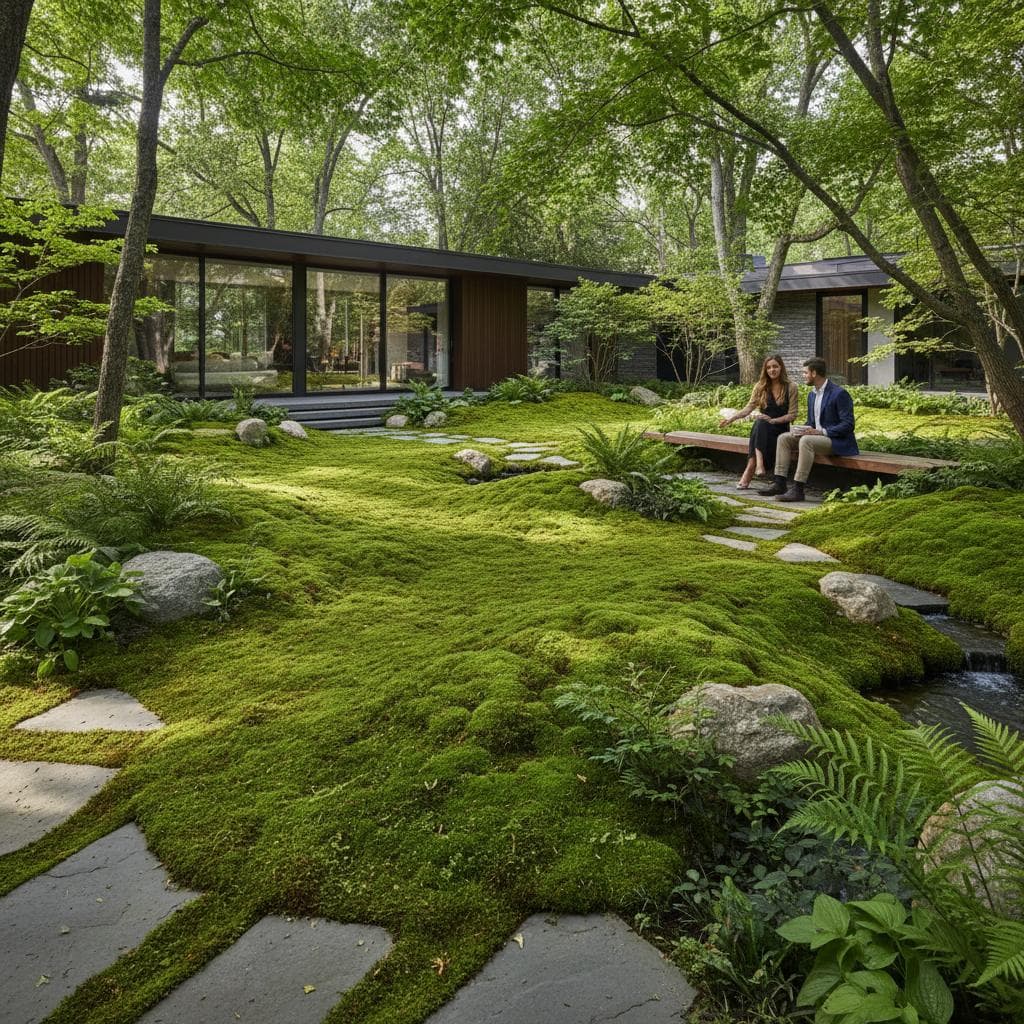
Moss Lawns Gain 300 Percent Popularity Amid Shift to Sustainable Ground Covers
Homeowners across various regions now question the value of conventional grass lawns. Restrictions on water use, prolonged exposure to harsh sunlight, and evolving preferences for reduced upkeep drive this change. People seek durable, environmentally sound options that demand less effort. Moss lawns emerge as a compelling choice, delivering a plush, carpet-like expanse that flourishes in conditions where grass often fails. This alternative evokes a sense of enduring elegance while introducing fresh possibilities, as it moderates yard temperatures and minimizes routine labor.
Key Considerations at a Glance
- Ideal Locations: Areas with shade or partial shade
- Suitable Scales: From compact patios to expansive wooded properties
- Preferred Climates: Temperate zones featuring soil that holds moisture
- Primary Objectives: Substitute demanding turf with a resilient, no-mow covering
1. Prepare the Site for Success
Begin by assessing your yard's conditions to ensure moss can establish strong roots. Clear away existing grass, weeds, and debris using a rake or sod cutter for a clean base. Test soil pH, aiming for levels between 5.0 and 6.0, since moss prefers slightly acidic environments. Amend heavy clay soils with organic matter like peat moss or leaf mold to improve drainage and aeration without creating soggy conditions.
Remove at least two inches of topsoil if grass roots persist, then level the surface gently to avoid compaction. Foot traffic during preparation should remain minimal to prevent soil disturbance. This foundational step sets the stage for moss to spread evenly and integrate with the landscape.
Visual Callout: Raked earth reveals prepared soil ready for moss transplantation.
2. Select Moss Varieties Suited to Your Space
Moss species vary in appearance and adaptability, so choose based on your yard's light and texture needs. Sheet moss, known scientifically as Hypnum, provides a seamless, flat coverage ideal for broad expanses. Cushion moss, or Leucobryum, builds compact, rounded cushions that introduce dimension and tactile appeal. Fern moss, Thuidium delicatulum, offers delicate, fern-like fronds that shimmer in filtered light.
Consider combining types to enhance visual diversity. Place sheet moss in deeply shaded spots with low foot traffic, while cushion moss suits edges receiving dappled sun. A horticulturist notes, "A mix of moss species gives the yard movement. It softens transitions between shade and light."
Visual Callout: Cushion moss forms tiny green domes near a low boulder wall.
3. Install Moss with Care for Lasting Results
Transplant moss during cool, overcast weather to minimize stress on the plants. Harvest patches from donor sites or purchase nursery-grown starters, ensuring ethical sourcing to preserve natural habitats. Lay pieces in a staggered pattern, pressing them firmly into the soil with your hands or a board to achieve good contact.
Water immediately after placement to settle the moss and encourage adhesion. For larger areas, divide transplants into smaller sections and overlap edges slightly for uniform growth. Avoid walking on the new installation for several weeks, using temporary barriers if necessary. This method promotes quick colonization and reduces gaps over time.
Visual Callout: Hands press fresh moss transplants into moistened earth.
4. Establish a Watering and Maintenance Routine
New moss requires consistent moisture to root effectively, so mist the surface daily for the initial weeks. Once settled, natural rainfall typically suffices, as moss draws humidity from the atmosphere. Steer clear of excessive irrigation that leads to standing water, which can foster mold or decay.
Regularly remove fallen leaves and twigs to keep the surface breathable, employing a soft-bristled broom or leaf blower on gentle speed. Fertilization proves unnecessary in most cases, though a diluted compost tea application revives pale areas if needed. A landscape maintenance expert observes, "A moss lawn does not need mowing, edging, or chemicals. It is a living carpet that rewards patience."
Visual Callout: A fine mist settles on a mossy groundcover after a morning watering.
5. Design Moss Lawns for Aesthetic and Functional Harmony
Integrate moss into broader landscapes by pairing it with compatible elements like stepping stones or low-growing perennials. Create winding paths through moss patches to guide movement while preserving the serene expanse. In sloped areas, moss stabilizes soil and prevents erosion, blending seamlessly with native plants.
Experiment with borders of gravel or wood chips to define edges without harsh lines. For urban settings, moss softens hardscapes around patios, adding a natural buffer. Thoughtful design amplifies the calming effect, turning ordinary yards into inviting retreats.
Visual Callout: Moss borders a stone path winding through a shaded garden.
6. Appreciate the Broader Environmental Advantages
Moss lawns contribute to ecological balance through practical mechanisms. The elimination of mowing reduces carbon emissions and fuel consumption significantly. As a natural filter, moss captures pollutants from rainwater, mitigating runoff and safeguarding waterways.
This ground cover demands no chemical inputs, preserving microbial life in the soil. In urban environments, it lowers ambient temperatures by holding moisture and provides acoustic insulation against street noise. An ecologist explains, "Moss is a quiet environmental ally. It works behind the scenes to balance moisture and temperature."
Visual Callout: A moss-rich slope slows rainwater flow beside a gravel path.
Embracing Daily Life with Moss
Walking on moss yields a subtle cushion underfoot, distinct from the firmness of grass. This surface cools surrounding air and invites barefoot exploration, appealing to children with its resilient bounce. Pets navigate it effortlessly, and the modest stature maintains unobstructed views, expanding the perceived size of compact spaces.
Over time, the moss develops a peaceful, earthy presence that enhances well-being. Without the clamor of lawn equipment or residue from treatments, the area fosters cleaner air and greater tranquility. Homeowners and landscape professionals recognize this trend as part of a larger commitment to harmonious, low-impact living.
Visual Callout: A shaded garden glows with moss beneath a canopy of Japanese maples.