
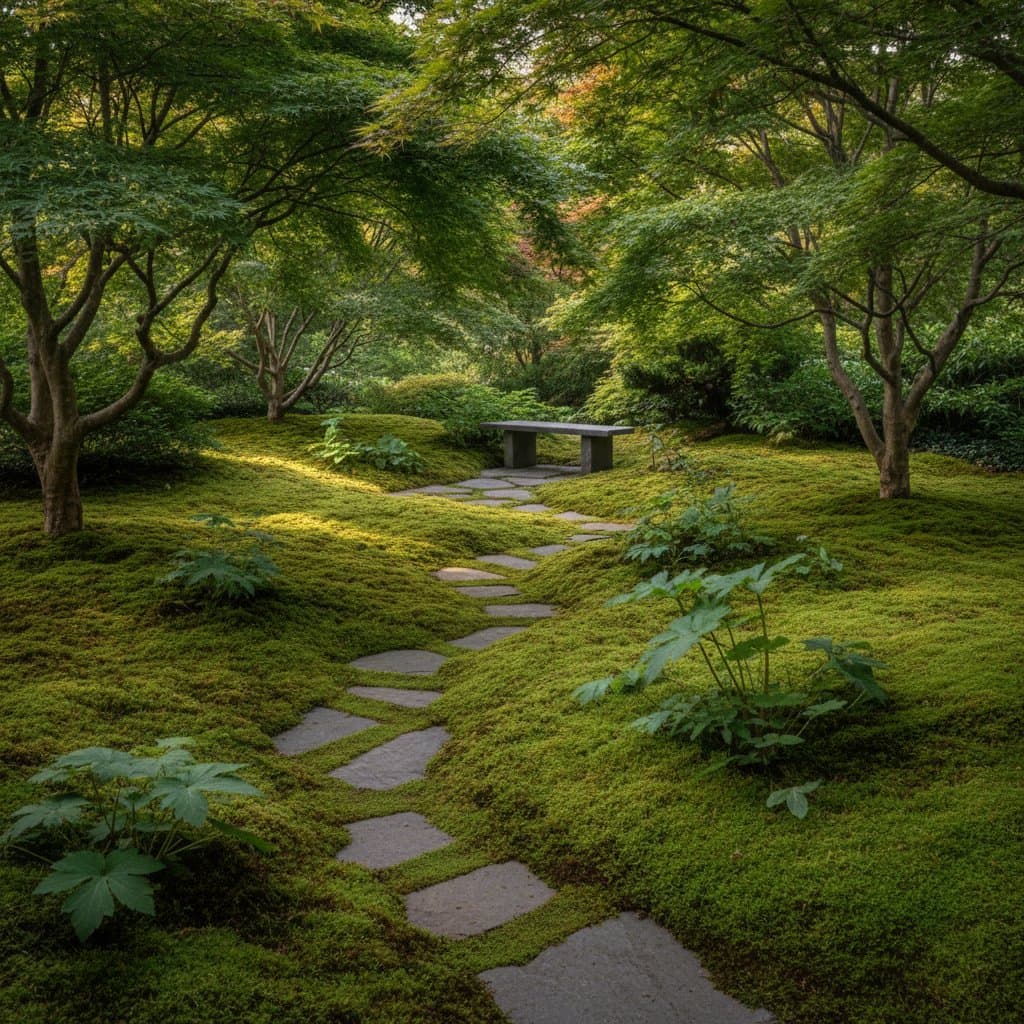
Moss Lawns: Effortless Shade Coverage Without Mowing
Homeowners often struggle to maintain grass under shady trees, resulting in patchy areas and frequent mowing. Moss lawns provide a superior alternative in shaded California gardens. These natural carpets flourish where turf fails, require minimal water, and eliminate the need for mowing, offering sustainable beauty with a timeless appeal.
Benefits of Moss Lawns
Moss lawns attract individuals who desire greenery without intensive maintenance. Traditional turf requires regular mowing, fertilization, irrigation, and repairs. Moss, however, aligns with natural cycles and demands only occasional misting and debris clearance once established.
This option supports California's focus on water conservation. Moss uses far less water than grass and benefits from coastal fog and moist microclimates. The outcome is a vibrant green expanse that appears intentionally designed.
Landscape professionals suggest moss for shaded gardens, north-facing yards, courtyards, and woodland paths. It softens rigid features, fills gaps between stones, and adds soothing texture to outdoor spaces.
Moss Growth Basics
Moss differs from grass as it lacks true roots and vascular systems. Rhizoids, resembling tiny hairs, secure it to surfaces like soil, rock, or wood. Moss takes in water and nutrients through its leaves, excelling in humid or periodically moist environments.
Optimal conditions include:
- Shade or dappled light, as direct sun causes rapid drying.
- Acidic soil with a pH of 5.0 to 6.0.
- Firm, moist surfaces such as compacted soil or stone.
- Regular but not excessive moisture to maintain density and color.
Under these circumstances, moss expands into dense mats that inhibit weeds and hold soil moisture.
Selecting Suitable Moss Species
Moss varieties vary in form and adaptability. Upright, feathery types contrast with low, cushioned ones. Choose based on light, moisture, and soil to promote durability.
Recommended species for California include:
- Sheet moss (Hypnum cupressiforme): Provides flat, even coverage on soil or rocks and establishes readily.
- Cushion moss (Leucobryum glaucum): Creates rounded clumps ideal for Japanese-style gardens.
- Fern moss (Thuidium delicatulum): Delivers delicate, fern-like patterns and withstands moderate foot traffic.
- Haircap moss (Polytrichum commune): Reaches greater heights and copes with drier spots in partial shade.
Combining species adds visual interest and robustness in expansive areas. Suppliers offer cultivated mats or fragments for straightforward application.
Steps for Moss Lawn Installation
Moss installation proves easier than seeding grass, though preparation and moisture control matter greatly. Proceed as follows:
- Clear the site of grass, weeds, and debris, as moss cannot compete with established turf.
- Compact the soil and check pH levels. Add sulfur if necessary to achieve acidity; steer clear of lime-based products.
- Mist the prepared surface lightly before placing moss.
- Press fragments or mats into the ground using hands or a roller for secure attachment.
- Maintain dampness with daily misting for the initial weeks, then taper off as roots form.
Establishment takes several months, during which moss integrates into a uniform, plush layer.
Maintenance Practices for Moss Lawns
Established moss lawns demand minimal attention, enhancing their appeal. Implement these routines to sustain health:
- Apply light watering, such as morning mists, to provide steady moisture without saturation.
- Clear fallen leaves and twigs periodically with a soft rake or blower to prevent smothering.
- Restrict heavy foot traffic; incorporate stepping stones or paths to safeguard areas.
- Pull weeds by hand as they arise, though moss typically deters them effectively.
- Monitor soil pH annually; apply acidifiers if thinning or discoloration occurs.
These steps ensure year-round vitality without mowing, edging, or feeding.
Moss Versus Traditional Grass
Moss and grass differ in upkeep and ambiance. Grass suits active, sunny spaces, while moss fosters contemplative settings.
Moss advantages encompass:
- Elimination of mowing and fertilization needs.
- Strong performance in shade.
- Effective slope stabilization.
- Inherent weed resistance.
- Persistent green hue across seasons.
- Superior water savings.
Potential drawbacks involve:
- Low endurance for intense traffic.
- Gradual startup phase.
- Requirement for acidic, shaded locales.
- Vulnerability to dry or exposed conditions.
For shade-dominated properties, moss balances effort and elegance effectively.
Design Inspirations for Moss Integration
Moss enhances diverse garden styles, from sleek modern layouts to rustic woodlands. It pairs with stone elements, metal accents, and water features in contemporary designs, or evokes serenity in natural settings.
Practical uses feature:
- Shaded courtyards transformed with moss carpets edged by ferns and camellias.
- Moss filling paver joints for an organic pathway feel.
- Groundcover under oaks or redwoods where other plants struggle.
- Moss in shallow containers or trays for tabletop displays.
Complement with shade lovers like hellebores, hostas, or Japanese maples to build textured, enduring scenes.
Broader Impacts of Moss Lawns
Moss lawns support ecological health by filtering pollutants, moderating temperatures, and hosting small insects. Their chemical-free nature avoids runoff into waterways.
Lifestyle gains include reduced noise from equipment and simpler routines, promoting relaxation. Barefoot contact with moss feels refreshing and connective.
These lawns advance California's resource-efficient landscaping amid water limits and climate shifts.
Starting Your Moss Lawn Project
Begin modestly in a shaded nook, side yard, or tree base to test performance across seasons. Expand gradually as results confirm suitability.
For larger projects, engage a moss-savvy landscaper for evaluation, selection, and setup. Such expertise accelerates growth and longevity.
Routine care evolves into an enjoyable ritual: a quick mist, light tidying, and observation. Moss matures into a richer, more textured feature, honoring natural rhythms and delivering sustained tranquility.