
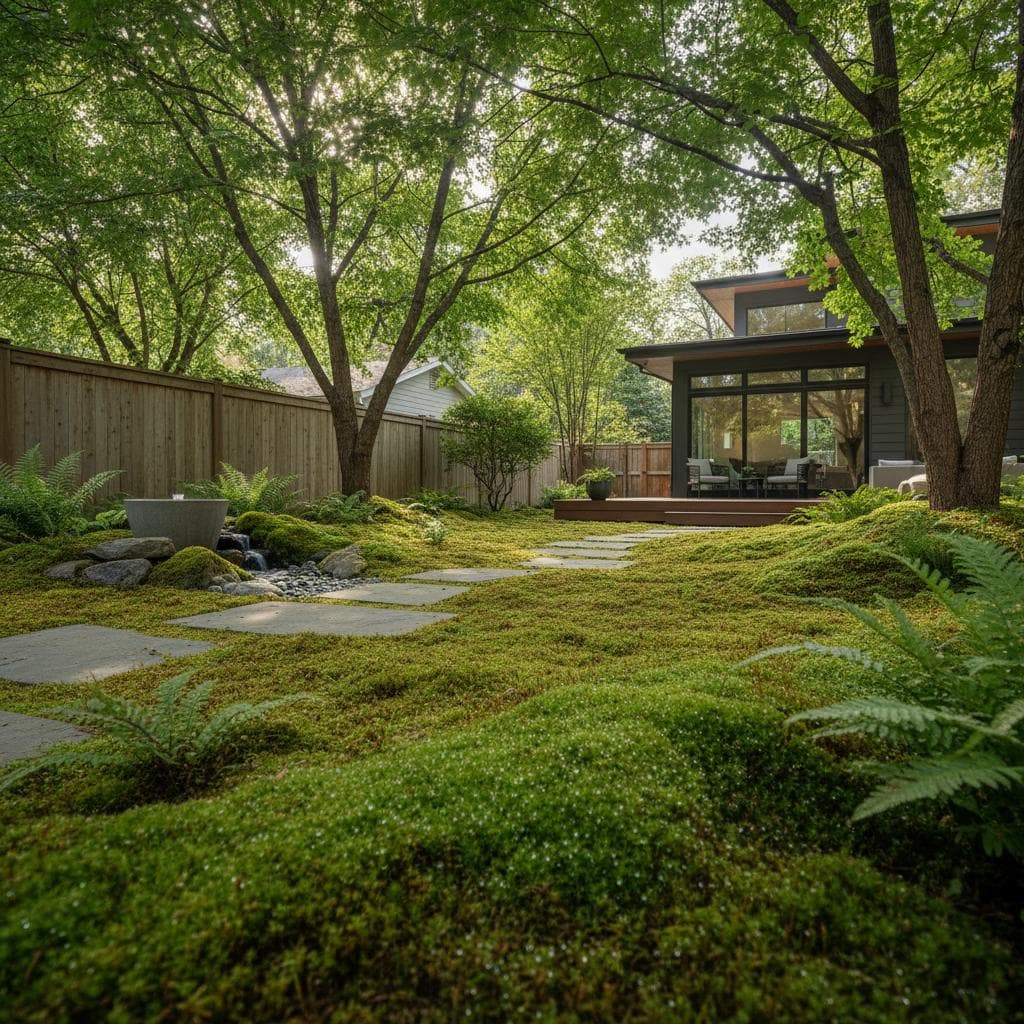
Why Moss Lawns Are Gaining Popularity
Homeowners across California and beyond reevaluate conventional lawns. Traditional turf grass requires regular mowing and heavy irrigation, but moss offers a more sustainable path. This hardy ground cover excels in shaded environments and provides lush greenery with minimal ongoing care. A moss lawn invites relaxation, supports birdwatching, and allows permanent retirement of lawn tools.
Key Reasons to Consider Moss Lawns
Moss lawns combine visual appeal with practical benefits. They perform well in areas where grass falters, including deep shade or compacted soil. The soft, velvety surface stays green throughout much of the year without the need for fertilizers or pesticides. In regions facing water restrictions or on steep inclines, moss emerges as a resource-efficient, earth-friendly solution.
Moss absorbs water and nutrients directly through its leaves rather than roots. This adaptation allows it to persist on thin soil layers or even rocky outcrops. In California's varied conditions, from coastal mists to inland woodlands, moss adapts readily. Once established, moss lawns lower ambient temperatures, stabilize soil against erosion, and need only occasional watering after the initial phase.
Set Clear Expectations for Your Moss Lawn
A moss lawn presents a different texture from grass lawns, appealing to those who value natural, uneven surfaces over precise edges. Assess how you plan to use the space before proceeding. Opt for sturdy types such as Bryum or Leucobryum species if light foot traffic occurs. Install stepping stones or gravel pathways in frequently traversed areas to safeguard the moss while maintaining easy access.
Choose the Right Moss Species
Different moss types suit particular site conditions. For California settings, evaluate these selections:
- Sheet moss (Hypnum): Spreads quickly to create a smooth, flat mat. Ideal for areas in complete shade.
- Cushion moss (Leucobryum): Forms dense, pillow-like mounds that handle partial sun exposure.
- Rock cap moss (Dicranum): Clings to slopes or rocky surfaces where grass cannot establish.
- Fern moss (Thuidium): Offers a feathery, fern-like growth and endures infrequent footfalls.
Obtain moss from reputable nurseries or ethical sources to preserve native habitats. Pre-grown moss sheets, akin to sod, streamline the planting process and ensure uniform coverage.
Prepare the Site for Successful Installation
Proper site preparation lays the foundation for a thriving moss lawn. Moss prefers compacted, slightly acidic soil that retains moisture. Follow these steps to ready the area:
- Clear away all weeds, existing grass, and debris, since moss cannot outcompete taller plants.
- Rake or brush the soil surface to roughen it and improve moss attachment.
- Test the soil pH and adjust to a range of 5.0 to 5.5; add elemental sulfur or peat moss to neutralize alkaline conditions.
- Water the soil thoroughly to create a moist base before placing the moss.
- Press moss fragments or sheets firmly onto the soil using your hands or a flat tool to ensure close contact.
Keep the area consistently damp for the first few weeks by misting in the morning or evening. Monitor for signs of attachment and lateral growth, which indicate successful establishment.
Care Essentials for Established Moss
Once rooted, moss requires sparse attention. Eliminate routines like mowing, fertilizing, or aerating. Concentrate on clearing debris and providing water during extended dry spells. Implement these habits:
- Use a soft broom to gently sweep away fallen leaves and branches.
- Mist lightly during droughts, steering clear of high-pressure sprays that could dislodge the moss.
- Restrict foot traffic on moss that appears dry or frozen to avoid damage.
- Pull any sprouting weeds by hand as soon as they appear to prevent shading the moss.
Moss naturally resists common pests and diseases. Its dense mat inhibits weed seeds from taking hold.
Integrate Moss into Larger Landscape Plans
Start with partial moss installations to experience the advantages without overhauling the entire yard. Focus on shaded corners, around tree trunks, or along inclines. Combine moss with companion plants such as ferns or hostas to build depth and variety. Moss complements hardscape elements like boulders, water features, and winding paths, cultivating peaceful outdoor settings.
In contemporary designs, pair moss with gravel or decomposed granite for defined patterns. This mix of soft organic forms and solid structures optimizes drainage and creates visually compelling contrasts.
Long-Term Advantages and Environmental Contributions
Moss lawns involve initial labor but yield enduring rewards. Full establishment might take several months, but the result surpasses grass in efficiency. Savings on water, fuel for equipment, and soil additives accumulate over time, alongside enhanced yard serenity.
These installations filter rainwater as it percolates through and foster microhabitats. Moss supports pollinators, small mammals, and birds, enriching the local ecosystem.
Track Progress and Refine Your Approach
Embracing moss reflects a shift toward site-responsive landscaping. It prioritizes working with existing conditions rather than forcing uniformity. This choice encourages appreciation of fine textures and natural cycles. Whether starting small or reimagining the whole space, moss aligns with sustainable practices that endure.