
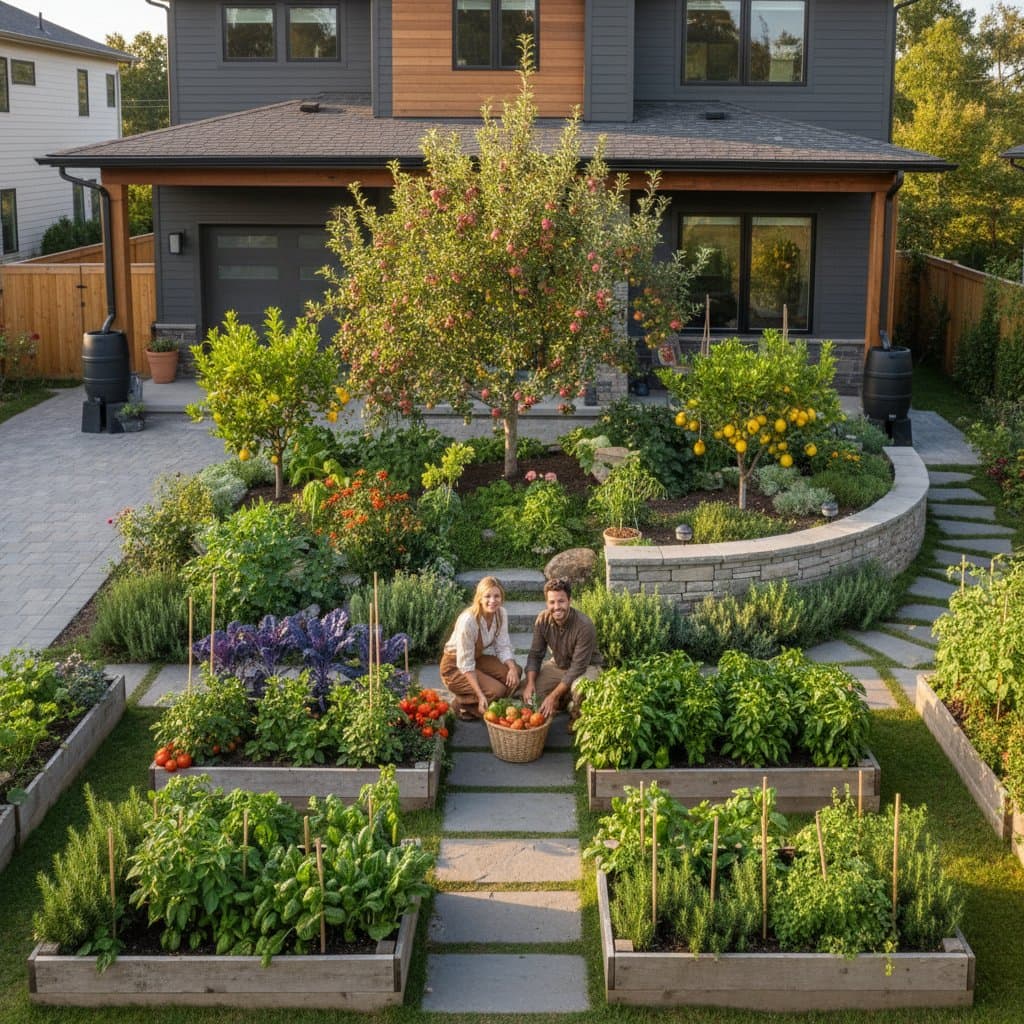
Edible Front Yards That Yield $2,000 in Food Annually
Erin and Mateo Alvarez replaced their patchy front lawn with a space that offers more than visual appeal. They created an area that nourishes their family and prompts neighbors to reconsider traditional yard designs. The result is an edible landscape that combines aesthetics and utility to generate tangible value from homegrown food.
Project Overview
- Residents: Erin and Mateo Alvarez, their two children, and a lively Labrador retriever
- Location: Suburban area near the foothills
- Area: 1,200 square feet in the front yard
- Designer: Carla Nguyen from Green Patch Studio
- Contractor: Local Roots Landscape Company
- Objective: Develop a visually attractive, low-maintenance edible front yard that produces approximately $2,000 in food value each year
- Key materials: Natural stone, cedar edging, decomposed granite pathways, and drip irrigation system
- Plant emphasis: Perennial varieties, herbs, fruit trees, and seasonal vegetables
A Walkway Integrated with Harvest Zones
The Alvarezes now traverse a crushed granite path that meanders through raised beds brimming with kale, strawberries, and chives. This entry route serves as a practical harvest path, inviting visitors to explore a functional living pantry.
Carla Nguyen of Green Patch Studio explains, "The front yard feels like an inviting garden passage, with production as a subtle element." She arranged the layout to maintain clear views to the front door while layering plant zones for depth and productivity.
Low stone borders outline each bed, providing definition and soil retention. Raised beds differ in height: knee-level ones suit herbs and greens, while taller structures accommodate tomatoes and peppers, which gain from improved drainage and soil warmth. Gravel paths separate the beds, facilitating weeding and picking without soil compaction.
Layered Planting Strategy for Aesthetics and Productivity
The design employs a three-tier planting method. Tall fruit trees anchor the structure, mid-level shrubs and perennials occupy the center, and low-growing edibles border the paths.
Selected plants by layer:
- Upper tier: Dwarf apple, fig, and pomegranate trees
- Middle tier: Blueberry bushes, rosemary, and lavender
- Ground tier: Strawberries, thyme, oregano, and edible flowers such as nasturtiums
This approach ensures year-round lushness and consistent yields. Evergreen herbs pair with seasonal crops to sustain visual appeal through quieter months. Fruit trees position to offer dappled shade for delicate greens during peak heat.
Nguyen notes, "Structure integrates with output, so the yard always appears full. The beauty matches the plants' productivity."
Building Healthy Soil Foundations
Soil quality underpins an edible landscape's performance. The team substituted the site's compacted clay with a blend of compost, aged manure, and coarse sand for better drainage. Shredded bark mulch tops the beds, conserving moisture and suppressing weeds.
Drip irrigation tubing lies beneath the mulch, linked to a seasonal timer for precise watering. This system minimizes consumption while sustaining root hydration. The Alvarezes collect roof runoff in a 300-gallon cistern concealed by rosemary, cutting utility expenses and supplying irrigation reserves in arid periods.
Rotating Crops for Year-Round Output
Productivity persists through a crop rotation that mixes annual vegetables with dependable perennials.
- Spring harvest: Lettuce, peas, radishes, and strawberries
- Summer harvest: Tomatoes, peppers, basil, and melons
- Fall harvest: Carrots, beets, kale, and Swiss chard
- Winter harvest: Garlic, onions, and resilient greens
Rotation maximizes bed utilization and preserves soil nutrients. Companion planting enhances results: basil guards tomatoes from pests, and marigolds border beds for natural insect repulsion and vibrant color.
Mateo shares, "Groceries cost us more before, particularly fresh items. Now herbs and greens come from the yard. It has altered our cooking and the children's eating habits."
Structural Elements That Enhance Daily Use
Vegetation forms the core, but thoughtful hardscape choices boost both style and practicality.
Hardscape components:
- Pathways: Decomposed granite, compacted for durability
- Edging: Cedar boards finished with natural oil for endurance
- Borders: Locally sourced stone, dry-stacked for an organic appearance
These materials create textural harmony and align with the home's facade. Gray stone pairs with cedar's warmth, while greenery tempers the orderly lines.
Near the porch, a compact seating nook includes a bistro table and two metal chairs. This area surveys the primary beds, allowing morning coffee to double as a crop inspection.
Assessing Harvest Value and Methods
During the initial complete growing season, the Alvarezes tracked outputs. Fruits, vegetables, and herbs totaled about $2,000 in equivalent market value. Tomatoes, berries, and salad greens drove the bulk, thanks to their repeated picking cycles.
Nguyen observes, "Diversity guided the design over bulk output. Steady yields from varied plants built the total, not dominant single crops."
Staggered planting and succession sowing sustain production. Homeowners reseed quick-maturing greens and herbs biweekly for uninterrupted supply. Perennials offer steady contributions amid annual transitions.
Balancing Curb Appeal with Privacy
Converting a front yard to food production invites concerns over aesthetics and local norms. Nguyen prioritized formal landscaping principles, embedding utility within them.
Boxwood hedges and ornamental grasses define the edges for a tidy frame. Edible elements occupy inner areas, shifting from ornamental to functional. Street views perceive the space as deliberate and neat, not farm-like.
Erin recalls, "Neighbors showed initial curiosity, then sought guidance. Two adjacent properties now plan edible conversions."
This influence demonstrates design's power to shape community practices. The Alvarezes' yard illustrates that productivity aligns with visual standards.
Integrating the Garden into Family Life
Several months post-installation, the edible front yard weaves into daily routines. Children gather herbs for meals, and visitors depart with produce baskets. The space adapts with crop cycles and maturing trees.
Upkeep stays straightforward. Drip systems and mulch cut routine tasks, while periodic pruning controls growth. The layout promotes mindful tending over intensive work. The family invests less in mowing and more in gathering.
Nguyen concludes, "A front yard that sustains a home while remaining sophisticated reshapes views on home landscapes. Productivity proves capable of grace."
Homeowners eyeing this change should begin modestly. Swap a turf section for herbs or berries, then scale up. Evaluate sun exposure and drainage, and prioritize soil enhancements from the start. A thoughtfully designed edible yard benefits sight and sustenance alike.
The Alvarezes' front yard delivers beyond nourishment. It fosters bonds, education, and renewed purpose in a formerly idle area. From grass to a vibrant ecosystem, it sustains the household and sparks neighborhood vitality.