
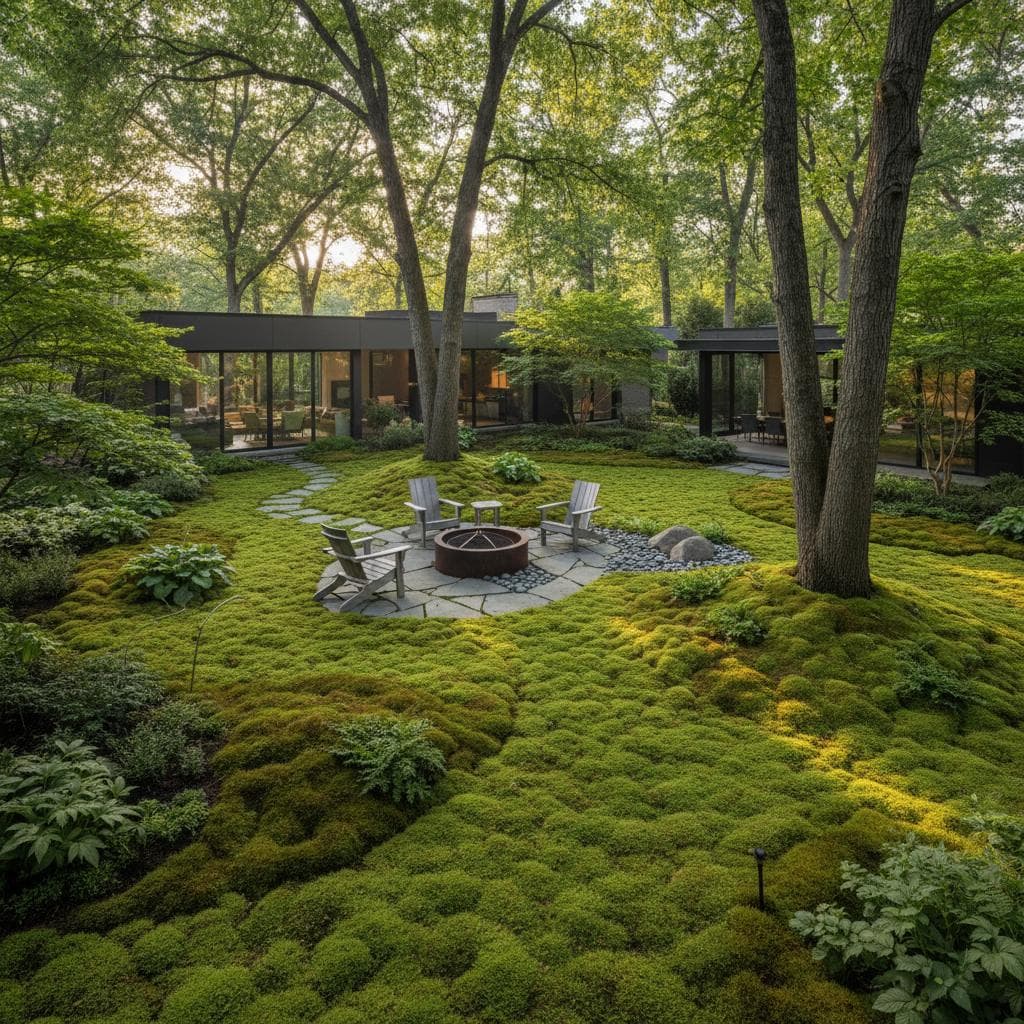
Moss Lawns Outperform Traditional Turf: The 2025 Eco-Friendly No-Mow Shift
Emma and Daniel encountered challenges when they relocated to a shaded hillside property. Traditional grass struggled to establish roots, demanding excessive watering yet yielding only sparse patches. They sought a vibrant, low-maintenance green surface that complemented the woodland environment and bolstered local biodiversity. Moss proved to be the ideal solution.
Creating a Forest Floor Aesthetic
The resulting landscape evokes the tranquility of a woodland understory. A soft, emerald carpet unfurls beneath the trees, resilient after rain and inviting to the touch. Moss excels in shaded conditions, retains moisture effectively, and eliminates the need for mowing. For Emma and Daniel, this approach delivered aesthetic appeal without the disruption of routine lawn maintenance.
Landscape designer Anika Lopez remembers the initial meeting vividly. "They desired a living element that demanded little effort," she noted. "The soil remained persistently damp and acidic, dooming turf to failure. Proposing moss transformed the vision into reality."
The installation process started with comprehensive soil testing and detailed site analysis. The north-facing incline offered optimal conditions: persistent shade, elevated humidity, and diffused sunlight. Rather than resisting these features, the team embraced them to guide the design.
Selecting Appropriate Moss Species
Various moss species suit distinct environmental niches. The project incorporated a blend of three varieties to enhance diversity and resilience:
- Sheet moss (Hypnum cupressiforme): This species develops dense, velvety mats that provide seamless coverage.
- Cushion moss (Leucobryum glaucum): It introduces subtle elevation and texture, particularly effective around rocks and boulders.
- Fern moss (Thuidium delicatulum): With its upright growth, this type adds a layered, woodland dimension near logs and pathways.
Combining these species ensured varied textures and consistent coverage throughout the seasons. Sourcing occurred from certified cultivators to promote ethical practices, avoiding depletion of wild populations. Workers pressed the moss onto moistened soil and applied daily misting for the initial weeks to secure establishment.
Incorporating Pathways and Seating Areas
Pathways weave through the moss using irregularly shaped basalt stepping stones embedded level with the surface. These stones direct foot traffic from the patio to a compact reading bench shaded by a Japanese maple. The interplay of dark stone against vibrant green moss promotes a sense of serenity.
Low-growing ferns and hellebores border the seating zone, framing the scene without overwhelming it. A modest water feature mirrors the surrounding foliage and draws in birds. The minimalist arrangement positions the moss as the focal point.
Lopez outlined the design philosophy. "Moss cultivates a peaceful ambiance. To preserve this, surrounding elements must remain understated. Natural stone replaces concrete, and seating options stay lightweight and portable."
Essential Guidance for Homeowners
Moss lawns extend beyond wooded locales. Proper groundwork enables success in diverse climates, particularly where grass falters due to shade or poor drainage. Critical elements include adequate shade, consistent moisture, and acidic soil pH between 5.0 and 6.0.
Key strategies for effective implementation:
- Begin modestly. Establish a trial area to assess compatibility before full-scale transformation.
- Minimize traffic initially. Moss withstands gentle use once fully rooted, typically after two to three months.
- Employ rainwater for irrigation. Municipal water supplies often carry minerals that impede moss development; collect and use rainwater instead.
- Omit fertilizers entirely. Excess nutrients favor weed invasion over moss proliferation.
- Clear debris regularly. Gentle raking or manual removal suffices to maintain surface health.
In areas with partial sun, install shade structures like pergolas to filter light. Opt for tolerant species such as Bryum caespiticium, or integrate automated misting for humidity control. Overall upkeep stays far below that of conventional lawns.
Installation Expenses and Enduring Benefits
Initial outlay for a moss lawn may exceed sod costs, with live moss priced at $10 to $20 per square foot depending on species and scale. However, long-term advantages offset this: elimination of mowing equipment, fertilizers, and irrigation systems reduces annual expenses by up to 90 percent. Environmentally, moss sequesters carbon, prevents erosion, and supports pollinators without chemical inputs.
Lopez emphasizes the intangible returns. "Clients invest in liberation from chores," she states. "The greenery persists year-round, forgiving lapses in attention." Emma and Daniel value this ease, noting how it enhances their daily lives without added burden.
Evolving with the Landscape
Several months post-installation, the moss continues to mature. Natural spore dispersal fills minor voids and refines contours. The couple now enjoys intimate gatherings on the soft terrain, fielding inquiries from visitors about its authenticity.
This design alters their interaction with the space profoundly. Rustling leaves supplant mower noise, and seasonal vistas from indoor views remain dynamic. Moss lawns signal a broader evolution in landscaping philosophy, prioritizing adaptation over imposition. Homeowners who select site-suited plants achieve reduced labor, enhanced ecology, and enduring tranquility.
Embracing existing conditions, as Emma and Daniel did, unlocks a resilient ground cover that demands nothing beyond coexistence. This approach yields a verdant expanse ready for quiet appreciation.