
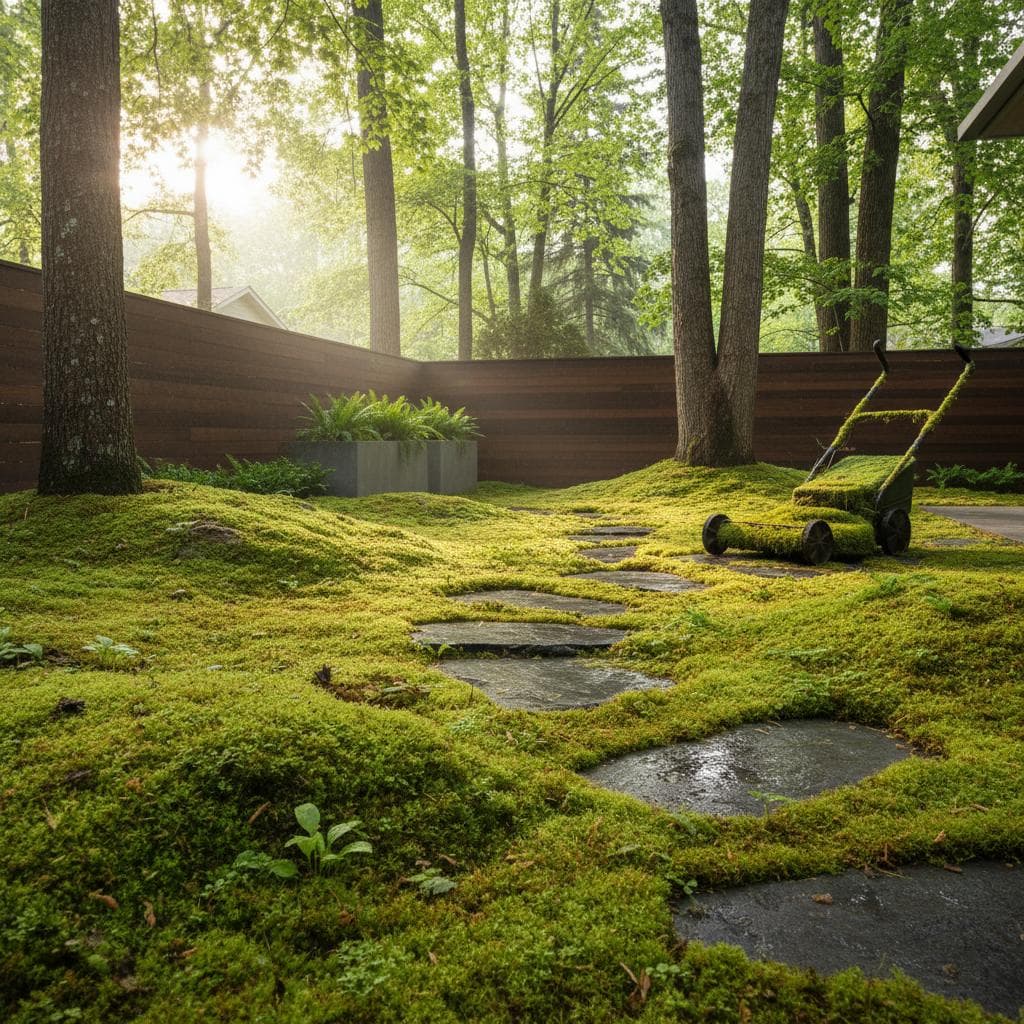
The Appeal of Moss Lawns: A Shift to Sustainable Greenery
Moss lawns present a compelling alternative to traditional grass, especially in areas where turf faces constant challenges. These living carpets deliver soft texture and vibrant color with far less effort. Homeowners gain a serene outdoor space that aligns with natural rhythms, reducing the need for ongoing labor and resources.
The transition to moss encourages a mindful approach to landscaping. It fosters environments that support biodiversity and conserve water. Many find that this choice enhances the overall harmony of their property, creating areas that invite relaxation and observation.
1. Assess Conditions for Moss Success
Moss flourishes under specific environmental factors, distinct from those favoring grass. Lacking true roots, moss plants draw moisture and nutrients through their leaf-like structures. They excel on compacted soils, in partial to full shade, and with consistent humidity.
Evaluate your site by noting sunlight levels, soil compaction, and drainage patterns. Test soil pH, as moss prefers slightly acidic conditions around 5.0 to 6.0. Amend heavy clay soils with organic matter to improve moisture retention without altering drainage.
A landscape designer observes: "Moss rewards neglect. It prefers stillness, moisture, and consistency rather than frequent disturbance."
Key benefits: This setup eliminates mowing, fertilizing, and excessive irrigation. Moss naturally suppresses weeds after establishment.
Design tip: Select species such as Bryum caespiticium or Hypnum cupressiforme for deep shade and moist ground. For areas with dappled light, Leucobryum glaucum provides resilience.
Visual element: A soft patch of Leucobryum glows pale green beside a flagstone path.
2. Transition from Grass to Moss Step by Step
Abrupt removal of existing turf can disrupt soil stability and moss growth. Begin by targeting small zones to observe performance and refine techniques. This method preserves the yard's appearance during the changeover.
Prepare the area by mowing grass short, then apply a natural smothering layer like cardboard topped with mulch for several weeks. Once grass dies back, rake the surface smooth and introduce moss fragments or transplants.
Key benefits: Phased conversion maintains visual balance and minimizes erosion risks.
Design tip: Integrate moss with elements like stepping stones or gravel paths to ease boundaries. Low-growing companions such as Mazus reptans bridge gaps effectively.
Practical example: Initiate with a 10-by-10-foot section adjacent to a shaded patio. Monitor for two seasons before expanding, ensuring debris-free soil to aid moss adhesion.
A landscape designer notes: "Patience is part of the beauty. Moss lawns mature slowly but reward you with texture and calm."
Visual element: New moss planting fills the space between slate pavers.
3. Establish Moisture Routines for Healthy Growth
During the initial phase, moss demands reliable hydration to root and spread. It absorbs water directly via leaves, making overhead or mist applications ideal over deep soaking.
Aim for light watering two to three times weekly until coverage thickens, adjusting based on rainfall. In arid regions, incorporate mulch around edges to retain ambient humidity.
Key benefits: Steady moisture accelerates colonization and prevents desiccation.
Design tip: Opt for drip irrigation or soaker hoses to target the surface efficiently, avoiding runoff and waste.
Practical example: Deliver morning mists lasting five minutes in dry spells. Rely on natural rain during wet periods, checking moss pliability as a vitality indicator.
A designer advises: "Moss thrives on humidity, not saturation. A gentle mist is better than a heavy soak."
Visual element: Morning dew glistens across a moss-covered terrace.
4. Incorporate Texture for Dynamic Landscapes
Beyond uniform green hues, moss varieties contribute varied surfaces that enhance visual depth. Undulating forms and subtle colors respond to light, adding subtle movement to static yards.
Layer different moss types or mix with textural hardscapes to build interest. This approach elevates simple grounds into engaging, multi-dimensional features.
Key benefits: Textural variety sustains appeal in minimal-care settings.
Design tip: Juxtapose moss against polished stones, textured bark mulch, or broad-leafed plants for striking contrasts. Such pairings unify built and natural components.
Practical example: Plant Polytrichum alongside river rocks to merge upright structure with plush undergrowth.
A designer reflects: "Texture tells the story of a landscape. Moss gives quiet rhythm where turf would feel flat."
Visual element: Soft moss contrasts against a stone retaining wall.
5. Maintain Cleanliness to Prevent Invasions
Early vigilance against weeds and litter ensures moss dominance. Dense mats eventually outcompete intruders, but proactive measures build a strong foundation.
Inspect weekly for emerging seedlings, removing them by hand to avoid chemical use. Clear organic debris promptly to maintain airflow and prevent smothering.
Key benefits: Routine upkeep secures long-term weed resistance.
Design tip: Employ wide-tined rakes or soft brushes for gentle surface grooming. Avoid power tools that compact or dislodge growth.
Practical example: In fall, use a leaf blower at low speed to disperse accumulations while preserving surface moisture.
A gardener shares: "Moss lawns reward gentle care. A few minutes of upkeep keeps them pristine."
Visual element: Light sweeping clears fallen leaves from a shaded moss garden.
6. Integrate Moss with Supporting Plants
Moss serves as an excellent base layer when combined with compatible flora. This strategy boosts ecological value and introduces vertical and floral elements.
Choose shade-tolerant partners that share moisture needs to avoid competition. Such integrations create balanced, self-sustaining ecosystems.
Key benefits: Companions enhance soil health, diversity, and structural variety.
Design tip: Surround moss with ferns, hostas, hellebores, or sedges for tiered compositions. Delicate bloomers like Tiarella cordifolia provide seasonal accents.
Practical example: Frame a courtyard moss expanse with Asarum canadense borders to evoke a woodland ambiance.
A designer comments: "Moss is a background that lets other plants shine."
Visual element: Ferns rise above a moss ground layer, creating vertical rhythm.
Sustaining and Enjoying Your Moss Landscape
Established moss lawns need sparse intervention to remain vibrant. Provide occasional hydration during droughts, clear seasonal debris, and limit heavy use to preserve integrity.
These landscapes contribute to environmental well-being by filtering pollutants, moderating temperatures, and sheltering microfauna. The result is a yard that pulses with subtle life, distinct from uniform lawns.
Homeowners often report a deeper connection to their space through this choice. It promotes unhurried enjoyment and appreciation of natural details.
A landscape designer concludes: "A moss lawn changes how you experience your yard. It slows the pace and invites you to notice small things."
Visual element: Evening light highlights the velvety surface of a moss courtyard.