
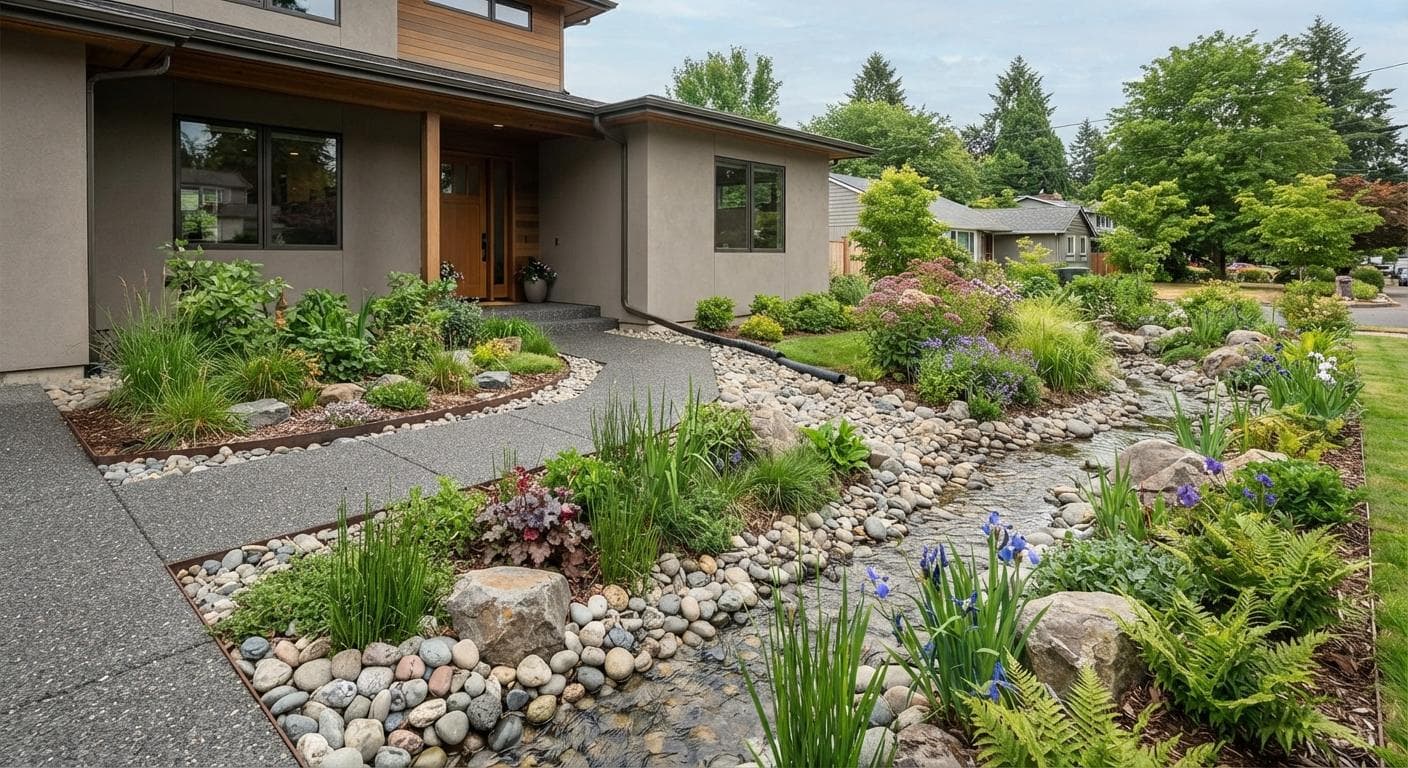
Stormwater Solutions That Boost Your Home's Curb Appeal
A well-planned stormwater landscape gives rain a clear path while making the front yard feel considered and welcoming. For homeowners, the goal is practical: slow runoff, reduce puddling, and protect the house, while using plants, stone, and grading to create a garden that looks at home with the architecture.
At a Glance
- Project type: Residential stormwater landscape
- Who it suits: Homeowners managing roof runoff, driveway flow, or soggy lawn areas
- Core features: Rain garden, planted swale, permeable paving, and visible water routing
- Best starting point: Observe where water enters, moves, and collects
- Key materials: Washed stone, compost amended soil, permeable pavers, and regionally suitable plants
- Main priorities: Safe drainage, healthy planting, low maintenance, and a clear arrival path
Start with the Water, Then Shape the Garden
A stormwater plan begins with a close look at the property, not a plant list. Watch the yard during rain and after it stops. Note where downspouts discharge, where driveway water travels, and whether water collects near the foundation, steps, or low lawn. Those observations help determine which features can manage runoff and where they belong.
The first design principle is to direct water away from the house. A swale or rain garden should not send water toward a basement, neighboring property, or public walkway. Soil type, slope, local drainage rules, and the distance from the foundation all affect placement. In areas with clay soil or a high water table, an infiltration feature may need an overflow route or a different design.
People often begin with the wet spot they can see. Landscape designers trace the water back to its source, then choose a route that protects the house and fits the front yard.
That route can become part of the composition. A stone lined channel beside a path, a shallow planted swale at the edge of a lawn, or a rain garden near a downspout makes water management legible. The details should feel intentional, with clear edges and plants selected for both appearance and changing moisture.
A Rain Garden with a Defined Edge
A rain garden is a shallow planted basin that temporarily holds runoff, allowing water to soak into suitable soil. It should drain between rain events, not remain a pond. Its shape can echo the home's lines or soften a formal front garden, but the basin needs enough room to accept water without spilling onto paths.
Use a broad, gently sloped depression rather than a deep, steep sided hole. A defined rim of stone, steel edging, or a neat lawn edge makes the feature look finished and helps distinguish it from an ordinary planting bed. A small stone inlet can reduce erosion where a downspout or channel enters. At the low point, an overflow notch guides excess water toward a safe destination.
Planting works best in layers. Place species that tolerate brief wet conditions near the basin's center, and use plants that prefer drier soil on the upper edge. Native sedges, rushes, flowering perennials, and compact shrubs can provide structure across seasons. Choose plants for mature size, sun exposure, and local conditions rather than relying on a generic mix.
Useful planting roles include:
- At the center: Plants that handle occasional standing water, such as suitable sedges or rushes.
- Along the slope: Perennials that tolerate both wet spells and ordinary garden conditions.
- At the outer edge: Grasses, ground covers, or shrubs suited to drier soil.
- Near the inlet: Tough plants and stone that can withstand moving water.
Avoid arranging every plant in isolated clumps. Repeated groups give the garden a composed look and make it easier to identify weeds. Leave enough room for mature foliage, and keep taller plants from hiding windows, house numbers, or the entry.
A Bioswale That Reads as a Garden Border
A bioswale is a shallow, planted channel that guides runoff while slowing its movement. Unlike a conventional pipe, it can filter sediment as water passes through vegetation and soil. In a front yard, a bioswale may follow a driveway, sit between the lawn and sidewalk, or connect a downspout to a rain garden.
Its shape should follow the land rather than cut across it abruptly. Gentle curves suit informal gardens, while a straighter channel can fit a crisp, contemporary landscape. A stable base and planted sides help control erosion. Where water moves quickly, use stone at the inlet and at any sharp change in direction. Do not fill the channel with decorative gravel alone. Plants and properly selected soil are part of the system.
Make the swale easy to read without making it look engineered. A narrow band of river stone can mark the channel's base, while grasses and flowering plants soften its sides. Repeating the same plant groups along the route ties the feature to nearby beds. Keep the channel clear of dense shrubs that could trap leaves and obstruct flow.
Paving That Lets Rain Through
Driveways and walkways often send a large share of roof and surface runoff toward the street. Permeable paving can reduce that flow by allowing water to pass through joints or a porous surface into a prepared stone base. Options include permeable concrete pavers, porous asphalt, and pervious concrete. Each has different installation and maintenance needs.
For a front entry, permeable pavers can define a path with a familiar, durable finish. Choose a color and texture that relate to the house, then set a clean border to prevent edge movement. Joint aggregate needs periodic attention, and the surface must stay clear of fine sediment. A permeable driveway can suit a larger project, but it requires correct excavation, base depth, and compaction. A standard paver installation with ordinary sand joints does not provide the same drainage performance.
Surface choices need to match the way the household uses the space. A path can be narrow and refined, while a driveway needs a base designed for vehicle loads.
Do not assume every paved area should be replaced. A shorter walkway, a planted strip along the driveway, or a small rain garden receiving roof runoff may solve a specific problem with less disruption. The best combination depends on drainage patterns and the available budget.
Downspouts as Part of the Composition
An exposed downspout can look like an afterthought, especially when it empties onto a narrow strip beside the entry. Extend it to a stable, visible route that leads away from the foundation. A buried pipe may work in some settings, but it needs a safe outlet and access for maintenance. A surface channel can be simpler to inspect and easier to incorporate into the garden.
A stone splash area beneath the outlet protects soil from erosion. From there, a shallow stone runnel can direct water toward a planted bed or rain garden. Keep the route clear of steps and walkways, and avoid creating a slick surface where people enter the house. If the downspout is prominent, paint or finish it to suit the exterior, while keeping the discharge point functional.
Rain chains can guide roof water into a stone basin, but they are not a complete drainage plan on their own. Wind, heavy rainfall, and roof volume affect how well they perform. Use one only where the receiving area can handle the flow and water can continue safely away from the foundation.
Materials and Planting That Hold Up
The visible materials help stormwater features feel connected to the home. Repeat a few finishes instead of introducing a different stone at every turn. A brick house may suit a simple brick or stone edging, while a modern exterior can work with clean steel lines and neutral aggregate. Pea gravel is comfortable underfoot in some areas, but it can migrate. Larger, angular stone tends to stay in place better in channels.
Soil preparation matters as much as the surface finish. A rain garden needs a soil mix suited to local drainage conditions, not a layer of rich compost that stays saturated. Before construction, confirm whether the native soil drains adequately and whether amendments or an underdrain are appropriate. A drainage professional or qualified landscape contractor can help assess difficult sites.
For a cohesive planting palette, select a few dependable forms:
- Upright accents: Rushes or narrow grasses that add height near a swale.
- Mounded plants: Perennials that soften the edge of stone and paving.
- Low ground cover: Plants that reduce bare soil and limit erosion.
- Seasonal color: Flowering species chosen for local conditions and pollinator value.
Keep sightlines open near the front door and driveway. A tidy edge, visible house numbers, and clear access often do more for curb appeal than adding extra plant varieties.
Maintenance That Protects the Design
Stormwater features need routine checks, especially after heavy rain. Clear leaves from inlets, inspect outlets, and remove sediment before it blocks the route. Look for bare soil, washed stone, leaning edging, or places where water escapes the intended channel. Early repairs are usually simpler than correcting a feature after erosion spreads.
A practical care list includes:
- Remove debris from grates, channels, and overflow points.
- Replenish washed stone when the surface becomes thin or displaced.
- Weed young rain garden beds until plants fill in.
- Trim vegetation without removing all cover from the soil.
- Check that paving joints remain open and appropriately filled.
- Confirm that water drains from a rain garden rather than lingering.
Avoid applying fertilizers or pesticides near a feature that receives runoff. These products can travel with water into nearby drains and waterways. Use mulch carefully. Large amounts of loose bark can float into inlets, so choose a stable mulch or a gravel finish where flow enters.
Living with a Better Drainage Plan
A front yard can manage rain without looking like a utility project. A clear route, well-scaled planting, and durable finishes make each feature feel connected to the house.
The finished design should make everyday routines easier. Paths stay more comfortable underfoot, planting replaces chronically soggy lawn, and roof water has a planned destination. Before work begins, confirm local requirements and seek professional guidance for steep slopes, poor drainage, or water near the foundation.