
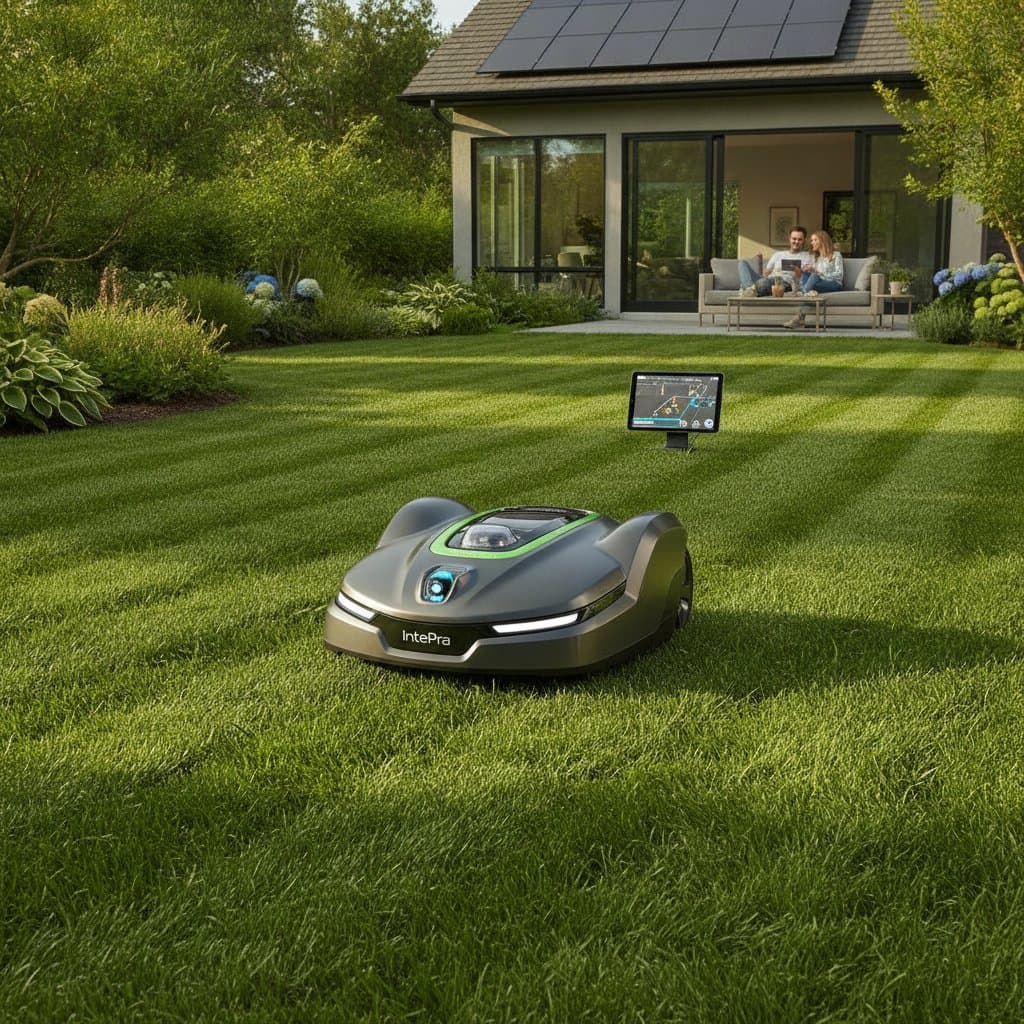
2026 Robotic Mowers Deliver Hands Free Lawn Care
When Emma and Lucas purchased their suburban home, they appreciated the mature trees and open yard yet wanted to avoid the weekly mowing routine. Between work, travel, and family commitments, they sought a lawn that remained neat without ongoing effort. Their choice was a next generation robotic mower, part of an expanding selection of smart outdoor tools built for consistent lawn maintenance.
How the System Operates
From the street the property appears as any maintained suburban lot. The distinction becomes clear when the low profile mower moves across the grass, cutting with accuracy and returning to its charging dock without manual guidance.
The SmartMow R6 follows a buried boundary wire that marks the mowing area. After installation the mower follows a GPS mapped pattern that covers the entire yard evenly. It adjusts speed and blade height when it senses slope changes or variations in grass length.
In the backyard the mower produces a quiet hum that remains barely audible. It operates early in the morning or at night and uses weather sensors to stop during rain. The lawn stays trimmed daily without visible tracks or clippings left behind.
Consistency proved the main improvement. The grass never becomes overgrown and the edges stay clean throughout the season.
Materials and Daily Performance
The SmartMow R6 relies on a brushless electric motor and a lithium ion battery. One charge handles up to 24,000 square feet before the unit returns to the dock. The blades consist of hardened stainless steel that lasts a full season before they require sharpening.
The lightweight composite body resists UV exposure and moisture. Its sealed design permits rinsing with a garden hose. Operation produces minimal vibration and no emissions.
Key Specifications
- Cutting width of 10 inches
- Blade height adjustable from 1.2 to 3.5 inches
- Noise level of 58 decibels at three feet
- Battery capacity of 5.0 Ah replaceable module
Daily trimming of small sections promotes denser grass growth. The mower mulches clippings finely into the soil, which returns nutrients and lowers fertilizer needs.
Routine Maintenance Steps
Blade replacement occurs roughly twice each season depending on yard size and debris levels. Keep the charging dock free of leaves or mulch to preserve airflow. Firmware updates arrive through the connected app without manual intervention.
The battery functions for several years under normal conditions. Replacement requires removal of a back panel with two screws and takes less than ten minutes. The electric motor eliminates oil changes, spark plugs, and fuel storage.
For winter storage clean the unit, power it down, and place it in a garage. The battery holds most of its charge during the off season and resumes operation when grass growth begins again.
Environmental Impact and Operating Costs
Switching from a gas mower to an electric robotic model lowers emissions and noise. The unit charges from a standard outlet and uses less energy than a typical light bulb during a full day. No fuel or oil storage removes risks of spills or fumes.
Initial purchase and installation costs exceed those of a traditional mower, yet ongoing expenses remain lower. Fuel refills are unnecessary and self sharpening blades extend replacement intervals. Time previously spent on mowing becomes available for other activities.
Selecting a Model for Your Property
After several months the yard maintains a freshly cut appearance each day. Even grass height creates a uniform surface, and quiet operation keeps the unit unobtrusive to neighbors. Reliability integrates the mower into daily routines alongside other automated home systems.
Property size, terrain, and layout determine the best model choice. Professional installers complete setup in one day, and adjustments remain possible if landscaping changes occur later.