
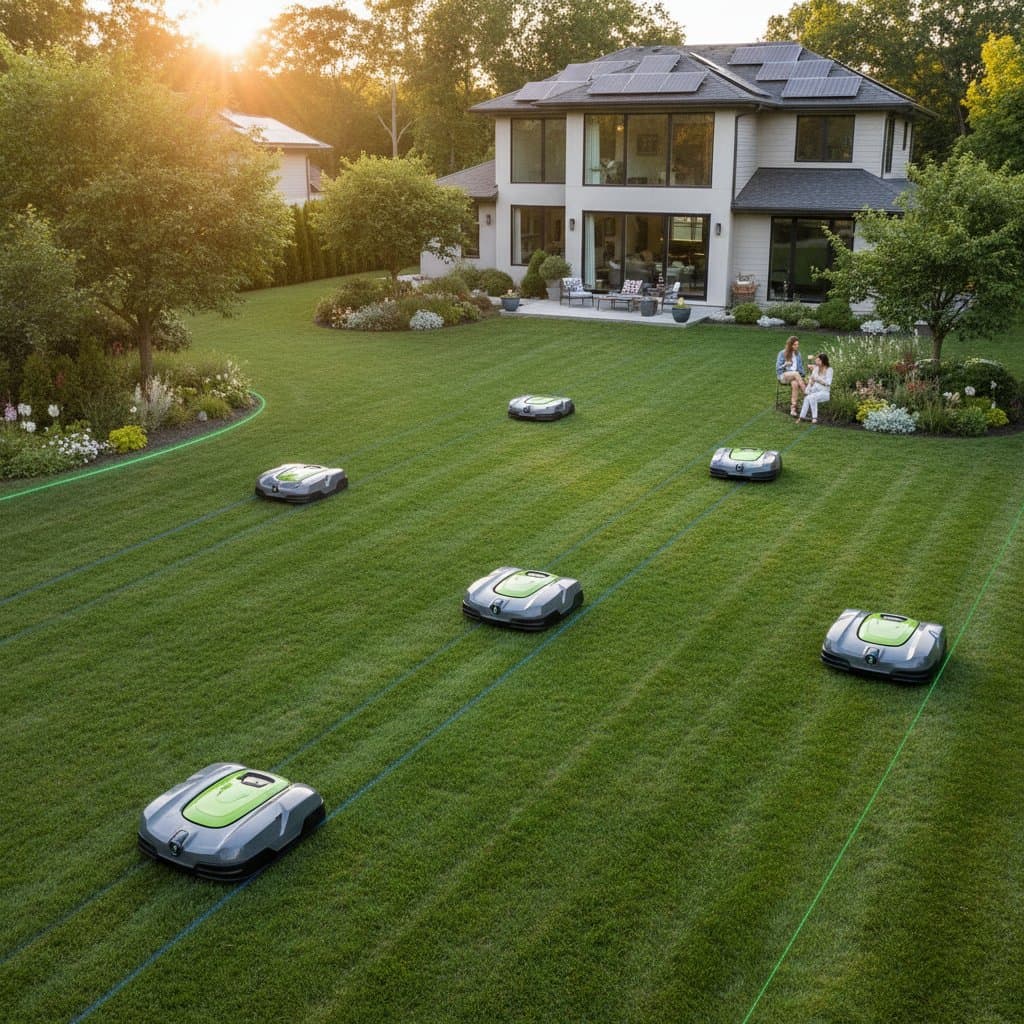
The Rise of Robotic Mowers in Modern Lawn Care
Robotic mowers have emerged as a game-changer for suburban homeowners seeking efficient yard maintenance. These autonomous devices navigate lawns with precision, eliminating the need for manual pushing or riding mowers. By integrating technology with traditional landscaping, they deliver consistent results that enhance curb appeal without demanding constant attention.
The appeal lies in their ability to operate independently, often returning to a charging station when needed. This self-sufficiency frees up weekends for family activities or relaxation. As urban green spaces become more valued, robotic mowers align perfectly with the demand for low-effort, high-impact solutions.
Key Features That Drive Performance
At the core of every robotic mower is a sophisticated navigation system. Boundary wires or virtual mapping technology define the mowing area, ensuring the device stays within designated zones. Sensors detect obstacles like toys or garden furniture, allowing safe operation even in complex yard layouts.
Micro-cutting represents another essential feature. Instead of removing large amounts of grass at once, these mowers trim small amounts frequently. This method leaves clippings on the lawn as natural fertilizer, promoting thicker growth and reducing waste.
Battery life and weather resistance further enhance reliability. Many models withstand rain and adjust schedules based on growth patterns detected by built-in calendars. Quiet motors produce minimal noise, making them suitable for residential neighborhoods.
Benefits for Homeowners and the Environment
Time savings stand out as the primary advantage. Traditional mowing might consume several hours weekly, but robotic mowers handle the task in the background. Families reclaim those hours for pursuits that matter more, such as outdoor play or home projects.
Healthier lawns result from consistent care. Even cuts prevent weed invasion and disease, leading to denser, greener turf. The eco-friendly design reduces fuel consumption compared to gas-powered alternatives, lowering carbon footprints.
Long-term cost efficiency adds value. Initial investments pay off through decreased labor and maintenance needs. Studies indicate that well-maintained robotic systems can extend lawn vitality, potentially reducing the need for professional services.
Environmental Impact in Detail
Robotic mowers contribute to sustainability by minimizing emissions. Electric operation avoids the pollutants associated with gasoline engines. Their efficient cutting preserves water and nutrients in the soil, supporting biodiversity in backyard ecosystems.
Some advanced models integrate solar charging options. This feature harnesses renewable energy, further diminishing reliance on grid power. Overall, they promote a greener lifestyle without sacrificing aesthetic standards.
Selecting the Right Robotic Mower
Choosing a model begins with assessing yard size and terrain. Compact units suit small lots under 1,000 square feet, while larger ones cover expansive areas up to half an acre. Consider slopes; many handle inclines up to 35 percent without slipping.
Budget plays a crucial role. Entry-level options start around $500, offering basic automation. Premium versions, exceeding $1,500, include app connectivity for remote monitoring and scheduling.
- Measure your lawn accurately to match capacity.
- Evaluate obstacle density for sensor compatibility.
- Review warranty terms, typically spanning two years.
- Test user interfaces for ease of setup.
Compatibility with smart home systems enhances control. Integration with voice assistants allows voice-activated starts or status checks. Prioritize models with strong customer support for troubleshooting.
Installation and Daily Operation
Setting up a robotic mower involves simple steps. Lay perimeter wires around the yard edges, securing them with stakes. Place the charging dock in a shaded, accessible spot near an outlet.
Initial calibration maps the area, often completed in under an hour. Program mowing times via the control panel or companion app. The device then follows a random or systematic pattern to ensure full coverage.
Daily oversight remains minimal. Empty the collection bin if equipped, though many models mulch clippings directly. Monitor battery levels through notifications to prevent interruptions.
Maintenance Tips for Longevity
Regular cleaning prevents debris buildup. Wipe sensors and blades monthly to maintain accuracy. Sharpen cutting discs annually or after 200 hours of use.
Store the unit indoors during off-seasons to protect against elements. Update software firmware as releases become available, improving performance and security. These practices extend operational life beyond five years.
Embracing Automation for Lasting Lawn Vitality
Robotic mowers blend innovation with practicality to elevate everyday landscaping. They deliver uniform results that boost property value and personal satisfaction. As technology advances, expect even smarter features like AI-driven pattern recognition.
Homeowners who adopt this approach discover a harmonious balance between nature and convenience. Lawns thrive under gentle, persistent care, creating inviting spaces for gatherings. The shift to automation marks a step toward effortless, sustainable living.