
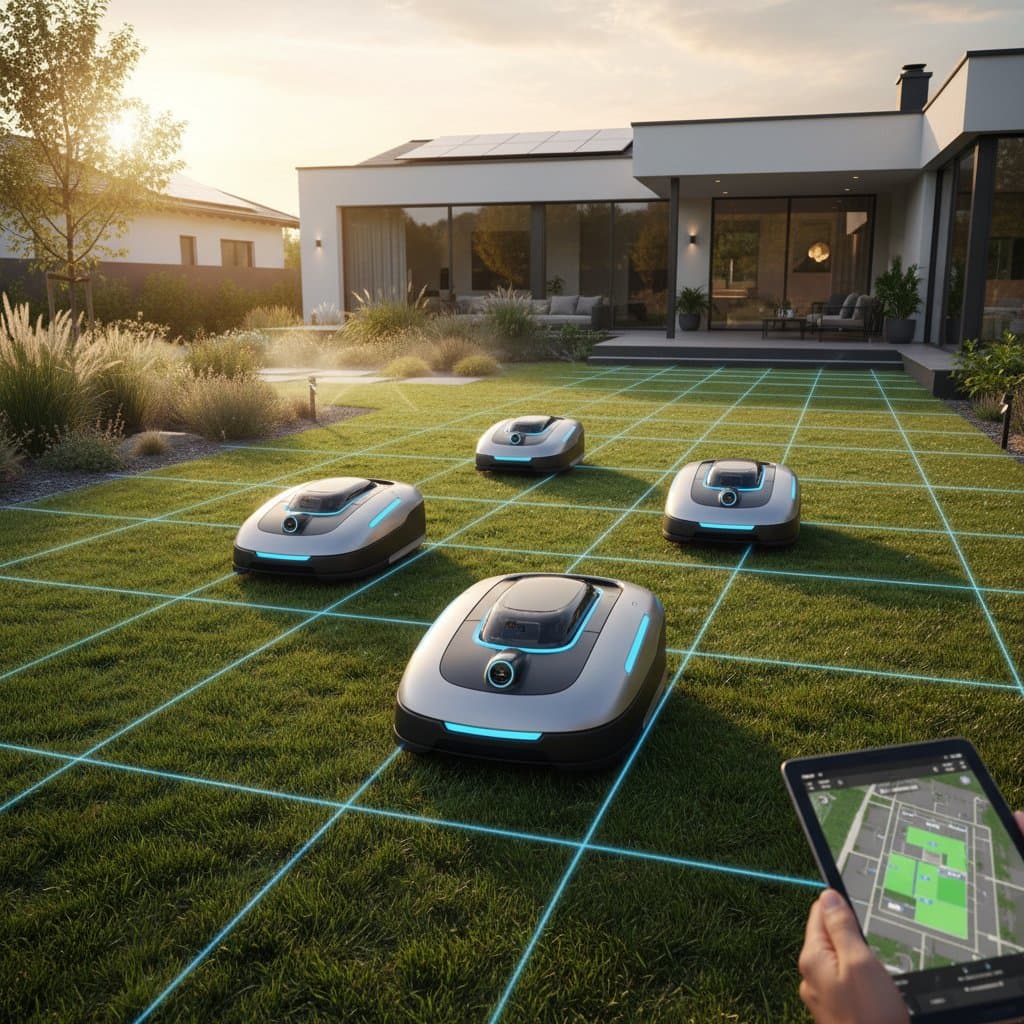
Smart GPS Mowers Slash Lawn Time by 60 Percent
A perfectly manicured lawn requires far less effort than in the past. Advanced GPS mowers manage the task with remarkable precision and minimal noise, ensuring even cuts while allowing homeowners to pursue other activities. These devices provide reliable performance, minimize physical work, and simplify yard maintenance entirely.
At a Glance
Location: Suburban and urban residential lawns
Size: Small to large yards with open or defined zones
Climate Zone: Temperate, warm, or mixed climates
Project Goal: Reduce mowing time and increase efficiency through automation
1. Map Once, Mow Smarter
GPS mowers rely on satellite technology to create detailed maps of yard boundaries. This method removes the necessity for buried guide wires, enabling precise navigation across the property. After initial mapping, the mower follows systematic paths rather than erratic routes, covering the area thoroughly.
Experts note that a mapped lawn appears deliberately designed rather than haphazardly maintained. The mower ensures uniform coverage without excessive overlaps or missed spots. For expansive yards, it segments the space into manageable zones, addressing each sequentially to promote even grass wear.
This technique conserves both time and battery power. Property owners achieve a professional striped pattern that enhances visual appeal. To begin, position the mower at a central point and allow it to scan the perimeter over one or two sessions.
Visual Callout: Sleek mower travels along precise stripes across a freshly cut lawn.
2. Schedule for Efficiency
GPS mowers excel in customizable scheduling via intuitive mobile applications. Users set mowing frequency, preferred start locations, and downtime periods to suit their routines. The quiet operation permits runs at dawn or midday without disturbing neighbors.
Such scheduling reduces overall yard maintenance time by approximately 60 percent. The device performs regular trims, freeing owners for alternative pursuits. Frequent light cuts foster healthier turf by stimulating root development and minimizing blade stress.
Landscape professionals emphasize that consistent mowing sustains lawn vitality. To optimize, align schedules with growth patterns, such as daily sessions during peak spring growth. Monitor progress through app notifications to adjust as needed.
Visual Callout: App interface showing a weekly mowing schedule and live GPS map.
3. Adapt to Changing Conditions
Equipped with advanced sensors, GPS mowers identify obstacles and modify paths in real time. Upon detecting rain or elevated soil moisture, select models retreat to the charging station until conditions stabilize. They also recognize dense grass patches and slow down or raise the blade height accordingly.
This responsiveness avoids common problems like uneven scalping or soil compaction. Fewer redundant traversals contribute to the significant time savings over manual mowing. For best results, select units with multi-sensor arrays for comprehensive environmental awareness.
Experts compare these features to a skilled landscaper's intuition. Integrate weather data from connected apps to preemptively pause operations during storms. Regular firmware updates enhance adaptive capabilities over time.
Visual Callout: Mower rerouting around a garden bed edged with hostas and ornamental grasses.
4. Pair with Sustainable Lawn Practices
Automated mowing pairs effectively with environmentally conscious yard strategies. Brief, repeated cuts produce small clippings that decompose into natural nutrients for the soil. Battery-powered models eliminate gasoline consumption and exhaust emissions, supporting broader sustainability objectives.
Incorporate resilient grass types, such as buffalo grass or fine fescue mixes, which tolerate frequent mowing and demand less irrigation. These varieties rebound swiftly and retain vibrancy under varied conditions. The combined approach yields a resilient landscape with reduced resource use.
Sustainability advisors highlight the synergy between technology and plant selection. Test soil pH annually and apply organic amendments to bolster grass health. This integration lowers long-term costs while preserving ecological balance.
Visual Callout: Fine grass clippings blending into the turf after automated mowing.
5. Integrate with Smart Home Systems
Contemporary GPS mowers link seamlessly to home automation ecosystems via Wi-Fi or Bluetooth. They transmit real-time data on operational status, power reserves, and coverage completion to a unified control panel. Users monitor paths, issue remote commands, or initiate charging from anywhere.
This connectivity streamlines daily routines by embedding lawn care into broader smart home functions. Automated alerts remind owners of routine tasks like blade sharpening or system diagnostics. Compatibility with platforms like Alexa or Google Home adds voice-activated oversight.
Professionals value the effortless management it provides. Set up integrations during initial installation to enable multi-device synchronization. Review logs periodically to refine performance based on usage patterns.
Visual Callout: Tablet screen displaying mower status synced with other smart devices.
Maintaining Effortless Lawn Care
After setup, GPS mowers demand only periodic attention. Inspect blades monthly and clear debris seasonally to sustain optimal function. The technology liberates time and effort, allowing greater enjoyment of outdoor areas.
Beyond mere convenience, these systems redefine yard upkeep as an automated backdrop to life. Lawns remain neat and vibrant with little intervention. Homeowners and designers alike discover renewed appreciation for spaces that maintain themselves.