
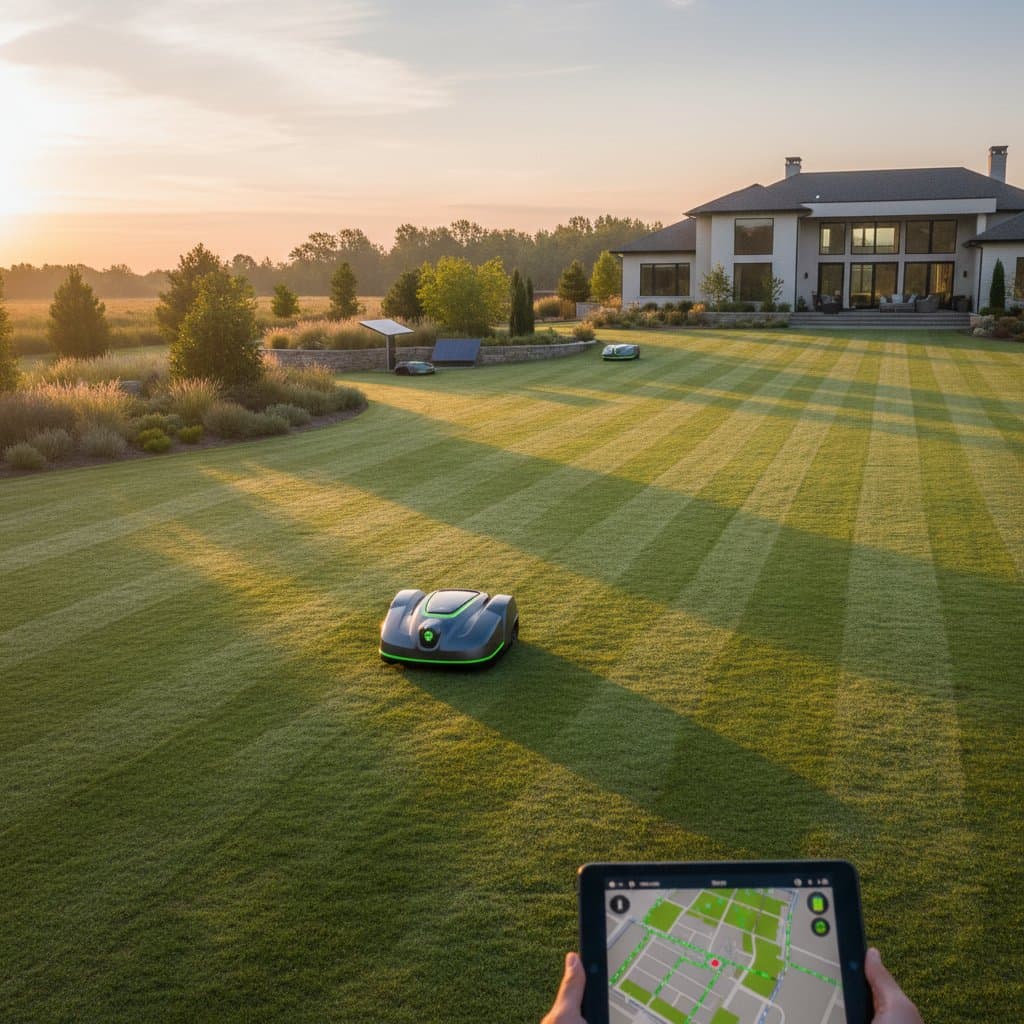
Smart Robotic Mowers for Large Landscapes Up to Two Acres
Robotic mowers have advanced significantly, becoming reliable tools for maintaining expansive residential properties. Models designed for areas up to two acres operate with quiet efficiency, delivering uniform cuts that promote healthier grass growth. These machines eliminate the need for extensive manual effort, allowing property owners to achieve professional-quality results without the noise or emissions associated with traditional gas mowers.
Integration with smart home ecosystems adds further value, as these devices adapt to environmental conditions and return to charging stations autonomously. The outcome is a lawn that maintains a fresh, manicured appearance daily, supporting both aesthetic appeal and sustainable practices in lawn care.
1. Establish a Precise Lawn Layout
Effective navigation begins with a thoughtfully planned mowing area, especially on properties spanning up to two acres. Robotic mowers rely on perimeter wires, sensors, or GPS technology to map boundaries and avoid non-grass zones such as flower gardens, water features, or driveways. Proper setup ensures comprehensive coverage while minimizing operational disruptions.
Landscape professionals recommend visualizing the lawn as a structured space, outlining edges and access routes prior to automation. For complex layouts with trees or raised beds, install boundary wires to encircle obstacles precisely. Advanced units employ GPS for virtual boundaries, which users define and store via companion software for repeatable precision.
Key functional advantage: Uniform mowing reduces overlooked areas and shortens overall session times.
Design consideration: Sharp borders amplify the polished look of automated maintenance.
Practical application: Install durable steel edging or natural stone along turf perimeters to guide the mower and prevent soil or mulch intrusion into grassy sections.
2. Position Charging Stations Strategically
A well-placed base station serves as the mower's recharging hub, essential for uninterrupted operation across large areas. Select a level surface close to an electrical outlet, preferably in a shaded location to mitigate heat exposure and extend component longevity. Clear any potential obstacles like roots or loose stones along the return path to facilitate smooth docking.
Experts advise treating the base as an integral part of the landscape infrastructure, ensuring accessibility enhances reliability. Many users incorporate the station into a protective enclosure, such as a garden shed or custom cover, to shield it from weather elements. Materials like treated wood or weather-resistant composites allow seamless blending with surrounding features.
Key functional advantage: Consistent power replenishment supports extended runtime and battery health.
Design consideration: Integrate the station to maintain yard aesthetics without visual clutter.
Practical application: Embed a covered charging unit into a low retaining wall using matching stonework for a cohesive, unobtrusive installation.
3. Implement Intelligent Controls and Schedules
Connectivity defines modern robotic mowers, enabling control through dedicated mobile applications or smart home platforms. Users customize mowing schedules, monitor real-time positions, and receive notifications for routine upkeep. Weather integration pauses operations during rain, avoiding wet clippings that could harm grass.
Property owners value the hands-off approach, configuring initial settings and then overseeing via remote access. On multi-acre sites, divide the lawn into zones for staggered mowing, optimizing energy use and maintaining even wear. This method ensures the device operates at peak efficiency without constant supervision.
Key functional advantage: Minimal user intervention maximizes system performance.
Design consideration: Automation streamlines care for expansive, diverse landscapes.
Practical application: Apply geofencing features in the app to restrict activity to specific areas, such as pausing rear-yard mowing during family events or planting sessions.
4. Prioritize Safety and Security Measures
Safety features protect inhabitants and the device itself on sizable properties frequented by families, pets, or local wildlife. Built-in sensors halt blades upon detecting lifts or collisions, while GPS enables theft recovery and access codes prevent unauthorized use. Visible indicators, like LED lights, signal active operation to bystanders.
Professionals emphasize robust safeguards for broader applications, recommending supplementary barriers to segregate high-traffic zones. Natural elements such as dense hedges or fences complement the mower's technology, creating defined safe areas. Regular checks on sensor functionality ensure ongoing compliance with safety standards.
Key functional advantage: Secure, hazard-free performance in populated environments.
Design consideration: Layer barriers thoughtfully to balance accessibility and protection.
Practical application: Plant low-maintenance borders of evergreen shrubs or flowering perennials to delineate zones, providing both safety and ornamental value while preserving sightlines.
Maintaining Excellence in Automated Lawn Care
With proper setup, a robotic mower integrates seamlessly into daily landscape routines, handling maintenance autonomously while preserving turf vitality. Seasonal reviews of boundaries accommodate growth in plants or changes in yard configuration, sustaining optimal coverage. This proactive approach keeps the system performing reliably year-round.
Homeowners discover newfound flexibility, redirecting saved time toward creative gardening, social gatherings, or leisure activities. The subtle operation of these devices fosters a serene outdoor space, where technology enhances natural beauty without overpowering it. Ultimately, smart mowing delivers enduring advantages in efficiency, health, and enjoyment for large properties.