
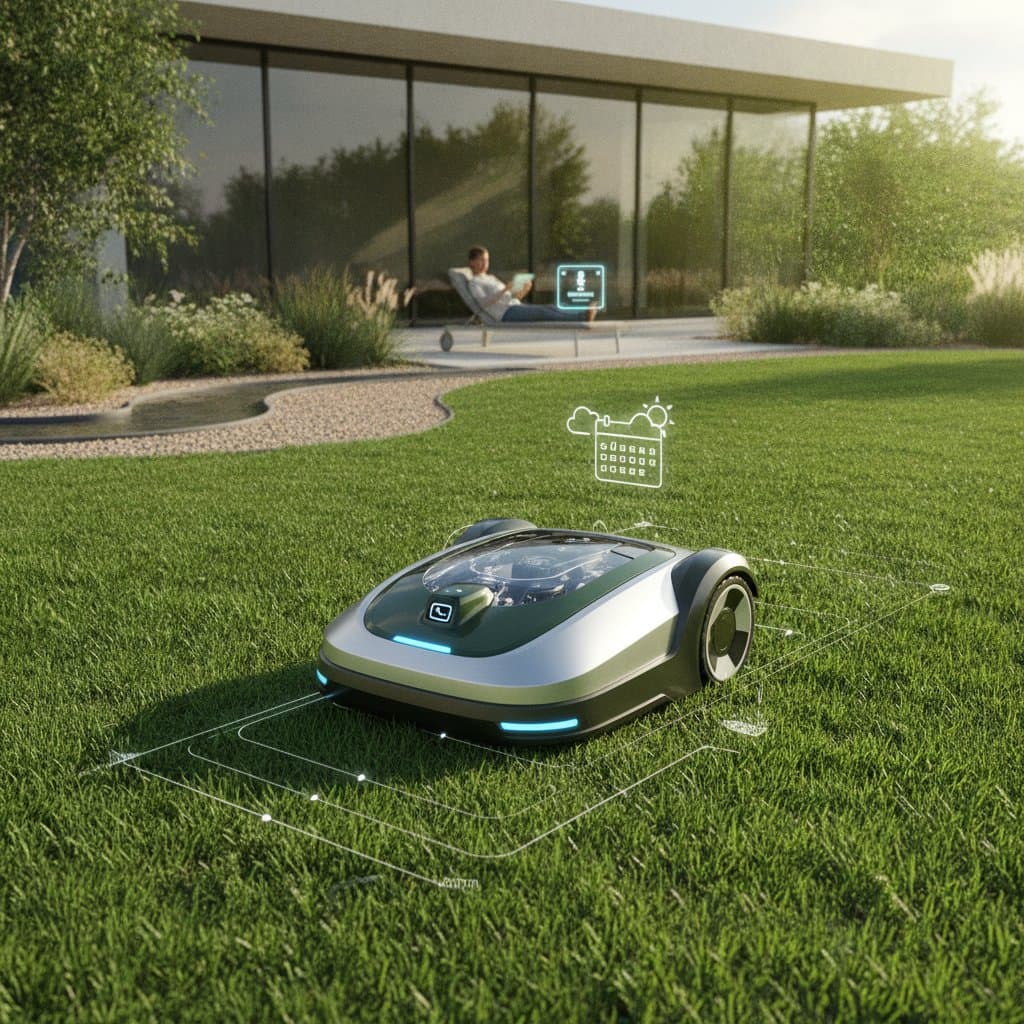
Why 2026 Robotic Mowers Transform Lawn Care
A well kept lawn creates a calm foundation for any outdoor space. It frames gardens, decks, and patios with natural texture. For many homeowners, however, the weekly mowing task reduces time available for relaxation. The newest robotic mowers address this issue through precision, efficiency, and quiet performance.
At a Glance
- Location: Suburban and urban properties
- Size: Small courtyards to half acre lawns
- Climate Zone: Adaptable across temperate, arid, or humid regions
- Project Goal: Reduce manual labor while delivering a consistent finish
Smarter Navigation for Complex Lawns
Modern robotic mowers handle irregular yards through satellite positioning, boundary sensors, and adaptive mapping. These systems learn the lawn shape and follow efficient routes.
Smarter navigation reduces missed patches and produces cleaner edges around beds or pathways. The mower follows a planned path instead of random movement. This approach saves energy and prevents soil compaction from repeated passes.
A curved lawn bordered by ornamental grasses once required hand trimming. Robotic models with edge detection sensors now maintain even lines without plant damage. Landscape designers note that such precision preserves design intent while cutting maintenance time.
Quiet Operation Supports Extended Outdoor Use
Electric motors in these mowers produce only a soft hum. Homeowners can therefore enjoy meals or reading on the patio without interruption.
Lower noise levels allow continuous use of multi purpose outdoor areas. Maintenance proceeds in the background while family activities continue. In a courtyard with raised planters, a compact model trims grass while guests converse nearby.
Adaptive Cutting Systems Promote Grass Health
Sensors detect grass density and adjust blade height or speed automatically. Lawns stay short without stress. Frequent light cuts encourage dense turf growth.
Finely chopped clippings decompose rapidly and return nutrients to the soil. This natural mulching lowers fertilizer requirements and improves water penetration. Homeowners with zoysia grass report fewer bare spots after adopting these systems.
Weather Responsive Scheduling Protects Turf
Built in sensors detect rain and direct the mower back to its base. Operations resume only after the grass dries. This function prevents ruts on clay soils and extends equipment life.
Homeowners set base schedules while the mower handles adjustments. The result is predictable upkeep without constant monitoring. A horticulture adviser observes that correct timing reduces both lawn stress and mechanical wear.
Energy Efficiency Supports Sustainable Design
Electric models use far less power than gas alternatives. Many pair with solar charged stations to create a closed maintenance loop. Operating costs drop and emissions decrease.
Designers integrate docking stations into garden layouts as functional elements. One minimalist yard uses the charging hub as a bench base. Contractors treat these stations as intentional landscape features rather than hidden utilities.
App Control Enables Remote Management
Smartphone applications allow schedule changes, battery checks, and zone selection from any location. Larger or divided yards become easier to maintain. Integration with irrigation systems prevents conflicts between watering and mowing cycles.
Digital oversight aligns mowing with other smart outdoor functions such as lighting. The lawn remains balanced without manual intervention.
Safety Features and Security Measures
Lift sensors, tilt detection, and automatic blade stops protect children and pets. GPS tracking deters theft and alerts owners to unauthorized movement. These systems operate reliably in shared community spaces.
Designers can specify robotic mowers for open landscapes with confidence. Equipment and design investments receive equal protection.
Reduced Labor Delivers Consistent Results
Automation removes weekly physical strain for homeowners of all ages. Slopes, edges, and tight spaces receive uniform attention without scheduling issues. Property managers use multiple units to maintain rental yards at the same standard.
Living with Smart Lawn Technology
Robotic mowers shift focus from routine chores to design and enjoyment. They support complex layouts and sustainable practices within smart home environments. Landscapes that maintain themselves represent the next standard in outdoor living.