
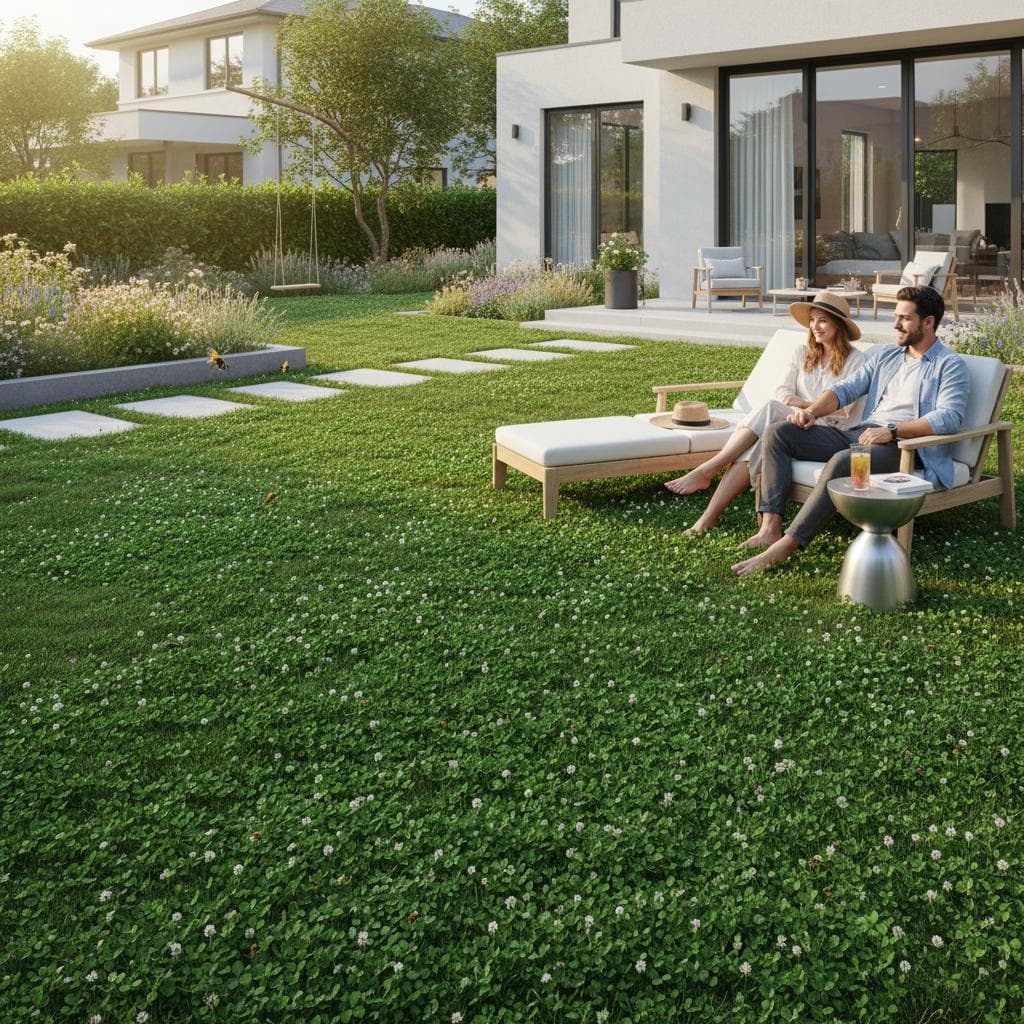
The Shift to Clover Lawns: Why 60% of Homeowners Made the Change in 2025
Homeowners have long prized lush green lawns, yet traditional grass requires substantial effort to maintain. In California and similar regions, more than 60% of property owners selected clover as a better option in 2025. This transition creates sustainable outdoor areas that fit modern living.
Clover lawns go beyond a passing fad. They tackle critical concerns like water shortages, increasing costs, and environmental effects. The shift arises from practical benefits and proven advantages, transforming yard care practices.
Challenges of Traditional Grass Lawns
Grass lawns bring to mind neat neighborhoods and leisurely afternoons. Maintenance, however, includes intensive watering, frequent cutting, and repeated chemical treatments. In places with water limits, these needs burden resources and finances.
These methods damage the surroundings via contaminated runoff and weakened soil health. Cutting the grass compacts the ground, limiting its ability to retain moisture. Even with hired help, owners encounter ongoing expenses and work.
Current weather patterns, including dry spells and intense heat, highlight grass shortcomings. Clover stands out as a tough replacement that performs well in such environments.
Key Reasons Clover Outshone Grass in 2025
Clover grew freely in the past before heavy fertilizer application branded it unwanted. Now, specialists recognize its contributions to soil quality and resource saving. The 2025 increase shows its combination of usefulness and attractiveness.
1. Superior Water Conservation
Clover needs far less water than common grasses. Its deep root system reaches underground water sources, keeping it lush in dry times. In California's changing climate, this quality drove many switches, reducing water costs by as much as 75%.
2. Built-In Soil Nourishment
As a member of the legume family, clover fixes nitrogen from the air and improves the soil without added help. This avoids artificial fertilizers that run off into rivers and hurt water life. Over time, the ground becomes more fertile, aiding plants throughout the yard.
3. Appealing Texture and Appearance
Clover offers a soft, cool feel perfect for walking without shoes or for recreation. It holds a bright green color through hot summers, in contrast to fading grass. Options like microclover create a dense, uniform layer that resembles a well-kept lawn with little effort.
4. Simplified Upkeep Routines
Once planted, clover demands rare care. Cut it three or four times each year to encourage thickness, and it crowds out weeds on its own. Property owners gain back time once spent on yard tasks, allowing more focus on relaxation.
5. Support for Pollinators
Clover flowers attract bees, butterflies, and other insects vital to crop pollination. This draws beneficial wildlife to built-up areas. Many people view the added activity as a positive indicator of balance in nature.
Selecting an Appropriate Clover Type
Various clover kinds match different yard demands and designs. Factor in foot traffic, how often blooms appear, and how it blends with current elements.
- White Clover (Trifolium repens): This short variety thrives in full sun and open areas. It spreads through runners, covering spaces quickly while staying green all year.
- Microclover: Developed with smaller leaves, it mixes well with leftover grass for a refined look. Less blooming reduces insect visits, making it suitable for busy family spaces.
- Red Clover (Trifolium pratense): Growing 12 to 18 inches high, it brings striking pink blooms to less formal spots. Plant it along edges or in low-use areas for decorative appeal.
In city settings, microclover leads in popularity for its neat habit and durability. Start with a test section to see how it adapts to your ground and sunlight.
Steps to Convert Your Grass Lawn to Clover
Switching takes some upfront work but provides long-term gains. Choose spring or fall for planting to take advantage of cooler weather.
- Evaluate Current Conditions: Check for thin areas or worn grass. Measure soil pH and target 6.0 to 7.0; add lime if the level is too low.
- Prepare the Ground: Cut the grass low, then clear dead layers with a rake or machine. Poke holes in hard soil to allow roots to grow easily.
- Apply Seeds Uniformly: Scatter seeds at a rate of 2 to 4 ounces for every 1,000 square feet, combined with a thin layer of soil for hold. Water lightly to position them.
- Maintain Moisture Initially: Water each day for the first two weeks to start growth. Reduce watering as roots strengthen, following rain patterns.
- Encourage Establishment: Keep off the area for a month. Cut to 3 inches high when plants reach 4 inches to promote spread.
Full coverage arrives in 6 to 12 months. Watch for insects, as clover handles most yard pests effectively.
Overcoming Typical Hesitations
Those considering the change often express reasonable concerns about clover's everyday use.
- Clothing Stains: Faint marks from clover sap wash away with regular soap, no worse than from grass.
- Pet Compatibility: Animals move over clover easily; it recovers from scratches or spots quicker than standard turf.
- Bee Interactions: Frequent cutting limits flowers, so insects appear only briefly. Nesting types present little risk.
- Boundary Control: Use borders or stone barriers to contain spread into garden beds. Clover stays in place with simple guides.
These approaches make clover fit smoothly into routines.
Environmental Impacts of Widespread Clover Adoption
Broad use of clover lawns eases city water pressure. Municipalities note drops of up to 50% in home watering after changes. Rivers stay cleaner with fewer chemicals entering them.
Clover-covered soil boosts microbe life that traps carbon and stops wear. The ground stays cooler, countering city heat buildup. Areas adopting this practice build stronger natural systems.
Integrating Clover into Daily Yard Life
A well-grown clover lawn ties the garden together. Combine it with water-wise bushes or rock elements for a unified dry-climate style. It handles casual activities, offering a resilient spot for kids.
The subtle scent and soft movement in wind create calm. Position it around seating areas or walks to link house and outdoors smoothly.
Steps to Achieve Lasting Yard Benefits with Clover
The 2025 move to clover highlights a desire for designs in tune with nature. Property owners want results without losing beauty. Test a small zone first to gain trust in its results.
Reach out to nearby agricultural experts for advice suited to your area. Proper installation ensures ongoing savings and enjoyment.