
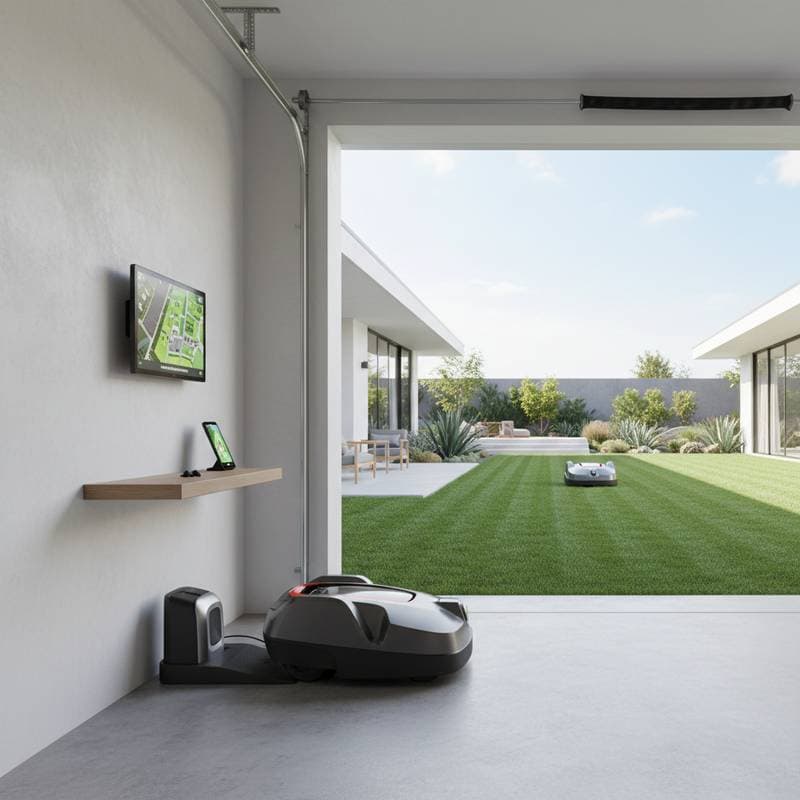
Why 60% of Homeowners Are Switching to Robotic Lawn Mowers
Weekends dominated by lawn mowing chores leave little room for relaxation. In California communities, many residents now opt for battery-powered robotic mowers that navigate yards independently. These devices offer more than convenience; they deliver uniform lawn care, reduced expenses, and better time management.
The Move to Automated Outdoor Maintenance
Modern homeowners seek automation for outdoor tasks similar to indoor conveniences like smart thermostats and adaptive irrigation. Approximately 60% of those prioritizing sustainability, accuracy, and productivity have adopted robotic mowers.
This shift began with innovative prototypes and has become a reliable choice. Initial users valued the innovation, while current owners appreciate dependable operation and performance analytics. Advanced models now include terrain mapping, obstacle avoidance, and precise cutting mechanisms.
Key Reasons for the Transition
Multiple factors drive this adoption, including efficiency gains, ecological advantages, and reliable outcomes that minimize intensive seasonal work.
1. Reclaiming time for leisure
Lawn maintenance often demands significant weekly hours. Robotic mowers operate multiple times per week unattended, keeping grass at a uniform height. This frees up time for gardening enjoyment rather than labor. Users report that their yards begin to support their lifestyle actively.
2. Promoting lawn vitality with gentle trimming
Conventional mowers cut excessive grass length in single sessions. Robotic units remove just millimeters each time, fostering robust roots and enabling natural mulching. Clippings enrich the soil, decreasing fertilizer needs and thatch accumulation. Lawns grow denser and withstand drought better as a result.
3. Minimizing noise pollution and emissions
Communities in California prioritize quiet environments and pure air. Gas-powered equipment generates loud sounds and exhaust, whereas robotic mowers function silently without pollutants. Schedule operations for off-peak hours to avoid disturbances. This choice enhances family health and neighborhood quality.
4. Cutting long-term expenses and upkeep
Upfront costs appear substantial, yet robotic mowers recoup value quickly. They need little maintenance, no gasoline, and simple part replacements. Blades cost little and change easily. Healthier turf also conserves water through improved moisture retention.
5. Seamless connection to smart ecosystems
Contemporary robotic mowers link to smartphone applications for scheduling, height adjustments, and activity monitoring. Compatibility with home automation systems aligns mowing with watering or forecasts. Tech-savvy owners gain practical oversight and fulfillment from this connectivity.
Navigating Practical Yard Obstacles
Doubts persist about performance on varied landscapes, dense growth, or irregular plots. Current technology addresses these effectively.
Adaptive pathfinding: Built-in sensors and digital maps guide mowers around trees, borders, and inclines, rerouting as needed. They manage gradients that manual units struggle with.
Durability in varying weather: Units resist light rain and humidity. Operations pause only during intense downpours.
Theft prevention measures: GPS location and access codes deter unauthorized removal. Displacement triggers app notifications.
Built-in safeguards: Proximity detectors halt blades upon contact or elevation, ensuring safety around children and animals.
Sustainability Benefits in Focus
Robotic mowers advance eco-conscious practices beyond ease of use. In water-conscious California, such efficiencies resonate strongly.
Battery operation avoids fossil fuels, lowering greenhouse gases. Silent performance preserves local serenity. Regular light cuts combined with mulching enhance soil quality, curbing chemical runoff into local waters.
Switched users simplify routines with reduced chemical handling and controlled growth. Sustainability integrates naturally into daily yard management.
Selecting an Appropriate Robotic Mower
Choose based on property specifics rather than solely on features.
-
Assess yard dimensions. Match the model's capacity to your space for complete coverage without strain.
-
Analyze ground conditions. Select units with strong grip and flexible navigation for hilly or uneven areas.
-
Examine setup methods. Perimeter wires remain common, but satellite options simplify installation. Hire professionals if needed, or follow detailed guides for DIY.
-
Inspect power endurance. Opt for extended battery life to minimize recharge interruptions. Units dock autonomously when low.
-
Verify service networks. Local availability of support and components ensures longevity.
Weighing Investment Against Enduring Benefits
Initial prices exceed those of gas mowers, but ongoing savings in fuel, repairs, and labor offset this. Time preserved and lawn improvements add intangible value.
Consistent upkeep boosts curb appeal, potentially increasing home worth. Automated care maintains pristine yards during demanding periods.
Addressing Doubts with Proven Outcomes
Concerns about incomplete coverage or border precision prove unfounded. Edge functions or occasional manual touches yield professional results.
Installation complexity fades after the first setup. Subsequent use requires minimal input, often described as straightforward.
Adaptation to regional grasses succeeds through frequent, precise cuts. Maintain sharpness and regularity for optimal performance.
Enhancing Your Outdoor Space Post-Adoption
With mowing automated, attention turns to broader landscaping elements like planting and hardscaping. Balanced yards emerge more readily.
Lifestyle upgrades include serene evenings, chore-free weekends, and perpetually neat grounds. For California residents, this fusion of innovation and ecology defines progressive home stewardship.