
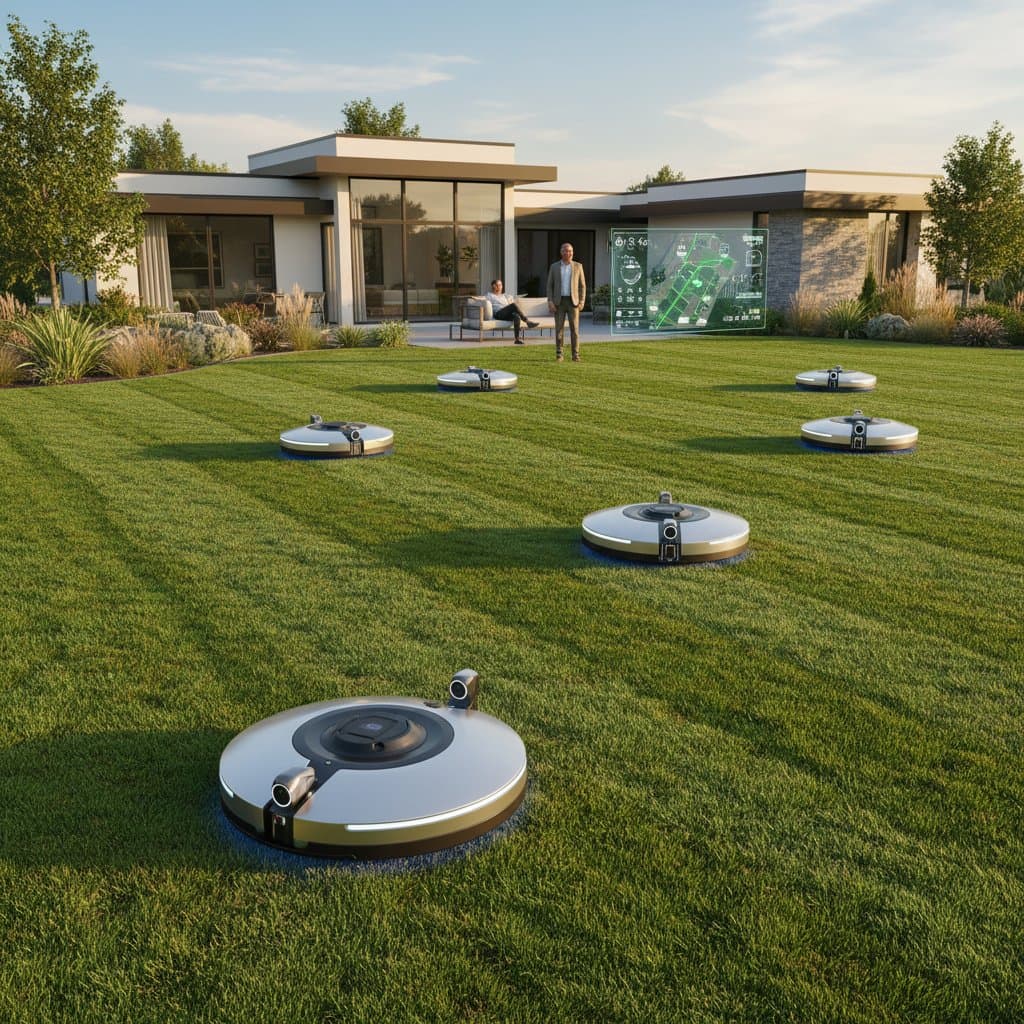
How AI Robotic Mowers Master Your Lawn Better Than Traditional Methods
A pristine lawn signals dedication to outdoor spaces, yet conventional mowing requires significant time, physical labor, and fuel consumption. The latest AI robotic mowers disrupt this routine. These efficient devices operate with minimal noise, function around the clock if needed, and develop precise knowledge of yard features. The outcome delivers uniform, professional-quality turf with far less intervention.
Key Overview
Applications: Homes and business properties
Suitable Areas: From compact yards to expansive fields
Environmental Fit: Versatile across diverse climates
Primary Benefits: Reliable upkeep through intelligent technology
1. Harness Intelligent Mapping for Efficient Coverage
AI robotic mowers employ advanced sensors and dynamic algorithms to record yard perimeters, inclines, and potential hazards. Modern units eliminate the need for embedded boundary wires or haphazard navigation. They generate detailed virtual blueprints that direct optimized paths for complete coverage.
A landscape technician observes: “Intelligent mapping minimizes inefficient travel, allowing the device to focus on cutting rather than searching.”
Such precision safeguards garden features, walkways, and recreational zones. Users avoid ongoing monitoring as the mower deftly avoids sensitive areas. Upon completion, it navigates back to its station, producing crisp borders and seamless shifts from grass to adjacent elements.
Visual callout: A sleek robot maneuvers smoothly amid garden stones, maintaining even trim lines along the route.
2. Benefit from Silent, Ongoing Maintenance
Electric-powered robotic mowers produce negligible sound compared to gasoline alternatives. They schedule operations for dawn hours or serene evenings without neighbor complaints. Regular, shallow cuts promote thicker grass growth that better withstands pests and dry spells.
A designer notes: “Ongoing light mowing enhances lawn vitality, as short clippings break down rapidly to nourish the ground organically.”
This method fosters a regenerative process. Turf remains consistently low, debris recycles into the soil, and blades encounter less resistance from overgrowth. Property owners enjoy reduced need for chemical treatments, lower pollution levels, and elimination of fixed mowing appointments.
Visual callout: A discreet mower traverses a tree-shaded area quietly, as occupants unwind in adjacent spaces.
3. Respond Seamlessly to Seasonal Variations
Advanced AI systems modify mowing intervals and heights according to grass development and atmospheric data. Devices halt during precipitation and restart once conditions improve. Certain models track hydration levels in the earth to fine-tune operational timing.
A consultant explains: “Integrated sensors assess turf status, determining optimal activity periods.”
This flexibility sustains lawn health across weather shifts. In arid phases, reduced cuts preserve moisture. During vigorous spring growth, heightened frequency ensures balanced aesthetics. The approach aligns operations with natural cycles, avoiding inflexible timetables that could harm the landscape.
Visual callout: The unit pauses beneath a protective dock while light rain falls on nearby surfaces.
4. Streamline Operations and Cut Costs
The primary gain lies in reclaimed time. After initial setup, AI robotic mowers function autonomously. They dock for recharging without prompts, perform self-cleaning routines on cutting edges, and notify users of any required checks via connected devices.
A manager states: “It eliminates uncertainty, providing steady outcomes free from daily supervision.”
Landscaping firms oversee fleets from one interface, enhancing productivity across sites. Residential users convert yard work into a passive task. Efficient power consumption and durable components further decrease ongoing expenses, making long-term ownership economical.
Visual callout: A mobile display reveals current position, power status, and navigation logs instantaneously.
5. Unlock Creative Landscape Configurations
Automated mowing liberates designers to emphasize aesthetics and diversity over upkeep demands. Intricate borders, blended surfaces, and slender grass paths, previously challenging, now integrate effortlessly due to the mower's navigational accuracy.
A designer comments: “Automation expands design freedom, accommodating slim grass edges or flowing contours without equipment access concerns.”
This evolution reshapes yard planning. Modest green areas stay impeccable with little input. Eco-conscious borders approach turf safely. Landscapes emerge as harmonious blends of style and utility, where innovation thrives.
Visual callout: Flowering plants and ground covers encircle a precisely edged, curved grass section.
Embracing Automated Lawn Management
AI robotic mowers integrate smoothly into everyday routines once deployed. They uphold a consistent pace that preserves yard freshness amid active use.
Both individuals and experts discover enhanced control through these tools. Yards evolve into vibrant, self-maintained features that demand no routine effort. As advancements boost reliability and accessibility, such devices will parallel essential fixtures like automated watering systems or pathway illuminations in prevalence.