
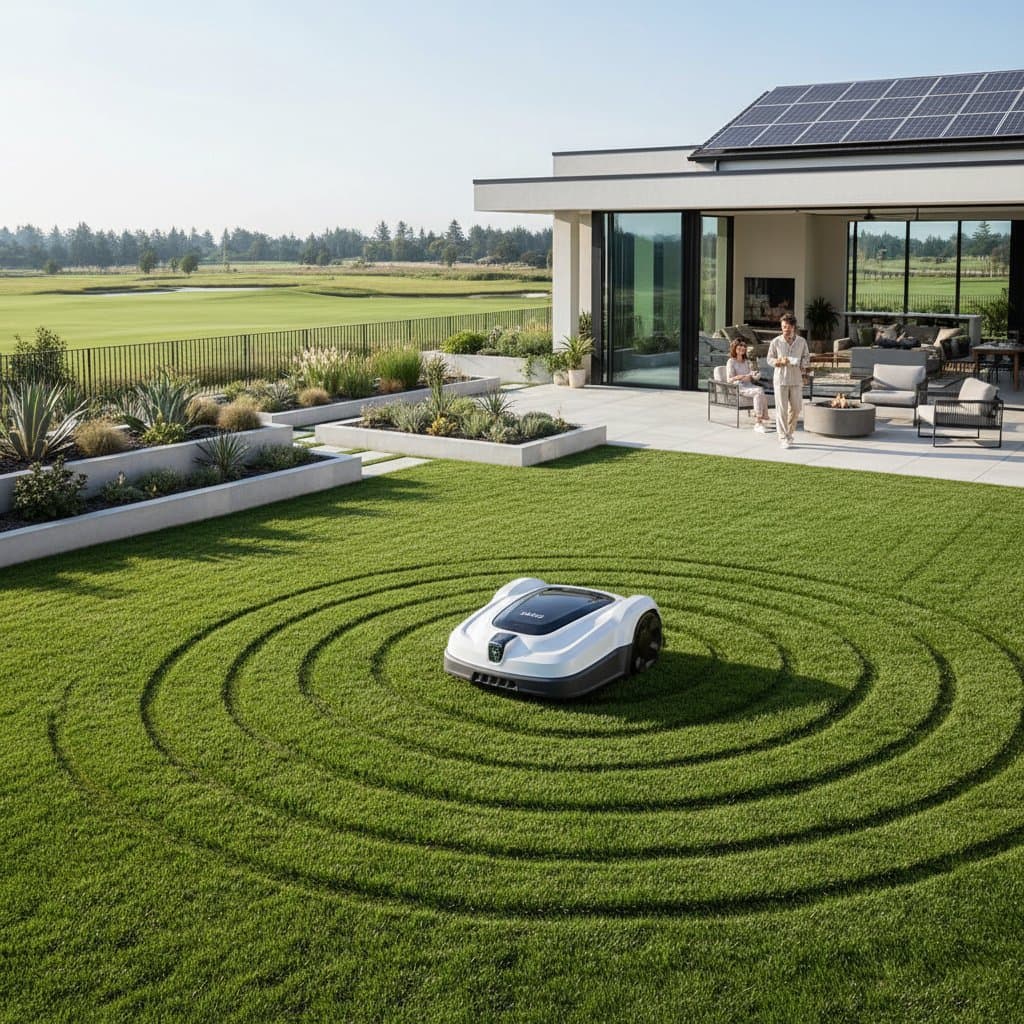
Why AI Robotic Mowers Are Dominating Lawns in 2026
Perfectly trimmed lawns once demanded early mornings and weekend effort. AI robotic mowers now handle the task quietly across suburban yards and large estates. These devices deliver consistent cuts, adapt to conditions, and reduce manual work. The change supports better lawn health while freeing time for other activities.
Homeowners and landscape professionals find that robotic mowers improve maintenance planning and resource use. They also influence garden layouts from the start.
The Shift Toward Smart, Automated Lawn Care
Modern homeowners seek efficiency paired with quality results. Robotic mowers combine artificial intelligence with navigation tools and weather awareness. Newer models map yards via satellite data and adjust patterns according to grass growth and moisture levels.
The machines support a wider trend in automated outdoor care. Like smart irrigation systems, they respond to actual lawn conditions. Frequent light cuts strengthen roots and limit thatch buildup.
Fit with Contemporary Lifestyles
Many property owners prefer outdoor spaces that require little upkeep. A robotic mower operates quietly during evening hours and runs on electricity rather than fuel. Busy schedules benefit from daily trimming without extra planning.
How AI Robotic Mowers Work
These units rely on several coordinated systems. The following points explain core functions.
-
Mapping and Boundary Recognition
GPS and vision sensors create digital maps of the yard. The mower identifies edges and obstacles without buried wires. -
Adaptive Cutting Patterns
Randomized routes avoid soil compaction. Small clippings decompose quickly and return nutrients to the grass. -
AI-Driven Decision-Making
The unit checks weather, growth rates, and battery status before starting. It pauses during rain and reduces activity in slower growth periods. -
Safety and Obstacle Detection
Sensors halt blades near pets or objects. Mobile alerts notify owners of unexpected activity. -
Energy Efficiency and Charging
The mower returns to its dock automatically. Solar-compatible stations further lower operating costs.
Comparing Robotic and Traditional Mowing
Robotic and conventional mowers differ in turf outcomes and daily experience.
Advantages of Robotic Mowing
- Consistent micro-cuts promote even growth and suppress weeds.
- Quiet operation permits use at any hour without neighbor disturbance.
- Electric power removes fuel handling and exhaust emissions.
- Fewer engine parts mean simpler upkeep focused on blade changes and cleaning.
- Mobile apps allow schedule adjustments and performance tracking.
Limitations to Consider
- Upfront costs exceed those of basic gas mowers, though fuel and labor savings accumulate over time.
- Steep slopes may require premium models with stronger traction.
- Cutting blades need replacement multiple times each season.
Site evaluation with a landscape professional helps match equipment to property features.
Integration with the Modern Garden
Landscape designs now account for mower paths and docking locations. Clear edging around beds and paths aids navigation. Charging stations should sit near power sources yet remain visually discreet.
Watering schedules must avoid wet grass during mowing cycles. Consistent clipping often reduces the need for heavy nitrogen fertilizers and supports healthier soil biology.
Reliability and Durability
Weatherproof construction and corrosion-resistant parts support long service life. Lithium-ion batteries maintain output across multiple seasons. Owners perform basic tasks such as underside cleaning and software updates through companion apps. Remote diagnostics from manufacturers catch issues early.
The Role of Professional Landscapers
Robotic mowers shift crew time from repetitive cutting toward detailed work like pruning and soil care. Large properties deploy multiple units across zones for uniform results with lower noise. Professionals then focus on design refinements that enhance property character.
Choosing the Right Model
Selection depends on several practical factors.
- Match mower capacity to lawn size and layout complexity.
- Confirm slope ratings for properties with inclines.
- Verify compatibility with existing smart home systems.
- Prioritize GPS tracking and geofencing for security.
- Confirm local availability of parts and service support.
Daily Lawn Management Made Simple
Owners adjust schedules through apps to align with growth patterns. Many add complementary tools such as robotic sweepers for full automation. The result is reliable presentation with minimal ongoing oversight.