
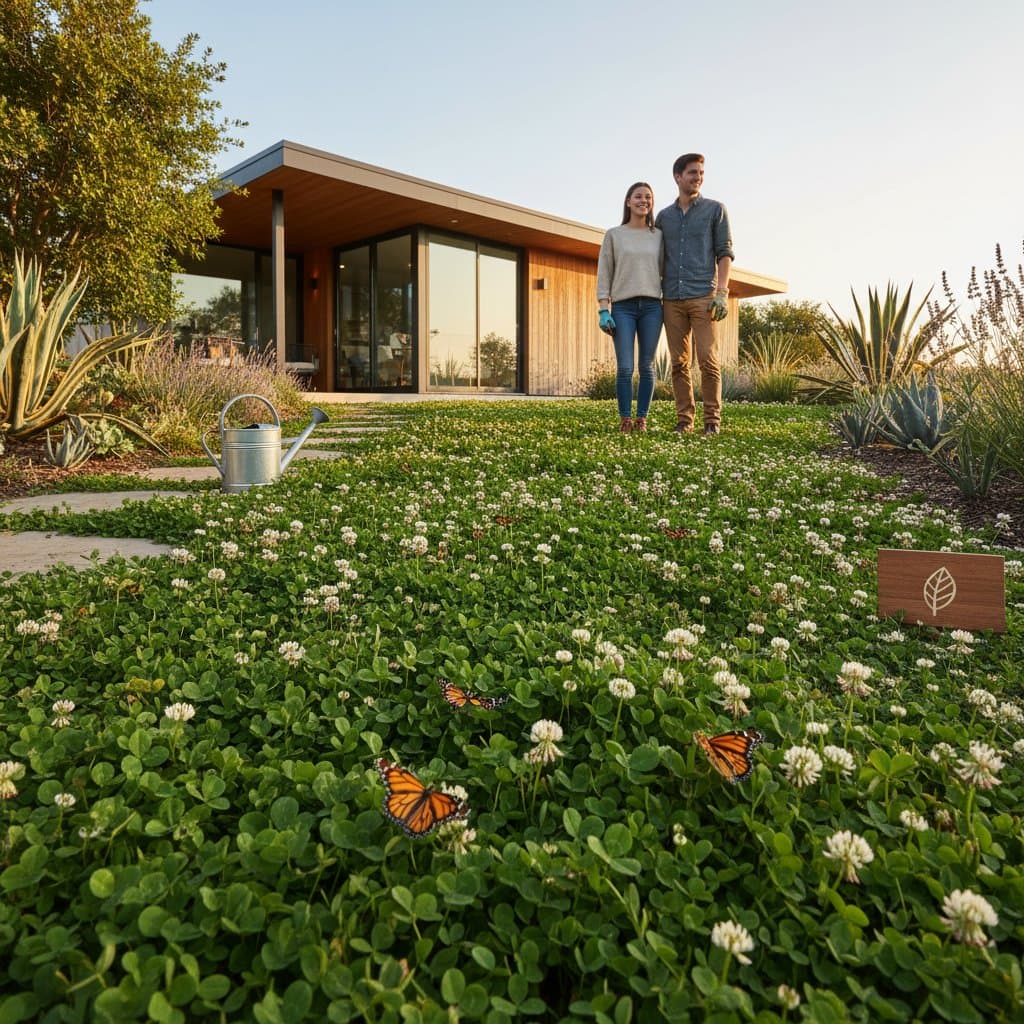
Why Clover Lawns Outperform Traditional Grass in California
California gardeners increasingly question the ideal appearance of a lawn. The familiar expanse of green grass yields to a more resilient option that demands less water, fewer chemicals, and minimal upkeep. Clover lawns emerge as a sustainable solution, aligning with the need for attractive, affordable landscapes in a warming climate.
Key Attractions of Clover Lawns
Clover lawns gain favor for advantages that extend past their gentle texture and small white flowers. These plants exhibit natural drought tolerance, retain green color during extended dry periods, and eliminate the necessity for fertilizers. In a region where water conservation shapes daily practices, such attributes present compelling reasons for adoption.
Varieties like microclover or Dutch white clover excel in challenging environments where turf grasses falter. Their extensive root systems access deeper soil moisture, sustaining vitality with limited irrigation. The compact foliage forms a thick mat that suppresses weeds and offers a soft surface for foot traffic, allowing families extended time outdoors without concerns over thinning areas or discoloration.
Superior Water Use and Drought Tolerance
Water scarcity defines landscaping choices in California. Conventional grass types require thousands of gallons annually, escalating expenses and straining resources. Clover lawns consume far less, with roots penetrating deep to extract moisture from subsoil layers and preserve hue amid arid conditions.
In established coastal or temperate inland settings, clover often relies solely on natural rainfall. Hotter interior zones benefit from infrequent additional watering to sustain vigor, avoiding the routine schedules typical for grass. These efficiencies lower water bills and promote practices attuned to the state's evolving environmental conditions.
Self-Sufficient Nutrient Cycle
Clover possesses a unique ability to fix nitrogen from the atmosphere, transforming it into soil nutrients that nourish the plant and adjacent vegetation. In contrast, grass necessitates frequent applications of fertilizers to maintain density and color. Opting for clover allows homeowners to forgo or minimize synthetic inputs entirely.
This process enhances soil fertility progressively. The added nitrogen aids companion plants, including decorative blooms and edible orchards. Professionals frequently incorporate clover as ground cover in planting beds to leverage these effects, fostering robust ecosystems, curbing fertilizer leaching into water sources, and simplifying care routines.
Natural Defenses Against Weeds and Pests
Weed removal and herbicide use consume valuable weekend hours for many gardeners. Clover shades the ground effectively, limiting space for invasive species to establish. Its thick growth serves as a barrier, thwarting prevalent lawn intruders.
The plant draws in helpful pollinators like bees and control agents such as parasitic wasps, while repelling common pests. This equilibrium reduces outbreak risks and dependence on pesticides. For households mindful of insects and play areas, regular mowing prior to full bloom or selection of low-flowering microclover varieties curbs bee activity without diminishing core advantages.
Comfortable Feel and Enduring Vibrancy
Clover provides a distinct tactile experience. Fine leaves and level growth yield a plush, resilient pad suitable for strolling, gatherings, or recreation. Grass often becomes coarse and arid in low-moisture periods, whereas clover retains its suppleness and shade.
The foliage holds a steady emerald tone across seasons, despite temperature shifts. When blended with existing turf, clover ensures uniform coverage and patches sparse spots. Landscape designers favor this hybrid method to harmonize endurance with visual appeal in high-use areas.
Reduced Upkeep and Financial Advantages
Homeowners often discover substantial maintenance reductions upon evaluation. Clover grows at a measured pace and remains compact, requiring only periodic mowing to stay tidy. It recovers swiftly from wear, eliminating needs for patching or resowing.
Absence of intensive irrigation, feeding, or weed management slashes ongoing costs. Accumulating savings over years typically recoup setup expenses. The outcome delivers a verdant, inviting yard that preserves resources without excessive demands on schedule or budget.
Alignment with California's Varied Conditions
Clover adapts seamlessly to the state's diverse weather patterns. It flourishes in direct sunlight yet endures light shade, suiting diverse locations. From seaside paths to valley expanses, it accommodates local earth compositions and thermal variations.
The plant aids sites prone to waterlogging or dense compaction, where grass struggles. Clover roots aerate the ground, enhance permeability, and prevent soil loss. These traits prove essential for inclined terrains, integrated gardens, and borders facing alternating moisture levels.
Broader Ecological and Practical Gains
Clover lawns extend benefits to the surrounding habitat. They bolster pollinator populations, diversify underground life, and limit pollutant flow to streams. For sustainability enthusiasts, this integration proves invaluable.
Such lawns complement California's emphasis on al fresco pursuits. They furnish inviting zones for hospitality, relaxation, and cultivation, free from relentless upkeep pressures. Pairing a modest clover patch with indigenous flora or stone walkways yields spaces that blend form, utility, and ease.
Steps to Create a Clover Lawn
Establishing a clover lawn involves targeted preparation for optimal results. Follow this sequence:
- Evaluate the location. Clover favors permeable soil and balanced light exposure. Conduct a pH test and amend to neutral levels if required.
- Eliminate current vegetation. Remove grasses and weeds to minimize rivalry.
- Prepare the surface. Gently scarify or cultivate the upper soil layer to promote seed adhesion.
- Sow uniformly. Disperse seeds manually or via equipment, blending with fine material like sand for consistency.
- Irrigate steadily. Maintain dampness through sprouting, then taper as growth solidifies.
- Trim as needed. After rooting, cut sparingly to encourage even stature and limit excessive blooms.
Most areas achieve partial cover in weeks, with complete density by season's end.
Integrating Clover into Daily Yard Care
A clover lawn shifts perspectives on landscape management. It encourages a measured approach rooted in nature. Homeowners move from pursuing flawless uniformity through intensive interventions to nurturing a harmonious setting.
The yard evolves into an interconnected element of the property. For those eyeing improvements, clover presents a pragmatic upgrade. This option delivers enduring greenery, ecological support, and tranquility, harmonizing with California's conservation ethos and relaxed outdoor ethos.