
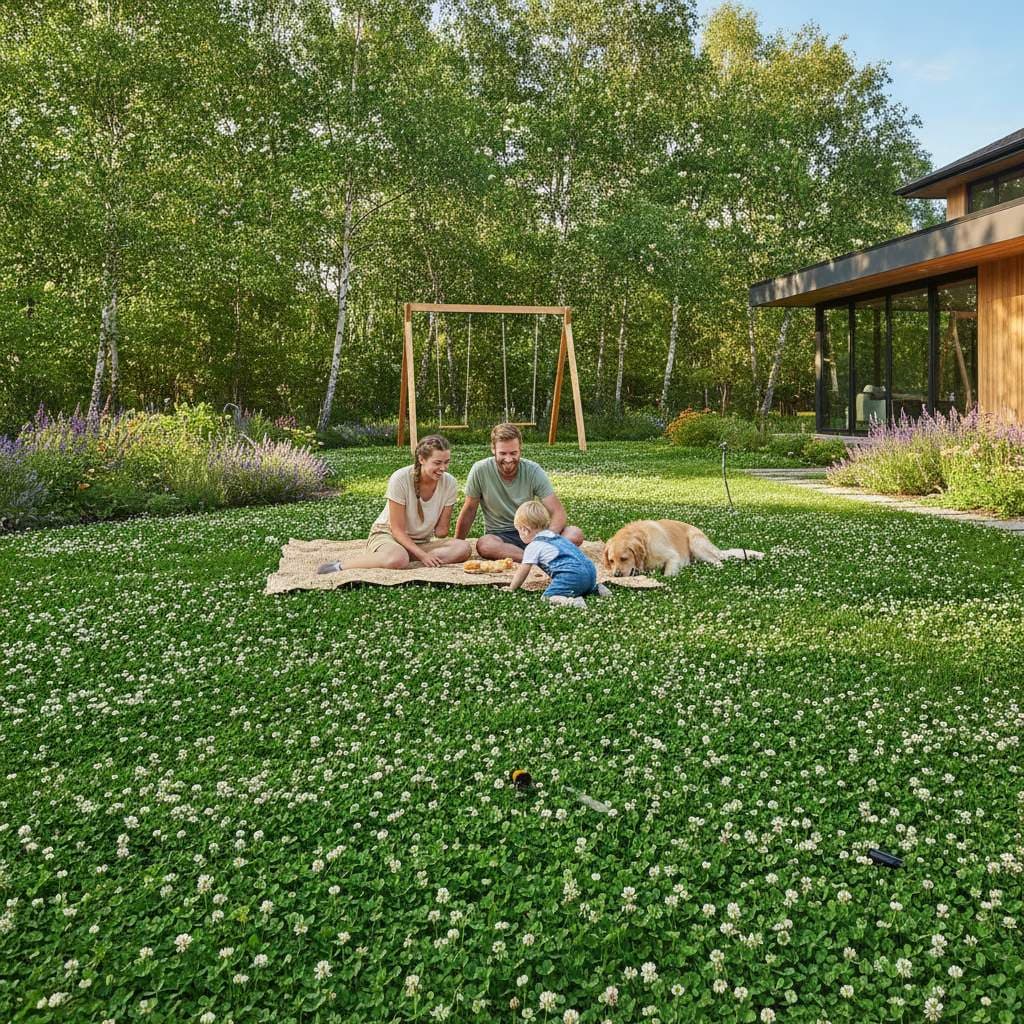
Why Clover Lawns Are Replacing Traditional Grass
When Sarah and David moved into their suburban home, they imagined a lush green yard that stayed vibrant without constant watering or chemical fertilizers. After a few seasons of battling brown patches and rising water bills, they began searching for an alternative. The answer came in an unexpected form: clover.
Their new clover lawn now stays soft underfoot, resists drought, and hums with pollinators. It also transformed their outdoor routine, replacing endless mowing and feeding with a few light trims each summer. Their experience reflects a growing shift. Homeowners, designers, and landscapers are rethinking what a lawn should be.
Clover, once dismissed as a weed, is now a smart, sustainable groundcover that fits modern life.
Shifting Priorities in Modern Landscapes
Traditional lawns once symbolized order and pride, yet they demand heavy upkeep. Watering, fertilizing, and frequent mowing create expense and environmental strain. Many homeowners now want landscapes that look natural, support wildlife, and require less input.
Clover lawns fit this mindset. They stay green with minimal care, tolerate foot traffic, and enrich the soil by fixing nitrogen naturally. For families balancing busy lives, that combination is appealing.
People still want a soft, green surface, but they do not want the constant work, said landscape designer Maria Jensen of Greenline Garden Studio. Clover checks all the boxes for beauty, comfort, and sustainability.
Why Clover Outperforms Grass
Clover advantages are both ecological and practical. It thrives in many soil types, improves fertility, and supports pollinators. The following points explain the key reasons homeowners are making the switch.
Natural Fertility
Clover belongs to the legume family, which means it draws nitrogen from the air and stores it in the soil. This natural enrichment eliminates the need for synthetic fertilizers. Nearby plants also benefit from this nutrient boost, making clover an excellent companion for ornamental beds or vegetable gardens.
Drought Resistance
Deep roots allow clover to access moisture beyond the reach of grass. It stays vibrant through dry months and quickly recovers after rain. This resilience reduces irrigation frequency, a major benefit in regions facing water restrictions.
Low Maintenance
Clover grows slowly and evenly, requiring far less mowing. A microclover blend maintains a compact height and dense coverage. It also suppresses weeds naturally by shading out competing species.
Pet-Friendly Surface
Unlike grass, clover resists damage from pet urine. Its self-healing growth pattern fills in small bare spots quickly, keeping the yard uniform. Families with dogs appreciate the consistent green surface and soft feel underfoot.
Pollinator Support
Clusters of tiny white blooms attract bees and butterflies, encouraging biodiversity. Homeowners can choose to mow before flowering if they prefer a uniform look, or allow patches to bloom for ecological value.
Installation and Early Care
Transitioning from grass to clover can follow two paths: overseeding or full replacement. In this project, the old turf was removed, and the soil was lightly tilled to create a smooth base. A seed spreader ensured even distribution, followed by gentle watering to encourage germination.
During the first month, consistent moisture was essential. After establishment, watering was reduced dramatically. The clover filled in quickly, forming an even mat within one season. Occasional trimming keeps it tidy, while fallen leaves are left in place to decompose naturally, enriching the soil.
Key materials used included a microclover and white clover blend, a compost and sand mixture for drainage, recycled steel strips for clean transitions, and a drip line system connected to a rain barrel.
Aesthetic Versatility
Clover color and texture make it adaptable to different design styles. In this yard, the bright green surface contrasts beautifully with the muted tones of stone pathways and cedar elements. It complements both modern and cottage-style gardens.
Some homeowners prefer to keep clover trimmed short for a manicured look, while others let it grow slightly taller for a meadow-like effect. The flexibility allows for creativity without sacrificing usability.
A small fire pit area at the back of the garden demonstrates this balance. The clover lawn flows right up to the gravel ring, creating a seamless transition that feels natural yet intentional. It feels alive, not static, said David. We spend more time outside now because it is comfortable and low stress.
Environmental Benefits on a Broader Scale
The shift toward clover lawns carries environmental ripple effects. Reduced fertilizer use means fewer chemicals washing into local waterways. Lower mowing frequency cuts fuel consumption and noise pollution. Clover ability to fix nitrogen helps restore soil health, which supports surrounding plant life.
Urban planners and landscape professionals are also recognizing clover potential in public spaces. Parks and community gardens can maintain green areas with less maintenance cost. The visual softness of clover lawns also contributes to a calmer, more inviting atmosphere in dense neighborhoods.
Addressing Common Misconceptions
Some homeowners hesitate to try clover because of outdated assumptions. A few of the most frequent concerns are easily resolved with proper understanding.
- Bees will make it unsafe for children. Clover attracts pollinators, but mowing before peak bloom reduces bee activity in play areas.
- It will look patchy. Microclover varieties grow uniformly when seeded correctly and maintained with occasional trimming.
- It dies in winter. Clover naturally goes dormant during cold months but returns lush and green with warmer weather.
- It cannot handle foot traffic. While constant heavy wear can cause thinning, clover combined with fescue or stepping stones provides excellent durability.
Education is changing perceptions. As homeowners see thriving examples in their neighborhoods, confidence in this alternative grows.
Cost and Long-Term Value
Clover lawns offer significant savings over time. Initial seeding costs are comparable to grass, yet ongoing expenses drop sharply. With no fertilizers, minimal watering, and infrequent mowing, maintenance budgets shrink. The soil also improves each season, reducing the need for future amendments.
Designers emphasize that these savings do not come at the expense of appearance. A well-managed clover lawn stays lush, even, and inviting. It delivers both beauty and practicality, which is why landscape professionals now recommend it as a mainstream option.
Practical Steps for Homeowners
Months after completion, Sarah and David outdoor space feels settled and easy to care for. Mornings start with dew on the clover leaves, and evenings often end around the fire pit surrounded by soft green groundcover. The lawn has become a living part of their daily rhythm rather than a chore.
For anyone considering the switch, the lesson is clear. A clover lawn provides the visual comfort of grass with far fewer demands. It supports pollinators, nourishes the soil, and adapts gracefully to changing weather. As homeowners look for landscapes that give back more than they take, clover stands out as a practical, enduring choice.