
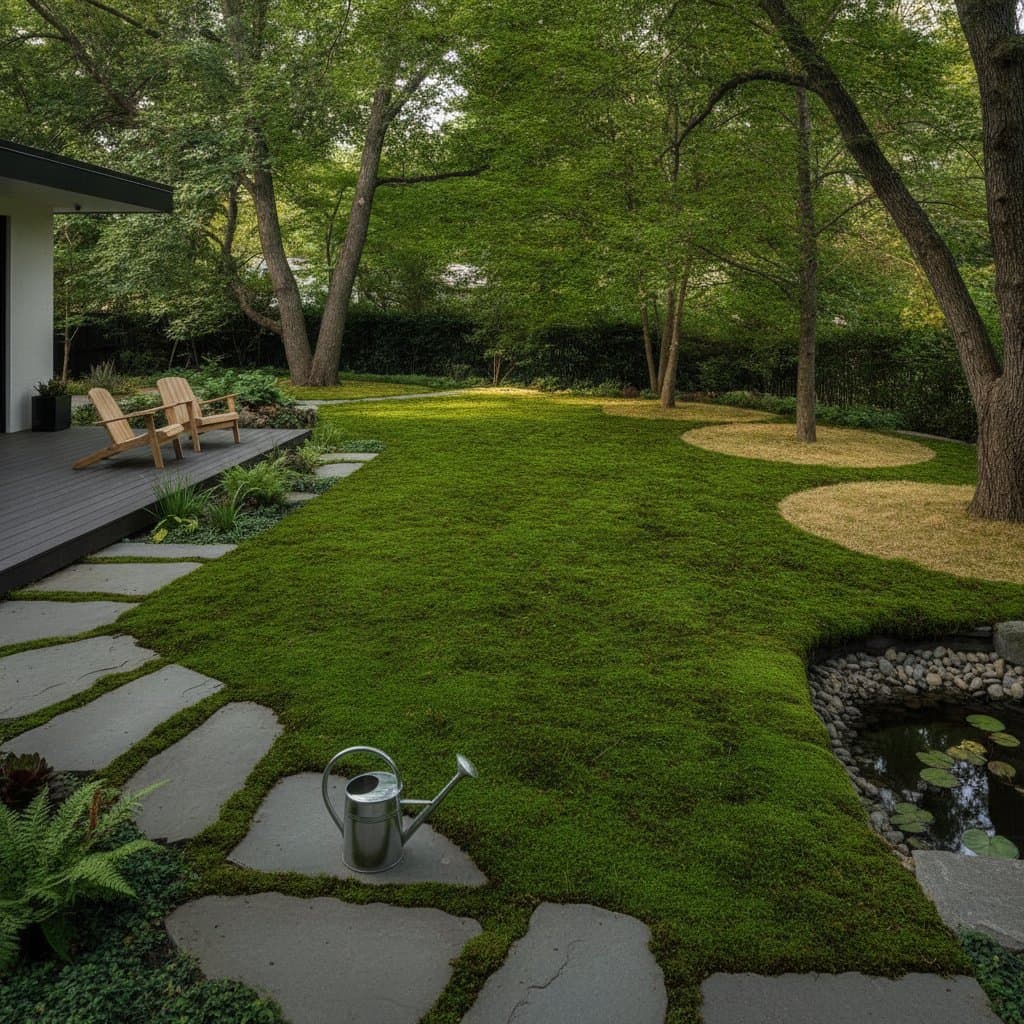
Why Moss Lawns Thrive Where Traditional Grass Fails
Homeowners are rethinking what a lawn should look like. Across California and beyond, a quiet shift is happening as people trade thirsty turf for soft, living carpets of moss. The appeal is obvious. Moss lawns stay green without mowing, thrive in shade, and sip water compared to traditional grass.
The Allure of a Moss Lawn
A moss lawn feels like stepping into a forest glade. The texture is velvety underfoot, and the color remains consistently lush through dry seasons when grass often fades. Moss does not rely on roots or seeds but absorbs nutrients and moisture directly through its leaves. This means it can prosper where most grasses fail, such as under trees, along north-facing slopes, or in compacted soil.
In regions with mild winters and coastal humidity, like much of California, moss finds a natural home. It softens hardscapes, cools surfaces, and creates a calming visual continuity that suits both modern and cottage-style gardens.
Why People Are Choosing Moss Over Grass
The rise of moss lawns matches several modern landscape priorities. It saves time, conserves water, and supports local ecology. Here are some of the main reasons people are making the switch:
-
Low Maintenance
Moss requires no mowing, fertilizing, or edging. Once established, it quietly maintains itself. Occasional weeding and gentle rinsing during dry spells are usually enough to keep it looking pristine. -
Water Efficiency
Unlike turfgrass, which can demand heavy irrigation, moss thrives on ambient moisture and light misting. In shaded yards or coastal microclimates, it often survives on rainfall alone. -
Year-Round Greenery
Moss holds its color in nearly every season. It does not brown out during droughts or frost, providing a consistent backdrop for surrounding plants. -
Soil Stability and Carbon Benefits
Moss helps reduce soil erosion, especially on slopes. It also contributes to carbon absorption, a small but positive step toward a more climate-conscious landscape. -
Aesthetic Harmony
Its soft texture and muted tones complement stone, wood, and water features, creating a balanced, natural feel in outdoor spaces.
How to Establish a Moss Lawn
Switching to moss is not difficult, but it does require patience and the right conditions. Planning and preparation make all the difference.
-
Assess the Site
Moss prefers shade or dappled light and slightly acidic soil. Test the pH, aiming for a level around 5.5. Avoid areas that bake in full sun unless you select sun-tolerant species like Bryum caespiticium. -
Prepare the Surface
Remove grass, weeds, and debris. Rake the soil smooth, then lightly compact it. Moss needs firm contact with the ground to establish. -
Choose the Right Moss Type
Sheet moss, cushion moss, and fern moss are common choices. Each has a distinct texture and growth habit. A mix of species can create depth and resilience. -
Install and Water
Press moss fragments or sheets firmly onto moist soil. Mist daily for the first few weeks until you notice steady growth. Once rooted, reduce watering frequency. -
Control Foot Traffic
Moss can tolerate light walking, but consistent wear may leave patches. Use stepping stones or pathways to protect delicate areas.
Common Challenges and Smart Solutions
Some homeowners worry that moss will dry out or invite pests. In reality, moss is remarkably self-regulating. If it turns brown during heat, it usually revives once moisture returns. To discourage weeds, maintain even coverage and avoid nutrient-rich fertilizers that favor grass growth. For larger spaces, professional installers can help ensure even establishment and select species suited to your microclimate.
Living with a Moss Landscape
A moss lawn changes the rhythm of garden care. Instead of mowing, you find yourself misting, sweeping, and appreciating subtle variations in texture and color. It encourages mindfulness and a slower pace, something many Californians find refreshing after years of battling turf maintenance. Over time, moss integrates seamlessly with native plantings, boulders, and shaded patios, creating a cohesive, tranquil environment.
Integrating Moss Into Daily Garden Care
The rising popularity of moss lawns reflects a deeper shift toward sustainable, low-input landscapes. They conserve resources, support biodiversity, and invite a different kind of beauty that values patience, texture, and quiet resilience. For homeowners ready to trade noise for stillness and routine chores for lasting calm, a moss lawn offers a living reminder that less can truly be more.