
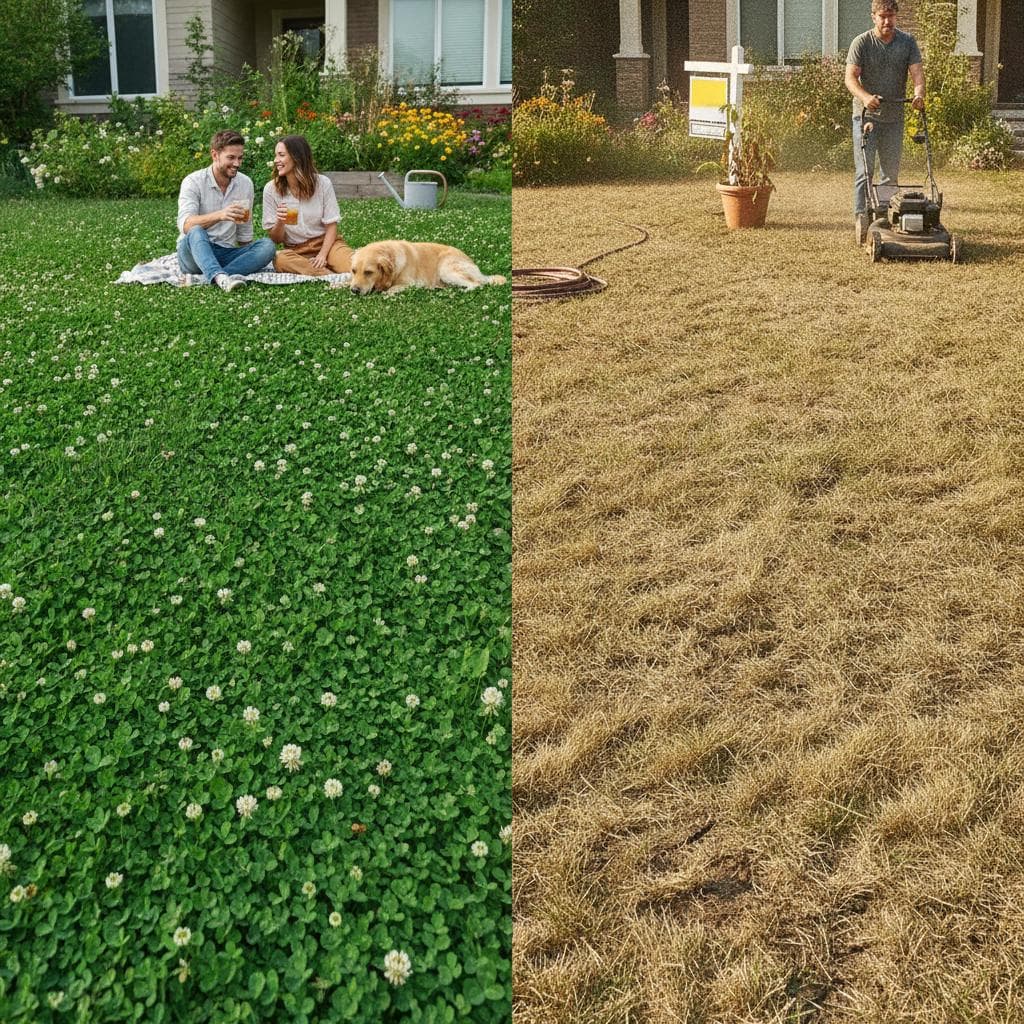
Why Homeowners Are Replacing Grass with Clover Lawns
Lush green lawns have long symbolized home pride. Many California homeowners now rethink what that green should look like. Traditional turf grass once set the landscaping standard. It now conflicts with values of sustainability, water efficiency, and low maintenance living. The shift toward clover lawns stands out in residential landscapes, especially in neighborhoods facing drought and rising costs.
Clover provides a soft, durable, and eco-friendly alternative. It looks attractive while requiring far less from homeowners and the environment. This choice represents a practical response to current conditions. Learning the reasons for the switch shows how one plant addresses major landscape issues.
The Case Against Traditional Grass
Traditional lawns deliver a polished appearance at a high price. Several drawbacks explain why grass loses favor.
-
High Water Use
Standard turf needs frequent irrigation in dry regions. Systems often run multiple times weekly to maintain color. This demand stresses household budgets and local supplies. -
Frequent Maintenance
Mowing, edging, fertilizing, and aerating require ongoing time and resources. Many homeowners view these tasks as repetitive chores. -
Chemical Dependency
Lush grass often depends on synthetic fertilizers and weed killers. These products can harm soil health and nearby ecosystems. Runoff may reach storm drains and affect groundwater. -
Shallow Ecological Value
Pure grass lawns supply limited support for pollinators and beneficial insects. They function as monocultures without the diversity that strengthens garden ecosystems.
These factors make traditional lawns seem like an outdated approach.
Why Clover Lawns Are Gaining Ground
Clover lawns address common frustrations with turf grass. Benefits span environmental, practical, and visual areas.
Natural Fertility and Soil Health
Clover belongs to the legume family. It captures nitrogen from the air and stores it in roots. This process enriches soil and reduces the need for chemical fertilizers. Soil under clover becomes more balanced and supports nearby plants.
Drought Tolerance and Water Savings
Established clover needs far less water than grass. Deep roots access moisture efficiently and keep plants green in dry spells. Clover remains resilient in areas with water restrictions.
Low Maintenance Lifestyle
Clover grows slower than grass. Mowing occurs only occasionally for a tidy appearance. Many owners allow natural growth for a meadow effect. The plant crowds out weeds and eliminates the need for chemical herbicides.
Year-Round Appeal
Clover stays green longer into dry seasons. It preserves curb appeal when grass fades. Some varieties produce white or pink flowers that draw bees and butterflies.
Durability and Comfort
Clover feels cushiony underfoot and handles moderate traffic. Families with children or pets find it suitable for play. Damaged areas recover quickly as the plant spreads to fill gaps.
Choosing the Right Type of Clover
Varieties differ in traits. Selection depends on goals, soil, and climate.
-
White Dutch Clover
This option stays low, spreads evenly, and tolerates foot traffic. Small white flowers add charm and mow cleanly. -
Microclover
The smaller leaves create a uniform surface. It blends with fine fescue and produces fewer blooms. -
Strawberry Clover
This type tolerates salt and heavy soils. It suits coastal or compacted sites and shows pink blossoms.
All varieties share drought resistance, nitrogen enrichment, and low input needs.
How to Transition from Grass to Clover
Preparation leads to strong results. Follow these steps for most yards.
Evaluate Existing Conditions
Assess soil type, sunlight, and drainage. Clover prefers well-draining soil and full to partial sun. Improve heavy clay with compost before seeding.
Remove or Thin Existing Grass
Options include full removal or overseeding. Use a shovel or sheet mulching for complete replacement. For overseeding, mow short and rake to expose soil.
Seed Evenly and Gently Water
Broadcast seed by hand or spreader. Rake lightly to cover with thin soil. Keep the surface moist until germination occurs. Avoid deep burial of small seeds.
Care During Establishment
Maintain even moisture in the first months. Reduce watering once roots establish. Allow plants to reach several inches before light trimming.
Long-Term Maintenance
Mow occasionally to promote density. Skip chemical fertilizers and herbicides. Reseed thin patches as needed.
Common Questions and Concerns
Homeowners often raise points about bees, comfort, and appearance.
-
Bee Activity
Flowers attract pollinators. Mow before peak bloom or select microclover to limit visits near play areas. -
Texture and Feel
Leaves remain soft and cool. Many people prefer the surface over grass during heat. -
Appearance
Clover shows a natural yet intentional look. Even green tones suit modern and cottage styles. -
Longevity
As a perennial, clover renews yearly and thickens over time.
Environmental and Lifestyle Benefits
-
Reduced Carbon Footprint
Less mowing lowers fuel use and emissions. Fewer chemicals decrease production impacts. -
Improved Soil Structure
Roots loosen soil and increase aeration. Nearby plants gain better access to moisture. -
Pollinator Support
Clover patches supply food for bees and insects. Lawns become small habitats in urban settings. -
Cost Efficiency
Expenses for water, fertilizer, and upkeep decline. Savings often cover initial seed and preparation costs.
Practical Steps After Establishment
Established clover invites simpler outdoor routines. Mowers and sprinklers see less use. Weekends shift away from routine chores. The change often improves how owners experience their yards. Clover fits regions that value sustainable practices and outdoor comfort. It combines resilience with visual appeal. Partial or full replacement both deliver clear daily benefits.