
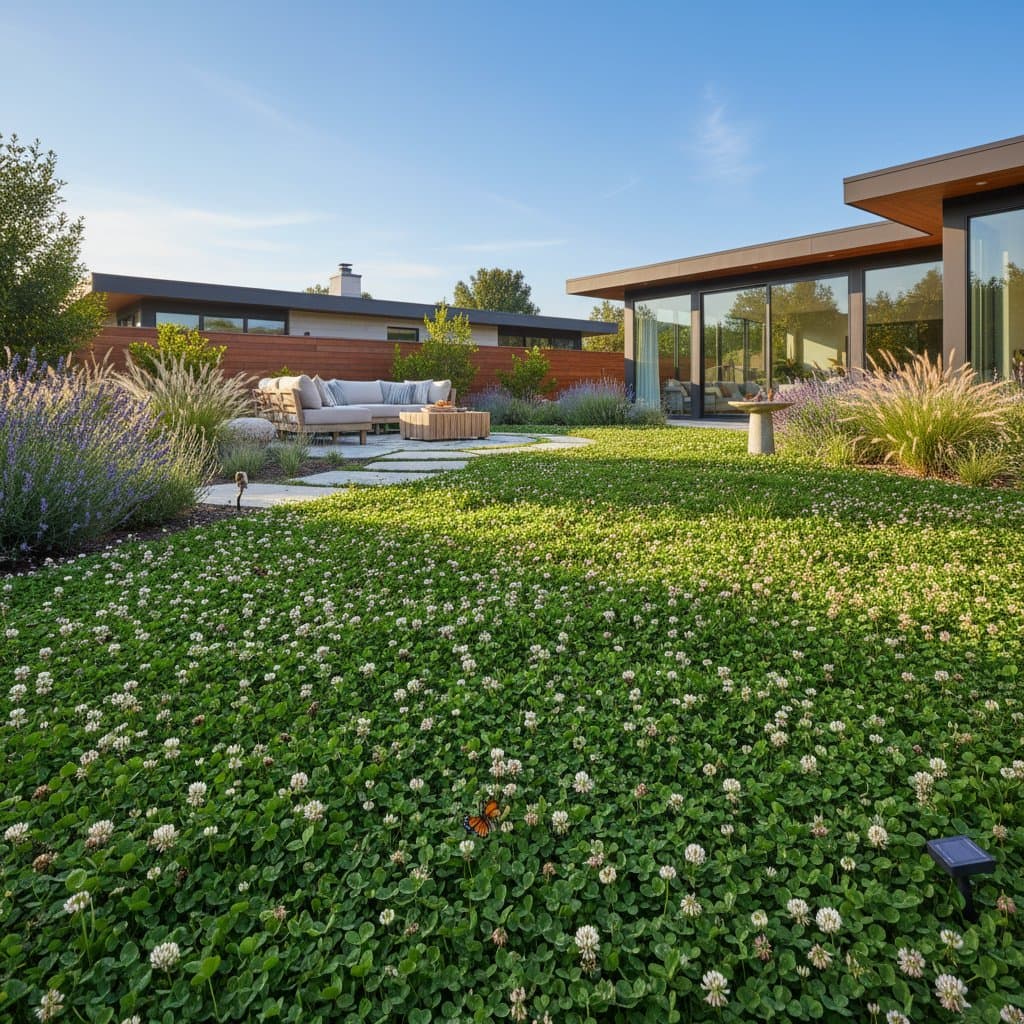
Why Clover Lawns Are Gaining Traction in Sustainable Gardening
A vibrant green lawn often signifies suburban ideal, yet for numerous California homeowners, conventional grass poses challenges amid escalating water expenses, persistent upkeep demands, and growing ecological awareness. These factors prompt a reevaluation of lawn possibilities. Clover lawns emerge as a compelling substitute, blending visual allure, functionality, and durability. They align seamlessly with California's emphasis on al fresco lifestyles and environmentally conscious landscaping.
Clover lawns transcend fleeting fads. They embody a deliberate move toward equilibrium, diminished labor, and planetary stewardship. For those refreshing a compact patio or crafting an extensive yard scheme, grasping clover's mechanics and merits enables the development of an organic, streamlined, and lasting haven.
Reasons Gardeners Choose Clover Over Grass
The transition to clover lawns extends beyond aesthetics. It mirrors a collective aspiration for yards that nurture human well-being alongside ecological health. Sole reliance on grass falters in arid climates or under usage limits. Clover, however, delivers a synergy of hardiness and eco-compatibility that surpasses standard turf.
1. Superior Water Conservation
Clover demands significantly less watering compared to typical turf varieties. After rooting, it endures prolonged dry spells that parch regular lawns into dormancy. This trait proves invaluable for residents aiming to curb utility costs or adhere to regional conservation mandates. Clover adapts to diverse soils, with its extensive root systems capturing water efficiently and minimizing erosion.
2. Built-In Soil Enrichment
Clover distinguishes itself through nitrogen fixation, drawing the element from the atmosphere to bolster soil fertility. This biological mechanism obviates the necessity for artificial amendments. Consequently, the lawn sustains itself, fostering robust earth that nourishes surrounding flora and fauna. Long-term, this approach curtails chemical reliance, eases care routines, and safeguards local biodiversity.
3. Inviting Texture for Everyday Use
The plush texture of clover invites leisurely strolls without shoes or designates zones for family recreation. Its foliage remains temperate under direct sunlight, providing a forgiving cushion for kids and animals alike. Distinct from certain covers that harden or thicken undesirably, clover preserves its pliant, welcoming character.
4. Reduced Weed and Pest Pressure
Dense clover growth suppresses prevalent invaders by limiting available space. Its inherent vigor also repels insects that plague grass. Such attributes diminish the call for chemical interventions, preserving the yard's vitality and safety for inhabitants. Persistent weeds yield readily to manual extraction or routine trimming.
5. Streamlined Upkeep Routine
Standard grass necessitates regular cutting, bordering, and nutrient applications. Clover advances at a measured pace and holds a compact stature, slashing mowing frequency by at least fifty percent. Numerous owners discover that selective clippings throughout the active season suffice to groom the area while upholding its casual elegance.
Steps to Create a Thriving Clover Lawn
Establishing a clover lawn proves more straightforward than anticipated. Proper groundwork and steady oversight yield a verdant expanse that endures for seasons.
Step 1: Site Preparation
Clear the ground of current vegetation or intruders prior to sowing. Employ gentle cultivation or organic barriers like layered newspaper topped with organic matter to smother growth. Ensure the earth is aerated and percolates adequately. Clover favors mildly acidic to neutral pH levels yet accommodates broader variances.
Step 2: Precise Seeding
Given their minuscule size, clover seeds require careful handling for uniform coverage. Scatter them manually or via a broadcaster, then incorporate lightly under roughly one-quarter inch of topsoil. For hybrid grass-clover mixes, blend seeds with inert fillers like fine sand in a container to promote even dispersal.
Step 3: Germination Watering
Maintain consistent dampness in the seeded zone until sprouts take hold, typically spanning two weeks. As clover expands, taper irrigation to foster resilience. Infrequent, thorough soakings build profound roots, enhancing capacity to withstand scarcity.
Step 4: Selective Trimming
Allow clover to flourish unchecked or clip periodically for evenness. Post-bloom mowing tidies the surface and curbs self-propagation. To support pollinators, permit flowering cycles before any cuts.
Ongoing Maintenance Strategies
Established clover lawns reward with simplicity. Implementing select practices ensures sustained vitality and appeal.
Trimming Practices
Clip when growth hits six inches or blossoms wane. Consistent sessions promote thickness and thwart taller competitors. For a wilder aesthetic, extend intervals between cuts to allow floral displays.
Irrigation Guidelines
Clover appreciates steady hydration yet outperforms grasses in aridity. During peak heat, one or two deep applications weekly often suffice. In littoral or sheltered spots, natural precipitation frequently covers requirements.
Nutrient Management
Self-fertilizing properties render additions unnecessary. In nutrient-deficient bases, incorporate a modest layer of decomposed organics during early spring for subtle enhancement. Steer clear of chemical formulas, which may favor competing grasses.
Managing Intruders
Thick coverage inherently deters most undesirables. Spot-check and uproot stragglers manually, or apply natural acetic solutions judiciously. Refrain from wide-spectrum agents that harm clover.
Addressing Frequent Doubts
Despite advantages, reservations linger for grass loyalists. Clarifying key queries dispels uncertainties.
Bee Attraction Levels
Blooms draw pollinators, aiding ecosystems but concerning allergy sufferers. Mitigate by trimming pre- or mid-flower. Opt for microclover variants that yield sparser inflorescences and thus fewer visitors.
Spread Control
Clover propagates modestly and responds to boundaries via edging and clippings. It confines itself to designated zones with upkeep. In blends, it harmonizes without overwhelming, yielding a cohesive, effortless turf.
Traffic Durability
Clover withstands routine passage effectively. For intensive zones, integrate microclover with dwarf grasses for optimal toughness and cushion. Incorporate durable pathways of flagstones or aggregates to safeguard and embellish high-use paths.
Embracing the Clover Lifestyle
A clover lawn reshapes interactions with green spaces. Care lightens, attuning to nature's cadence. Time shifts from laborious tasks to savoring floral aromas, insect symphonies, and the soothing chill of verdant footing.