
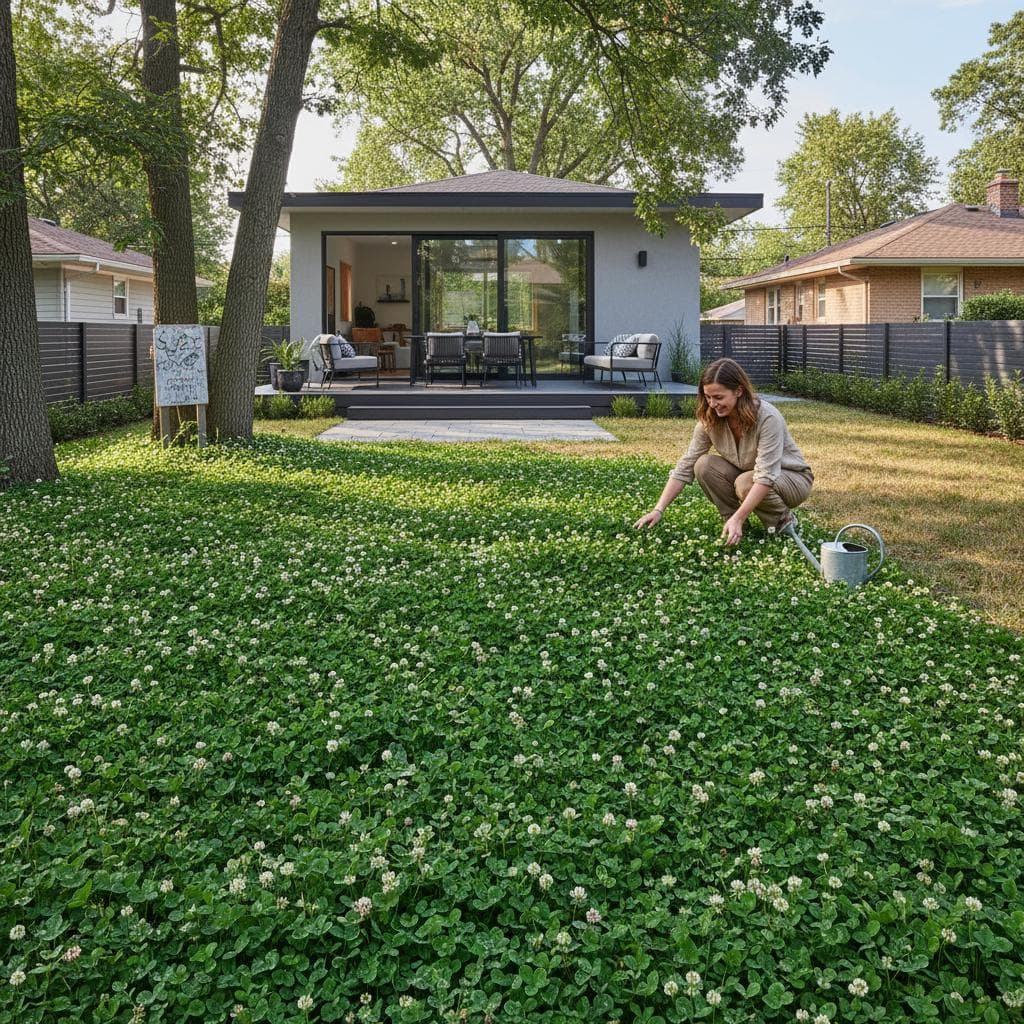
Why Clover Lawns Outperform Traditional Grass as 2026's Home Favorite
A subtle transformation appears in California neighborhoods and other areas. Homeowners replace water-intensive, labor-heavy grass lawns with dense clover coverings. Once viewed as an unwanted intruder, clover now earns recognition for its durability, environmental benefits, and economical upkeep. Families, gardeners, and those focused on design discover that clover provides a viable, attractive option suited to evolving climates and daily routines.
The Case for Rethinking Grass
Traditional lawns represent tidiness and accomplishment for many. However, their maintenance demands frequent mowing, fertilization, irrigation, and weed management, which demand significant time and resources. In areas with scarce rainfall, sustaining a grass lawn proves costly and harmful to the environment.
Clover flourishes in challenging conditions that challenge grass. It retains its green color during droughts, needs infrequent mowing, and improves soil quality on its own. This blend of hardiness and ease prompts numerous homeowners to redefine the ideal lawn appearance.
What Makes Clover Different
Clover grows in the legume family and possesses a unique capacity to extract nitrogen from the atmosphere and deposit it into the soil. This process allows the plant to sustain itself while benefiting surrounding vegetation. The outcome creates a self-regulating ecosystem that minimizes reliance on external fertilizers.
Two primary clover types prevail in home settings:
- White clover (Trifolium repens): This variety features a gentle texture and compact foliage, remaining close to the ground for a thick, padded surface.
- Microclover: An enhanced, diminutive form of white clover, it blends seamlessly with current grass and yields a smoother look with limited flowering.
Both options withstand regular foot traffic, rebound swiftly from damage, and maintain greenery nearly year-round in temperate zones. They draw pollinators, although microclover produces fewer blossoms, which suits households with small children.
Environmental and Economic Advantages
Clover lawns offer substantial gains that reach beyond the immediate property.
- Water Efficiency: Clover uses far less water than grass. Its extensive roots access deeper soil moisture, sustaining vitality during arid times.
- Chemical-Free Fertility: The natural nitrogen fixation eliminates the need for artificial fertilizers, which can runoff into streams and cause ecological harm.
- Weed Resistance: A thick clover cover blocks sunlight to potential weeds, decreasing herbicide requirements.
- Cooler Surfaces: Clover absorbs heat more effectively than grass, lowering temperatures near decks and recreation zones.
- Cost Savings: Reduced water usage, minimal chemical applications, and less frequent mowing lead to tangible monetary benefits over the years.
In California's diverse local climates, ranging from seaside mist to interior warmth, these factors yield both planetary and financial successes.
The Aesthetic Question
Certain homeowners resist the change, picturing clover as uneven or untamed. A developed clover lawn, in reality, presents a lush, welcoming vista with a subtle, deliberate sheen. The occasional white blooms, when permitted, add a pastoral elegance that attracts admirers of organic styles.
Microclover delivers a classic vibe through its fine, consistent weave that echoes grass benefits without the drawbacks. Combining it with a modest amount of water-wise grass achieves a seamless finish while preserving clover's toughness and green credentials.
Installation and Establishment
Transitioning to clover proves straightforward, provided preparation and scheduling receive attention. An adept amateur or skilled professional can oversee the work.
- Prepare the Soil: Clear away current grass and weeds. Gently aerate or level the area to form an even planting base.
- Choose the Right Seed: Opt for a type matched to local conditions. In California, white clover or microclover serve as dependable selections.
- Sow Evenly: Combine seeds with sand or light earth for uniform dispersal. Apply manually for small patches or use a spreader for expansive ones.
- Water Gently: Maintain steady soil dampness until sprouts emerge. As roots develop, taper off irrigation.
- Mow Sparingly: Clover advances gradually, so trim every several weeks suffices. Raise the mower height above grass settings to prevent close cuts.
Greenery emerges within weeks. Gradually, the clover forms a plush, even mat capable of daily activity.
Maintenance Made Simple
Clover demands considerably less oversight than grass, though periodic attention enhances longevity. Consider these essential practices:
- Water deeply but infrequently: Established clover benefits from thorough, spaced irrigations over daily light ones.
- Weed lightly if needed: Remove stubborn intruders manually in their initial stages to curb expansion.
- Overseed each spring: Scatter additional seeds sparingly to mend sparse areas and promote density.
- Skip chemical fertilizers: The inherent nutrient cycle suffices; excess nitrogen may hinder clover growth.
Proper care ensures a clover lawn endures for years with minimal overhaul.
Addressing Common Concerns
Will it attract bees? Flowers draw bees, but regular mowing or microclover selection curbs this during bloom periods.
Can pets use it? Clover endures animal activity superior to many grasses and resists discoloration from waste.
Does it handle heavy use? For busy homes with events or playful kids, mixing microclover with sturdy grass boosts resilience.
Will it invade garden beds? Clover expands gradually and yields to boundaries via edging or pruning, proving milder than aggressive grasses.
The Broader Shift Toward Sustainability
Clover's rising adoption mirrors a wider commitment to eco-conscious habits. Individuals pursue yards that demand reduced water, chemicals, and effort. Local governments acknowledge these efforts through incentives for grass removal initiatives that preserve resources.
Clover aligns perfectly with this evolving perspective on landscapes. It fulfills contemporary standards for attractiveness and usability while fostering earth vitality and species variety. Landscape professionals find it enables innovative designs incorporating local flora, gravel walks, and efficient edging.
Living with Your Clover Lawn
An established clover lawn alters everyday experiences noticeably. Maintenance time decreases, allowing greater enjoyment. Children play safely without sharp edges or residues, and the surface endures dry weather resiliently while supporting local insects.
The seasonal flow of clover brings renewal rather than strain. In an era demanding versatile, green outdoor areas, clover achieves harmony between form and function unmatched by alternatives.
Supporting Lasting Yard Health
A thoughtfully installed clover lawn transcends passing interest. It embodies a deliberate move to environmentally attuned designs that deliver ease and allure. Selecting clover aids ground fertility, water preservation, and effort reduction without compromising style.
For new installations or updates, clover presents a refined path aligned with current values. It embodies a way of living that honors efficiency, ecology, and aesthetic excellence.