
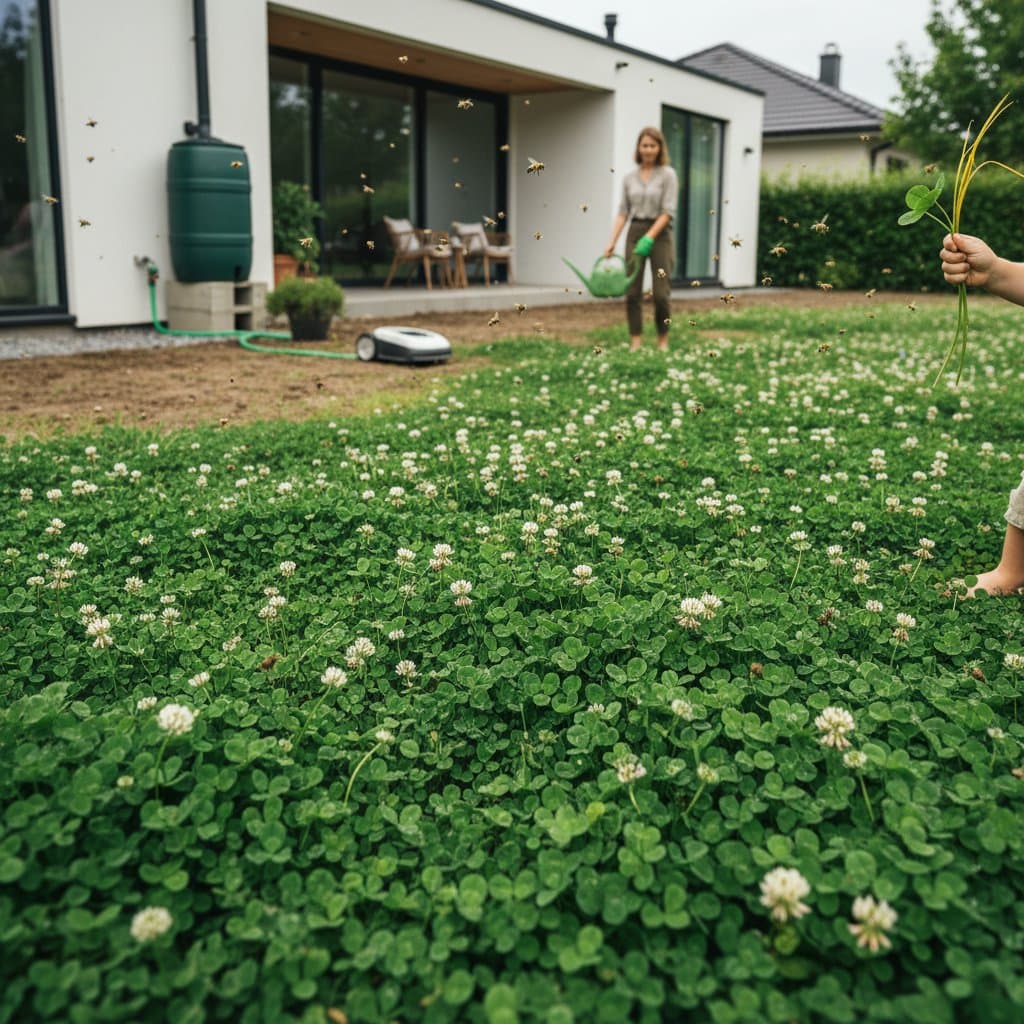
Why Homeowners Switch to Clover Lawns in 2026
A vibrant lawn traditionally symbolizes homeowner pride. Increasing numbers now question the form this greenery takes. Many opt for clover lawns over water-intensive grass, gaining a soft, colorful surface with reduced maintenance demands. This change delivers comfort, financial benefits, and environmental advantages.
At a Glance
Location: Suitable for suburban and urban yards in diverse climates
Size: Ideal for small courtyards or expansive front lawns
Climate zone: Performs well in temperate to warm areas
Project goal: Minimize water usage, decrease mowing efforts, and enhance ecological value
1. Reduced Water Consumption While Preserving Green Appearance
Traditional grass lawns require regular irrigation to retain vitality. Clover sustains its hue during dry periods through efficient water uptake. Its extensive root system accesses deeper soil moisture, allowing the plant to remain verdant as grass yellows.
Landscape designers note that clover holds a deep green shade well beyond the browning of turf varieties. This inherent drought tolerance reduces irrigation frequency and eases compliance with regional restrictions. Homeowners achieve a uniform, plush surface that remains inviting to the touch.
Varieties such as microclover or white Dutch clover suit various soil types. They form a compact layer that withstands heat and moderates underlying soil temperature. For those confronting escalating water expenses, this transition yields tangible reductions in utility bills.
2. Elimination of Fertilizer Requirements
As a legume, clover converts atmospheric nitrogen into soil nutrients naturally. This mechanism nourishes surrounding vegetation and maintains fertility without synthetic inputs. In contrast, grass often relies on fertilizers that contribute to runoff in drainage systems and water bodies.
Horticulturists observe that a natural nitrogen provider like clover redefines landscape care practices. It enriches the soil rather than opposing its natural processes. With time, soil quality enhances, promoting superior drainage and oxygen flow. Adjacent garden areas benefit from this improved foundation extending outward.
This trait removes the cycle of fertilizer applications entirely. The landscape operates independently, conserving resources and limiting chemical contact for family members and animals.
3. Decreased Mowing Frequency for Greater Leisure Time
Clover grows to a modest height and ceases vigorous expansion thereafter. Homeowners typically mow once monthly or omit it during certain periods. This controlled stature avoids the irregular patches common in variable grass growth.
The result is a smooth, consistent expanse demanding little intervention. Landscape contractors report that clients appreciate the neat presentation even after occasional skips in maintenance. Beyond visual appeal, reduced mowing lowers fuel consumption, emissions, and noise levels. Freed time shifts focus from labor to relaxation in the outdoor space.
4. Support for Pollinator Populations
Clover blooms offer nectar sources that draw bees, butterflies, and helpful insects. These visitors aid pollination in nearby plantings and orchards, fostering ecosystem equilibrium. Homeowners find this aspect particularly gratifying.
Sustainable design consultants explain that clover converts standard lawns into purposeful environments. It bolsters pollinators while preserving a refined appearance. Opt for microclover to curb flowering for a neater aesthetic, or select larger types for a meadow effect.
These blossoms also aid in sustaining local insect communities strained by chemical treatments in conventional yards. Such contributions provide measurable environmental gains through modest adjustments.
5. Durability Against Traffic and Play
Grass thins in busy zones, exposing soil. Clover recovers swiftly from compression due to its resilient structure. Flexible stems rebound from footsteps, retaining a gentle feel under pressure.
Families with active children or pets value this toughness. The padding cools during heat, enhancing comfort. Integrate with paths of stone or gravel to manage heavy use while upholding attractiveness.
Designers highlight that clover encourages activity with its accommodating texture. The steady coloration conceals minor flaws, simplifying ongoing care compared to grass.
6. Built-In Weed Suppression
Thick clover coverage crowds out intruders effectively. Rapid establishment forms a shading barrier that deters weed establishment. This approach minimizes herbicide applications and manual removal efforts.
Those weary of battling invasives like crabgrass welcome the relief. Post-establishment, intervention proves unnecessary. Uniform spread masks subtle terrain variations, yielding a polished, integrated yard.
Experts emphasize that dense planting equates to inherent protection. Clover excels in this regard among ground covers, offering enduring simplicity after initial growth.
7. Long-Term Cost Efficiency
Seeding expenses align closely with grass, yet ongoing savings elevate clover's value. Lower water needs, absent fertilizers, and infrequent mowing accumulate substantial reductions. Maintenance expenditures often decline sharply across years.
Seed blends spread easily and integrate with lingering grass for phased changes. This adaptability supports budget-conscious implementations over complete redesigns.
8. Enhanced Visual and Tactile Qualities
Clover's delicate foliage produces a nuanced pattern that interacts uniquely with sunlight. This lends an organic quality, ideal for native or water-wise designs. Its richer green tone imparts serenity, harmonizing with elements like stone features, timber accents, and floral edges.
Professionals blend clover with decorative grasses or ground-level sedges for textured depth. Such combinations sustain interest without complexity. Residential architects note that subtle hue shifts enrich spaces subtly.
This versatility suits contemporary clean lines or informal garden motifs, adapting seamlessly to diverse home styles.
Maintaining and Enjoying a Clover Lawn
Adopting clover alters yard aesthetics and care routines profoundly. Diminished tasks, reduced resource demands, and inherent appeal promote effortless outdoor engagement. The cool padding, persistent color, and supportive biology create a thriving, low-effort haven.