
Why Clover Lawns Outperform Traditional Grass
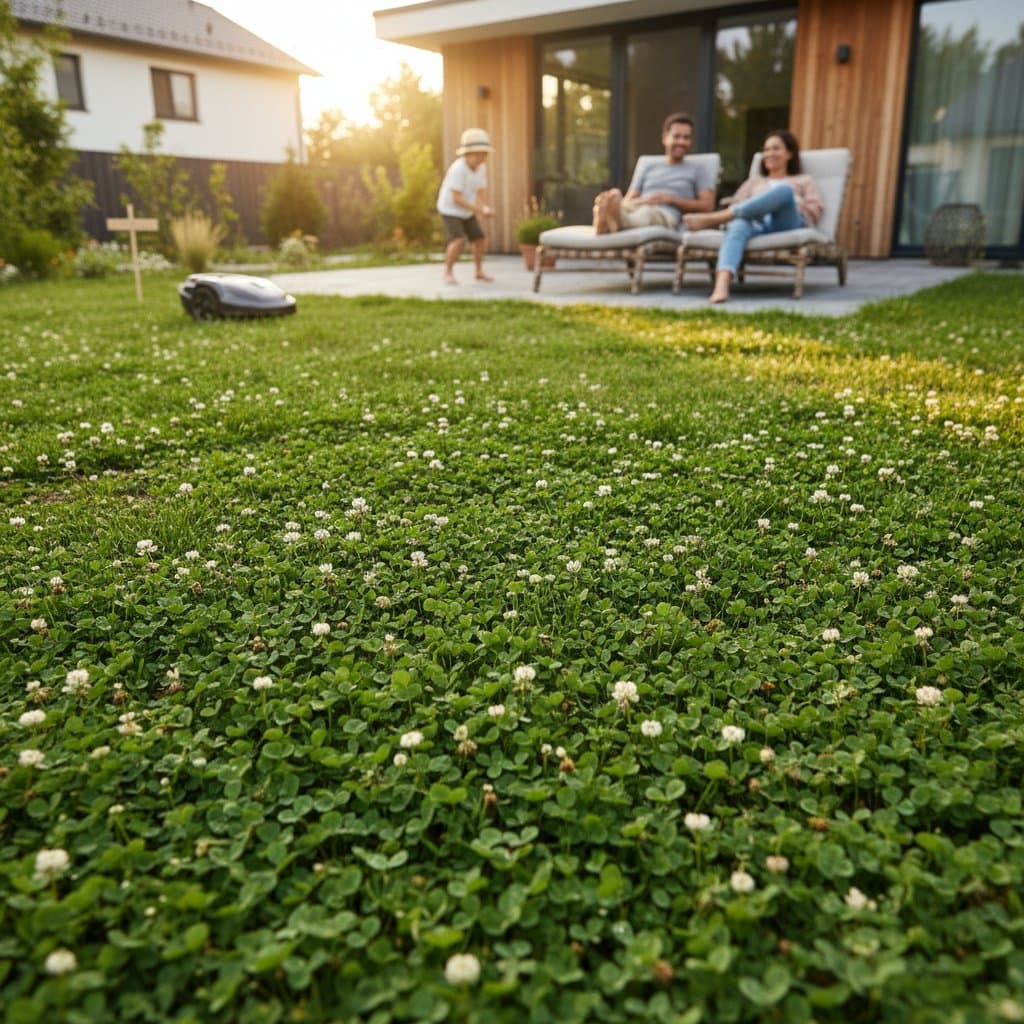
Amanda and Luis purchased a bungalow on a serene corner lot, envisioning a play area for their children that avoided frequent mowing and chemical applications. Their transition from conventional turf to clover swiftly altered their upkeep schedule, utility expenses, and the yard's appearance during twilight hours. This modest suburban plot illustrates a trend many homeowners observe: clover lawns deliver functionality, durability, and refined charm.
At a Glance
- Residents: Amanda and Luis, two children, golden retriever
- Setting: Suburban area near a mid-sized city
- Property Size: Quarter-acre
- Initiative: Full lawn conversion to low-maintenance design
- Design Firm: Greenfield Outdoor Studio
- Installation Team: EcoTurf Landscape Services
- Objectives: Develop a gentle, child-safe, drought-resistant surface requiring minimal care and no synthetic fertilizers
Clover as a Lawn Alternative
Several clover varieties suit lawn applications, each offering unique visual and functional traits.
- White Dutch Clover: Popular for home settings, this type reaches four to six inches in height and features petite white blooms that draw pollinators.
- Microclover: Engineered with finer leaves, it integrates with grasses or creates a tight, uniform layer. Flowering occurs infrequently, promoting a neat profile.
- Strawberry Clover: Exhibits greater drought resistance, pale pink flowers, and a delicate texture.
Clover flourishes in average soils without supplemental nutrients. It adapts to partial shade but performs optimally under moderate sunlight. Professionals frequently combine it with fine fescue to achieve a familiar lawn aesthetic while halving irrigation and feeding requirements.
"Clover's roots differ from those of grass," explains landscape designer Erin Wallace of Greenfield Outdoor Studio. "They extend deeply, retain hydration, and enhance soil structure progressively. This results in reduced compaction and fewer discolored areas."
Benefits of Reduced Effort
Conventional grass lawns necessitate ongoing care. Clover varieties, however, prosper with limited intervention. Mowing occurs every few weeks to manage growth or clear faded flowers. Water demands decrease substantially, allowing greenery to persist in arid periods with sparse supplementation across most regions.
Weed control proves simple, as clover's stolons suppress competitors effectively. In grass blends, it forms a seamless carpet that deters even persistent weeds like dandelions.
After seeding, Amanda and Luis monitored their efforts. Yard tasks consumed one-third of the previous time. "Weekends once centered on mowing and trimming," notes Luis. "We now prune occasionally and savor the area."
Installation Guidelines
Converting to clover involves basic preparation for success. Homeowners typically eliminate existing sod and aerate the surface lightly. A garden rake levels the ground for uniform seed placement.
Key steps to establish a clover lawn:
- Soil preparation: Remove litter and till the upper two inches. Aim for pH levels between neutral and mildly acidic.
- Seed application: Scatter seeds uniformly using a spreader or by hand. Blend with inert sand for precise coverage.
- Initial irrigation: Maintain consistent moisture for two weeks to support germination.
- Early maintenance: At four inches, perform a gentle cut to promote lateral growth.
Establishment happens rapidly, yielding complete coverage in months. For hybrid options, incorporate drought-tolerant grass seeds to merge visual appeal with clover's toughness.
Ongoing care remains light. Infrequent mowing and spot-seeding preserve density. Fertilizers and core aeration become unnecessary. In snowy climates, clover rebounds robustly each spring.
Addressing Frequent Concerns
Homeowners often question bee attraction and safety for families or animals. Regular mowing prior to flowering minimizes visits while preserving vitality. Perceptions of untidiness fade with microclover's polished finish, comparable to groomed grass.
Durability draws scrutiny as well. Clover withstands moderate use, though less than athletic fields. Enhance play zones with pathways or fescue reinforcements.
Budget considerations arise too. Clover seeds cost less than premium grass blends. Self-installation further lowers expenses, with long-term gains from reduced resource use amplifying value.
Embracing Clover in Daily Life
Several months post-installation, Amanda and Luis report a transformed outdoor routine. Mornings involve porch relaxation amid buzzing pollinators on clover flowers. Their children engage more, identifying bloom types that lure butterflies.
Water consumption fell markedly, and the yard endured dry weather effortlessly. "The lawn now harmonizes with nature rather than opposing it," states Luis.
This narrative reflects broader adoption of sustainable ground covers in communities. Clover lawns affirm that efficiency and sophistication coexist. They restore soil vitality, infuse landscapes with color, and reclaim leisure time through self-sustaining beauty.