
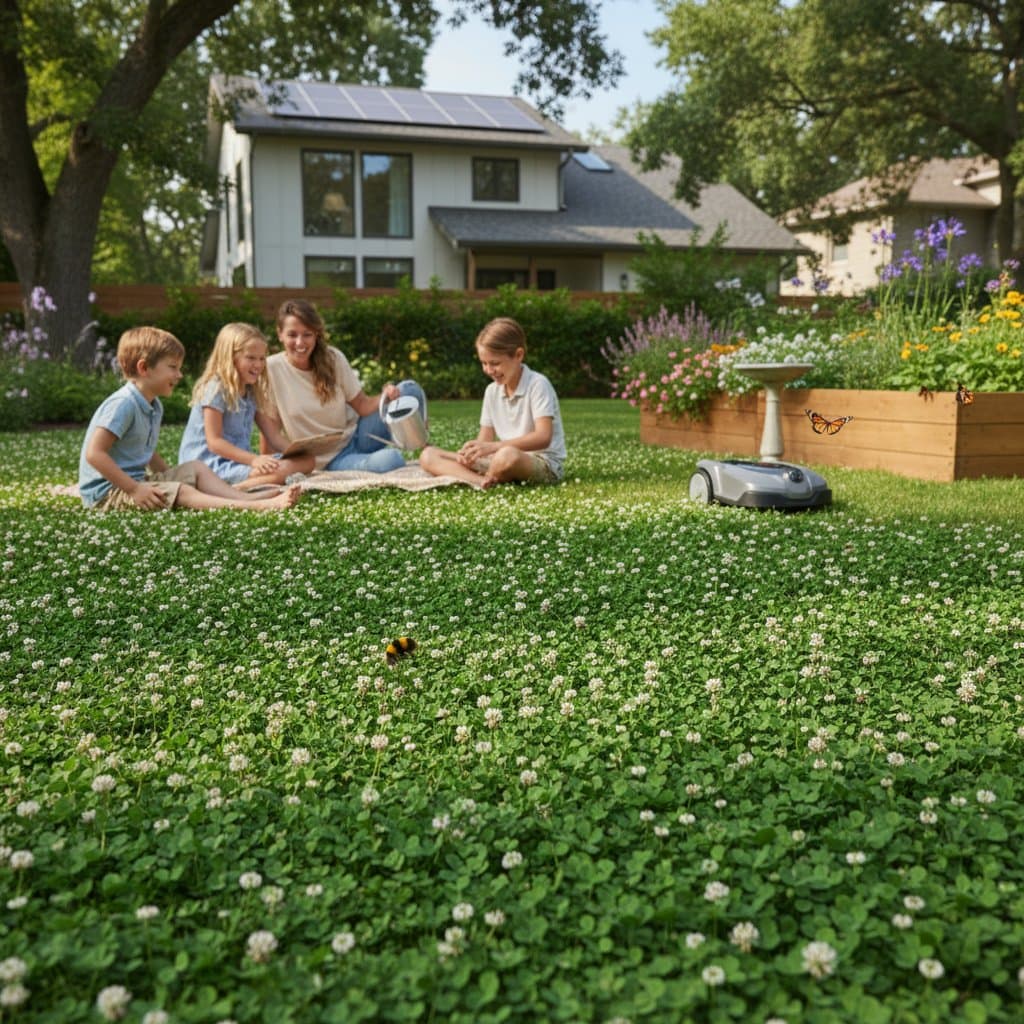
The Rise of Clover Lawns: A Shift Toward Sustainable Green Spaces
Maya and Lucas purchased a suburban home with visions of a vibrant yard that required minimal effort. They sought a surface that remained soft, supported wildlife, and maintained an orderly appearance without constant intervention. Their solution emerged through clover, beginning as a trial patch near the driveway and expanding to envelop the full yard, altering both its aesthetic and upkeep demands.
Project Overview
- Residents: Maya and Lucas, along with their two children and a golden retriever
- Setting: A wooded suburban area near a mid-sized city
- Property Size: Quarter-acre plot featuring full sun in the front and partial shade in the rear
- Design Input: Homeowner-directed initiative with guidance from Green Edge Landscape Design
- Installation Team: EcoGround Services, a regional specialist in sustainable turf
- Primary Objective: Substitute conventional grass with a resilient, environmentally sound option
Challenging Conventional Turf
Standard grass lawns dominate home landscapes, yet they demand substantial irrigation, regular cutting, and synthetic nutrient inputs. Maya noted, "We grew weary of the time and expense required to sustain the grass." Their landscape advisor proposed a microclover variety, offering comparable verdant density at a reduced care level.
Clover lawns attract interest for their drought tolerance, pest resistance, and inherent soil nitrogen enhancement. These qualities provide aesthetic appeal alongside functional advantages. The resulting surface exhibits a plush density and organic sway, surpassing the rigidity of typical grass expanses.
Steps to Install a Clover Lawn
The homeowners first cleared the existing turf with a sod cutter, then smoothed the ground using a blend of compost and sand for optimal drainage. They broadcast microclover seeds over the tilled area and gently incorporated them with a rake. A sparse covering of straw secured the seeds and preserved humidity during initial sprouting.
Sprouts emerged promptly, with small green foliage forming a cohesive layer in mere weeks. The development progressed reliably. Lucas observed, "The coverage developed rapidly. It appeared robust immediately, free from bare spots or invasive plants."
Aesthetic and Sensory Qualities
Established clover displays a richer green hue than many grass types. Its foliage captures light to produce a gentle luster, while delicate white flowers in summer draw bees and butterflies. Maya and Lucas integrated a trimmed pathway to guide foot traffic, allowing the clover to reach three to four inches elsewhere for a natural profile.
This creates an inviting, resilient terrain. "The yard lacks the precision of classic lawns," Maya explained, "yet it conveys deliberate care and harmonizes with our home more effectively than the uneven grass did."
Key Design Elements and Advantages
Reduced Water Needs
Once rooted, clover accesses deeper moisture reserves, limiting irrigation to severe dry spells. Maya and Lucas observed a near 50 percent drop in household water consumption.
Self-Sustaining Nutrition
Clover converts atmospheric nitrogen into soil usable forms, nourishing itself and nearby vegetation. This approach avoids chemical fertilizers prone to environmental leaching. The selected microclover, with its compact leaves, integrates seamlessly with residual grass for hybrid appearances.
Simplified Upkeep
Monthly trimming replaces weekly sessions, promoting uniform height and managing flower proliferation in active zones. A battery-powered mower at elevated settings prevents over-cutting. Clover's density naturally suppresses many weeds, eliminating herbicide applications.
Suitability for Pets and Play
Clover withstands pet urine without discoloration and retains suppleness in arid conditions. Children navigate it barefoot comfortably, and the dog relaxes there extended periods. The pliable structure recovers swiftly from use.
Essential Materials and Details
- Seed Variety: Microclover (Trifolium repens var. ‘Pipolina’)
- Soil Preparation: Equal portions of compost and coarse sand
- Germination Cover: Thin layer of clean straw
- Cutting Equipment: Rechargeable electric mower with variable height
- Boundaries: Locally sourced stone edging between lawn and planting areas
Stepping stones in the backyard provide defined routes, sourced from regional limestone with a textured surface that complements the clover's organic feel.
Professional Perspective
Erin Patel of Green Edge Landscape Design stated, "Clover offers straightforward resilience for demanding yards. It revitalizes soil while maintaining a full appearance. Clients value its balance of purpose and ease." She advises microclover for gradual transitions, noting that many extend its use after initial success.
Year-Round Maintenance Practices
Clover requires sparse oversight, though targeted actions sustain vitality:
- Spring: Reseed sparse sections and provide gentle watering to spur emergence.
- Summer: Trim as needed to control stature and limit flowering in preferred areas.
- Fall: Spread a modest compost layer to replenish elements.
- Winter: Avoid cutting to shield roots and preserve soil integrity.
Broadleaf intrusions like dandelions occur infrequently and integrate without disrupting the design.
Embracing the Clover Lifestyle
Several months post-conversion, Maya and Lucas report enhanced outdoor engagement with negligible effort. The yielding texture and subtle leaf motion foster a serene connection to nature. "Knowing our space aids pollinators rather than repels them brings satisfaction," Lucas shared.
Homeowners eyeing this change should test a modest area, such as a border or shaded spot, before broader implementation. Pure or blended, clover restores vitality to grounds while conserving effort, moisture, and materials, yielding a harmonious integration with the environment.