
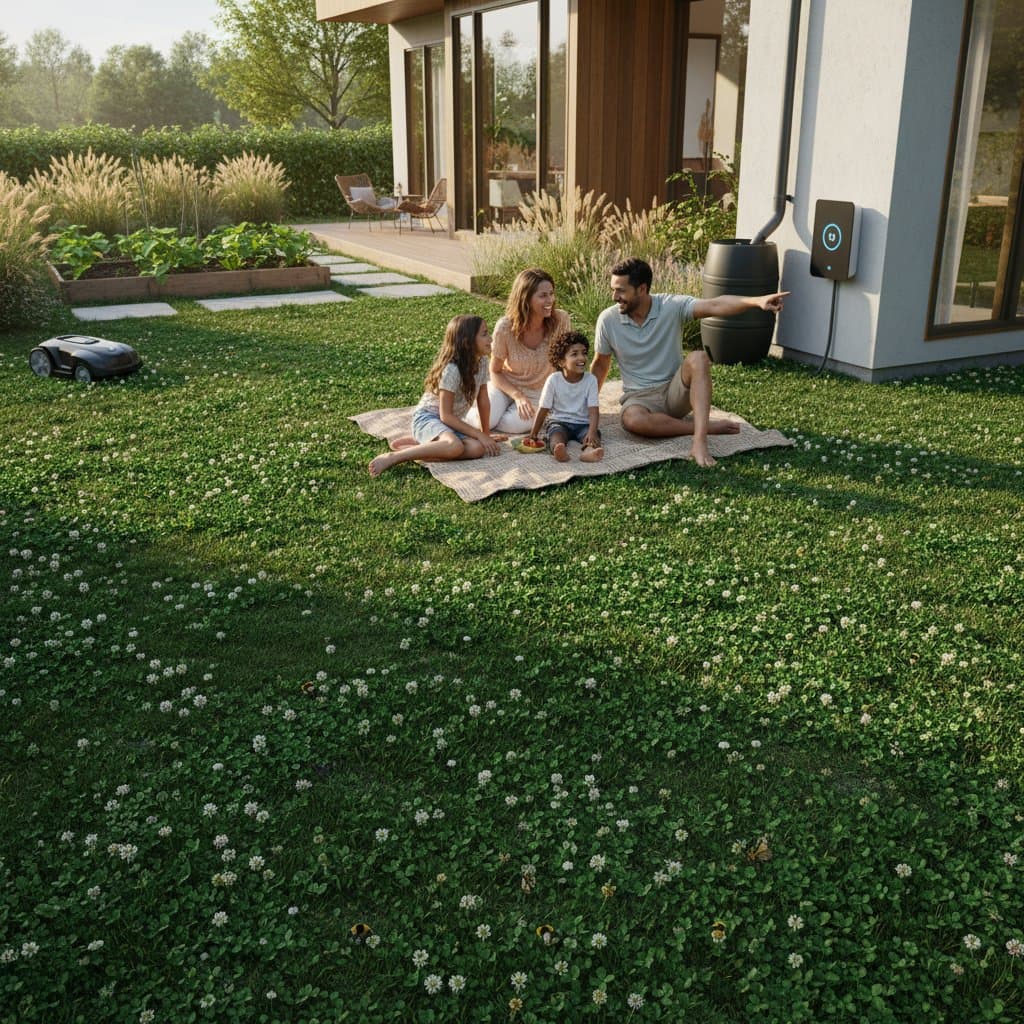
Swap Grass for Clover: 2025's Easy Lawn Revolution
Sarah and Michael Rivera settled into their suburban home, yet the lawn demanded endless attention. Weekends filled with mowing, fertilizing, and watering left the grass perpetually parched. They sought a yard that remained green, offered a soft surface, and required minimal effort. Clover emerged as the ideal solution.
This shift not only revitalized their yard but also reshaped their outdoor routines. What started as a personal trial now inspires a wider trend among homeowners.
At a Glance
- Residents: Sarah and Michael Rivera, along with two children and a dog
- Location: Suburban area near a mid-sized city
- Lot Size: Quarter-acre
- Designer: Green Path Studio
- Installer: EcoGrounds Landscaping
- Objectives: Minimize water consumption, shorten upkeep time, foster pollinator habitat
- Primary Materials: Microclover seed blend, organic compost, decomposed granite for paths
Why Clover Lawns Are Gaining Ground
Clover lawns proliferate in communities that once favored pristine turf. These alternatives appear lush and vibrant, endure dry periods without fading, and demand significantly less care than conventional grass. Clover fixes nitrogen from the air, nourishing itself and surrounding vegetation, which removes the necessity for synthetic fertilizers. Its low-growing habit reduces mowing frequency substantially.
"Homeowners grow weary of landscapes that require nonstop effort," explains landscape designer Julia Meyers of Green Path Studio. "Clover delivers a resilient ground cover that maintains an effortless yet polished appearance."
Planning the Transition
The Riveras initiated the change by eradicating uneven grass and enriching the soil with organic compost. The designer recommended a microclover variety, featuring petite leaves and tight growth for a neater profile compared to common white clover. This selection preserves the advantages while enhancing visual uniformity.
Soil Preparation
Optimal soil sets the stage for a robust clover lawn versus a spotty failure. The installation crew followed these precise steps:
- Eliminated existing grass using a vinegar-based, non-toxic herbicide
- Aerated the topsoil to six inches deep
- Incorporated compost to boost drainage and nutrient content
- Graded the area smoothly prior to seeding
Such preparation ensures balanced moisture retention, accelerating root development for the emerging clover.
Seeding and Establishment
Workers scattered microclover seeds uniformly by hand and gently incorporated them into the soil. A light straw mulch shielded the seeds from birds and retained moisture. Initial watering occurred daily for two weeks, then tapered as sprouts appeared.
Clover germinates more rapidly than grass. In just one month, a delicate green layer evolved into a dense, verdant expanse. "The transformation happened so swiftly," Michael recalls. "We had little opportunity to notice the absence of grass."
Walking Through the New Landscape
The Riveras' yard evokes a gentle meadow rather than a formal lawn. The clover yields underfoot with a resilient bounce, accented by delicate white blooms that draw bees and butterflies. Children play without concern for rough textures or arid spots.
A path of decomposed granite curves from the patio to an elevated vegetable garden, framed by lavender and thyme. Clover extends to the borders organically, blurring edges with natural grace. Stone accents delineate zones without imposing rigidity.
Solar-powered lights provide understated illumination along the path, preserving the foliage as the evening centerpiece.
Functional Benefits That Go Beyond Looks
Clover lawns enhance practicality in daily use.
- Reduced Water Needs: Deeper roots access subsurface moisture, allowing the Riveras to cut irrigation by 75 percent.
- Comfortable Surface: Fine foliage remains cool and plush during warm weather.
- Weed Resistance: Established clover creates a thick barrier, suppressing unwanted growth.
- Soil Enrichment: Nitrogen fixation sustains fertility, benefiting the broader garden.
"Clover bolsters the ecosystem comprehensively," Julia notes. "It sustains pollinators, enhances soil quality, and delivers consistent vibrancy without artificial aids. The impact proves substantial from such a modest adjustment."
Choosing the Right Clover Variety
Clover types vary in growth and suitability. Selection hinges on regional climate, soil type, and intended activities.
- Microclover: Dense and even, suited for play areas in family settings.
- White Clover (Dutch Variety): Taller with broader leaves, fitting for wilder or meadow-inspired designs.
- Crimson Clover: Vibrant red flowers make it ideal for seasonal covers or integrated plantings.
The Riveras chose microclover for its subtle elegance and casual vibe. It maintains a low profile near hardscapes, with modest flowers emphasizing the green rather than dominating.
Maintenance Made Simple
Clover care shifts from intensive routines to occasional tasks.
- Mowing: Every three to four weeks, adjusted to preferred height.
- Watering: Weekly deep soaks during drought periods.
- Fertilizing: Unnecessary; annual compost application suffices for vitality.
- Weed Management: Rare intervention, as clover naturally dominates competitors.
The Riveras embrace the clover's blooms, which invite pollinators and infuse the space with subtle charm. "We once battled every weed," Sarah shares. "Today, the yard buzzes with bees and butterflies, brimming with life."
Integrating Clover with Existing Plantings
Clover complements diverse gardens seamlessly. In the Riveras' setup, it adjoins raised cedar beds of herbs and vegetables. Stone borders guide the layout, permitting clover to advance freely within defined areas.
This ground cover thrives beneath trees, where grass falters in shade. Clover tolerates variable light, retaining color in dappled conditions. Such versatility suits complex yard layouts.
Environmental Payoffs
Opting for clover diminishes reliance on fertilizers, pesticides, and gas mowers. This curbs chemical runoff into waterways and lowers emissions from equipment. The yard aligns with rather than disrupts local habitats.
The Riveras observed heightened biodiversity soon after installation. Birds frequent the area, and butterflies cluster near the flowering margins.
"Each modest yard like this bolsters a larger web of habitats," Julia observes. "Across neighborhoods, these choices foster meaningful ecological improvements."
Embracing Everyday Resilience
Several months post-installation, the Riveras enjoy extended time outdoors. Free from routine chores, they relax on the patio as children explore the soft terrain.
The surface withstands family activity remarkably, recovering swiftly from play and pet traffic. As demand grows for sustainable, low-effort landscapes, clover provides an accessible alternative. It delivers aesthetic appeal, tactile pleasure, and durability minus traditional turf's burdens.
The Riveras' journey illustrates how one plant redefines outdoor harmony, conserving resources while deepening connections to nature.