
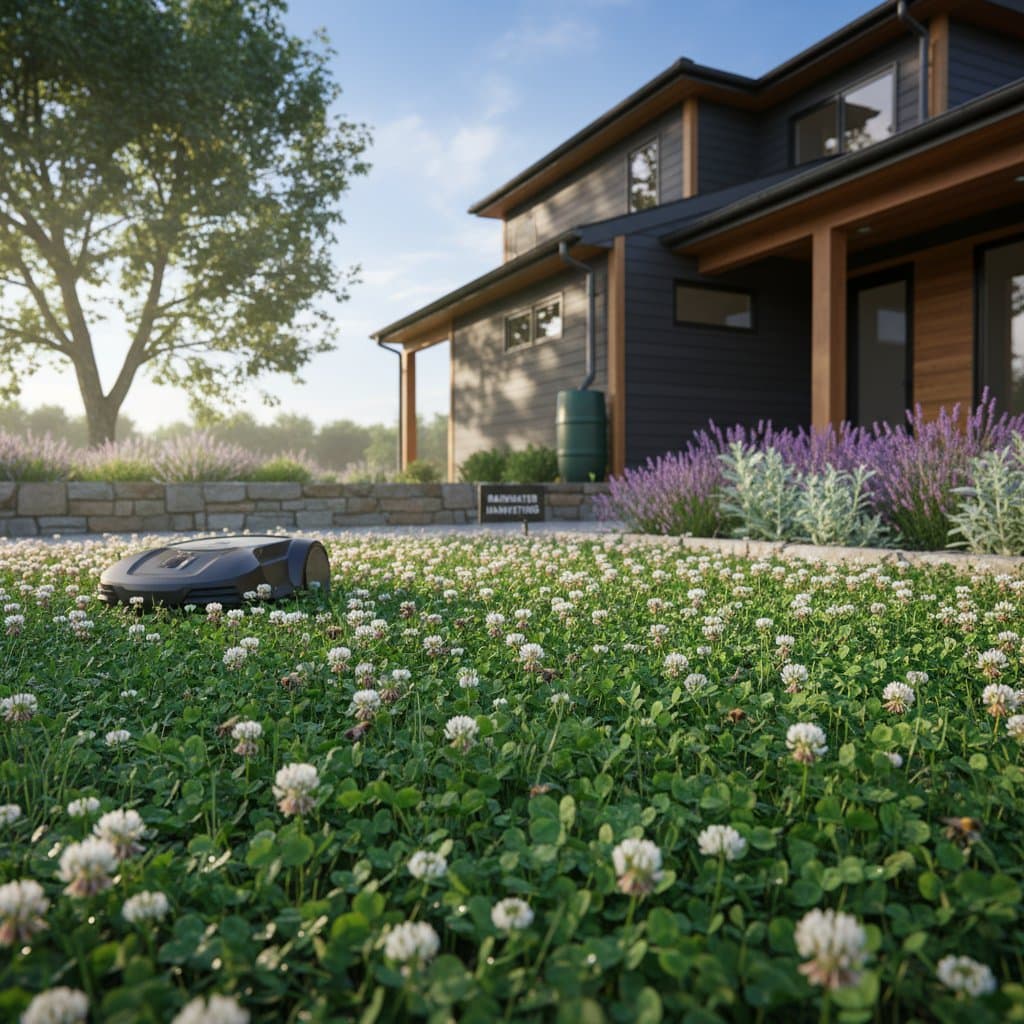
Why Homeowners Are Switching to Clover Lawns
A lush green lawn has long defined curb appeal for residential properties. Yet, more homeowners now replace traditional grass with clover to gain practical benefits that extend far beyond visual appeal. This shift supports lower maintenance demands, enhances soil quality, and creates an organic aesthetic that fits both modern minimalist designs and traditional cottage gardens.
Clover establishes a soft, resilient ground cover that holds its color through dry weather and attracts essential pollinators. For families or professionals with limited time for yard work, these qualities make clover a smart choice that maintains an inviting outdoor space without constant effort.
1. Reduced Water and Maintenance Requirements
Conventional grass lawns demand frequent mowing, fertilizing, and watering to stay healthy. Clover simplifies this routine by requiring half the water after it establishes and growing more slowly, which means mowing only every few weeks during the growing season.
Its deep root system draws moisture from lower soil layers, allowing it to stay green during droughts that would stress grass. In regions with unpredictable rainfall or water restrictions, this trait helps homeowners cut irrigation needs by up to 50 percent, lowering bills and conserving resources.
Clover also resists pests like grubs and chinch bugs better than many grasses, reducing the need for chemical treatments. The result is a sturdy lawn that thrives with basic care, freeing up time for enjoyment rather than labor.
2. Improved Soil Health and Nutrient Benefits
Clover stands out for its natural soil-enriching abilities as a member of the legume family. It partners with rhizobia bacteria in its roots to fix nitrogen from the air, converting it into a usable nutrient that feeds the plant and surrounding soil without external inputs.
This process builds fertile soil over time, creating a structure with better aeration and water retention. Healthier soil means less erosion on slopes and stronger growth for nearby plants, such as flowers or shrubs, leading to a more vibrant yard overall.
When converting from grass, homeowners notice reduced fertilizer use since clover supplies its own nutrients and shares them through decomposition. This self-sustaining approach fosters a balanced ecosystem that supports long-term yard health and cuts down on synthetic additives.
3. Soft Texture and Seasonal Aesthetic Appeal
Clover's fine leaves create a cushioned, walkable surface ideal for barefoot lounging or children's play. Throughout the season, small white or pink flowers bloom intermittently, adding delicate color and inviting bees and butterflies to aid in garden pollination.
The natural, meadow-like look blends seamlessly into landscapes without appearing wild or neglected. Landscape designers often mix clover with fine fescue grasses or creeping thyme to add texture variety and seasonal shifts, from spring greens to summer blooms.
These blends suit urban backyards or suburban plots, offering a low-profile elegance that evolves naturally. The setup encourages relaxation and wildlife interaction, turning the yard into a welcoming habitat.
4. Durability and Adaptability in Various Settings
Clover performs well across light conditions, from full sun to dappled shade, and handles moderate foot traffic without thinning quickly. It recovers from wear, such as from games or pet activity, faster than delicate grass types.
In family yards, this toughness supports play areas or pathways. For compact spaces, combine white clover with gravel borders to define zones neatly. On expansive properties, opt for microclover seeds that mimic grass density while providing superior resilience.
Experts highlight how clover fills in bare spots rapidly and maintains coverage in challenging soils where grass fails. Its versatility eases maintenance in diverse yard configurations, from sunny front lawns to shaded side yards.
Practical Care for a Thriving Clover Lawn
Establishing a clover lawn starts with soil preparation: till lightly, remove weeds, and broadcast seeds in spring or fall at a rate of 4 to 6 ounces per 1,000 square feet. Water gently until germination, then reduce to natural rainfall as roots develop.
Mow at 2 to 3 inches high occasionally to promote thickness, skipping it entirely in cooler months. Skip fertilizers, but overseed thin areas annually to keep coverage dense. Monitor for weeds early, pulling them by hand to avoid chemicals.
A well-cared-for clover lawn buzzes with pollinators, boasts richer soil, and slashes water use. This choice transforms yard care into a simple, rewarding practice that enhances beauty and supports the environment.
Embracing Clover for Sustainable Yard Benefits
Choosing clover reimagines outdoor spaces with enduring, low-effort appeal. It combines tactile comfort, ecological support, and resource efficiency into a cohesive whole. Homeowners gain a resilient landscape that thrives naturally, aligning daily life with sustainable principles.