
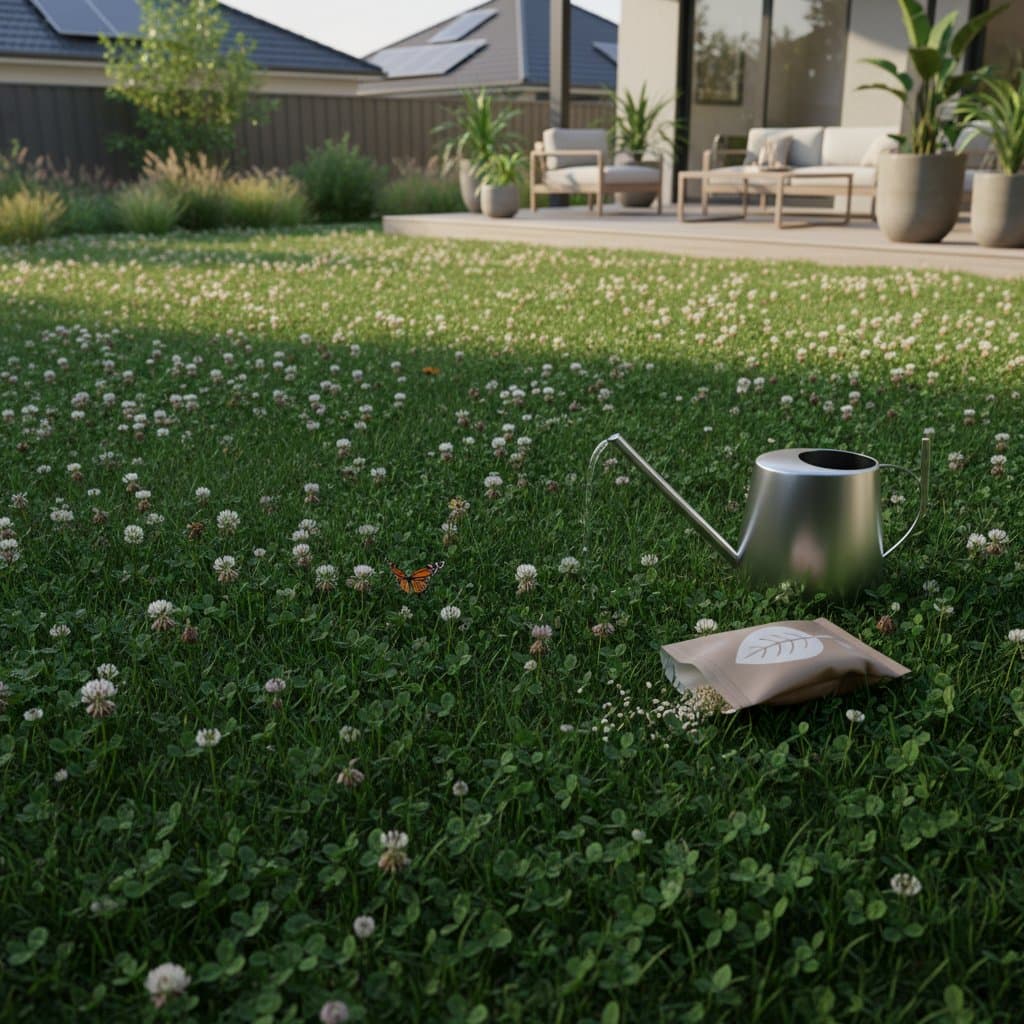
Why Clover Lawns Outperform Traditional Grass
Homeowners often face challenges with uneven, water-hungry lawns and seek superior alternatives. In California and other regions, many individuals replace conventional turf with dense clover coverings. This shift, once subtle, now represents a viable path for residential landscaping. Clover delivers a plush surface, promotes ecological balance, and exhibits unexpected elegance. It demands minimal water, requires sparse care, and nourishes the soil instead of exhausting it.
For those weary of frequent mowing, rigid fertilization timetables, or irrigation limits, clover presents an effective and refined choice. The following sections detail the reasons for its rising popularity and guidance on assessing suitability for specific properties.
1. Clover's Remarkable Resilience
Clover's appeal extends past its vibrant foliage and compact stature. This hardy, versatile plant flourishes in conditions where grass falters. Varieties such as white clover and microclover manage dense soil and regular foot traffic effectively. Their extensive root networks penetrate deeply and spread broadly, enabling the plant to remain verdant during arid periods and stabilize the earth.
In distinction to grass, clover extracts nitrogen from the atmosphere and deposits it into the soil via its roots. This inherent fertilization process sustains the clover and benefits adjacent vegetation. Gradually, the ground gains fertility and equilibrium, diminishing reliance on synthetic fertilizers. Such independence drives many to adopt clover.
2. Substantial Water Conservation
Gardeners in California recognize the value of each water unit. Conventional lawns consume vast amounts, necessitating regular watering to preserve vitality. Established clover, however, exhibits innate drought resistance. Its roots extend several inches downward, accessing reserves unavailable to grass.
In prolonged dry spells, clover might lighten in hue temporarily but revives swiftly with minimal precipitation or irrigation. Numerous property owners note reductions in watering by at least fifty percent following the transition to clover. These efficiencies yield tangible decreases in utility expenses and lessen ecological impact over time.
3. Minimal Upkeep with Maximum Benefits
Standard lawns follow a demanding cycle of cutting, nourishing, and pest management. Clover disrupts this pattern. It advances gradually, reaching approximately six inches in height, rendering mowing discretionary. For a neat appearance, one monthly trim suffices to achieve uniformity.
Clover also wards off prevalent weeds. Its thick coverage and soil shading limit opportunities for intruders to emerge. Pests that afflict grass show little affinity for clover, thereby reducing pesticide applications. Consequently, the yard achieves greater health and natural vigor with limited intervention.
4. Support for Essential Pollinators
A subtle advantage of clover lawns lies in their role as wildlife habitats. The blooms attract bees, butterflies, and other helpful insects crucial for garden productivity. These pollinators aid fruit-bearing trees, vegetable plots, and indigenous flora. A clover lawn fosters their presence, infusing the area with subtle activity and vitality.
For those desiring subdued flowering, microclover serves as an excellent selection. Its blossoms remain compact and inconspicuous, while preserving soil enhancement and hydration efficiency. This variety suits households with active children or frequent al fresco events.
5. Luxurious Feel and Seasonal Durability
Aesthetically, clover lawns offer a soft, velvety surface that surpasses the rigidity of grass blades for many preferences. The petite, oval leaves form a compact, padded expanse ideal for foot traffic. Even amid drought-induced paling, clover holds a satisfactory green shade, avoiding the harsh browning common in turf.
In California's coastal and interior zones, clover maintains greenery across much of the year without synthetic enhancers needed by some grass types. It integrates seamlessly with companions like creeping thyme or native meadow blends, aligning with contemporary, naturalistic designs.
6. Practical Costs and Setup Methods
Establishing a clover lawn proves economical. Seeds distribute readily through garden suppliers, allowing overseeding into existing turf or initiation on cleared ground. For current lawns, cut the grass low, rake lightly, then broadcast seeds to promote establishment. Provide consistent, gentle moisture until germination occurs, after which natural processes dominate.
Initial outlays remain modest relative to sod installation or ongoing turf maintenance. Expenditures on fertilizers and pesticides plummet, and equipment needs simplify. Annual reseeding addresses sparse areas, incurring far less than routine grass care protocols.
7. Resolving Frequent Misgivings
Though gaining traction, clover encounters lingering doubts. Concerns about bees near children or animals arise occasionally. In reality, bees concentrate activity during flowering phases and seldom provoke. Opting for microclover or pre-bloom mowing curbs bee presence without sacrificing advantages.
Staining from foliage pigments represents another issue, particularly on damp surfaces, potentially marking footwear. These residues rinse away readily and diminish as the lawn matures. Relative to the aridity and barren spots of grass lawns, this drawback appears negligible amid broader gains.
8. Broader Ecological and Neighborhood Advantages
Clover lawns bolster community well-being. Enhanced soil composition boosts absorption and curbs runoff. The plants moderate local temperatures, alleviating heat in urban settings. Reduced chemical inputs safeguard aquifers and surrounding habitats from pollutants.
In areas with water quotas or green mandates, clover supplies a conscientious substitute that retains yard aesthetics and usability. It complements sustainable approaches, harmonizing with porous walkways, indigenous borders, and drought-resistant arboreal elements.
9. Blending Clover in Diverse Designs
Complete clover coverage need not define the approach. Property owners frequently incorporate clover within hybrid schemes. It complements fescue, rye, or local grasses, yielding varied carpets resilient to fluctuations. As border underplanting, clover functions as organic mulch, retaining hydration and curbing weeds near woody and herbaceous specimens.
Landscape professionals deploy clover in buffer areas linking hardscapes to beds. Its supple greenery offsets rigid materials, enriching texture and composition.
Nurturing a Flourishing Clover Lawn
After rooting, clover lawns demand scant oversight. Periodic shearing ensures consistency, while targeted irrigation during severe droughts preserves lushness. Annual patching of thin zones sustains density.
Transitioning from grass to clover transcends aesthetics; it embodies a commitment to endurance and environmental harmony. This choice yields a robust, green space that thrives with basic attention, providing enduring rewards in form and function for discerning homeowners.