
Clover Lawns: The 2026 Shift Replacing Traditional Grass Yards
Sarah and Mateo purchased a suburban home with visions of a lush yard for their children to play and for pollinators to flourish. They avoided the ongoing demands of mowing, watering, and chemical applications associated with conventional turf. In collaboration with landscape designer Claire Jensen, they replaced their grass with a dense clover carpet. This choice yielded a soft, low-maintenance yard that maintains its green hue without irrigation and buzzes with activity from bees and butterflies.
Experiencing a Clover Lawn
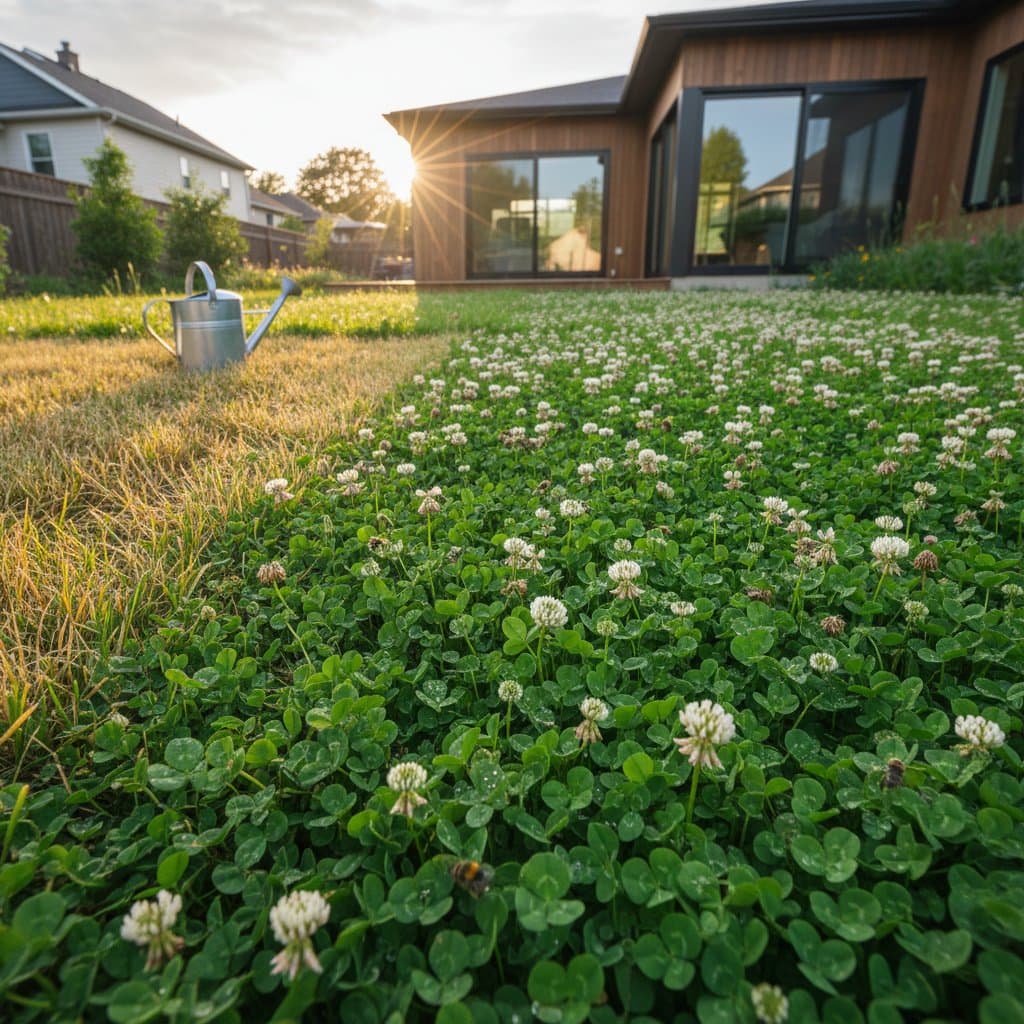
Entering Sarah and Mateo's yard differs markedly from a standard suburban lawn. The surface yields softly underfoot. Small, rounded clover leaves create a thick mat that absorbs each step. Unlike the even green of turf grass, the clover lawn reflects light variably, imparting depth and subtle motion to the expanse. Delicate white flowers emerge in spring and summer, drawing bees and forming faint patterns against the verdant base.
The clover endures dry periods without additional water, aligning with the couple's key objective. Sarah noted, "We wanted something that looked alive all year, but did not need us to run sprinklers or use fertilizers." The clover manages itself effectively.
The Design Process
Claire initiated the project by analyzing soil composition and evaluating sun exposure. The yard enjoyed full sun in most sections, with partial shade along a fence. Drawing on these findings, she suggested a blend of white clover (Trifolium repens) for its robustness and microclover (Trifolium repens var. Pirouette) for its finer foliage. This mix produced a compact, plush surface ideal for recreation and aesthetics.
The team first eradicated the existing turf and tilled the soil to four inches deep. They incorporated a modest layer of compost to enhance texture and percolation. Next, they dispersed the clover seeds via a hand spreader and gently pressed them into the ground for optimal adhesion. Daily light misting sustained the area until sprouts appeared in roughly two weeks.
As the clover established, the yard gained immediate fullness and vitality, even in arid conditions. Mateo remarked, "It is honestly our favorite part of the house now." The inviting and effortless quality encourages more outdoor time.
Aesthetic and Tactile Features
The clover lawn presents a velvety finish that shifts with illumination and atmospheric changes. Dew gathers on the leaves at dawn, yielding a shimmering silver tone. At noon, the expanse radiates a deep, vivid green. The petite blooms introduce dynamism and focal points without overshadowing adjacent vegetation.
For the family dog, the clover offers a gentle padding that deters excavation and avoids mud after showers. Children experience a refreshing coolness barefoot. The terrain accommodates play while supporting furniture and regular passage.
Claire incorporated discreet pathways of decomposed granite, bordered by metal edging, to direct traffic without disrupting the organic layout. These routes weave through the greenery seamlessly. In the rear, a cedar deck seating zone overlooks a pollinator garden featuring echinacea, salvia, and black-eyed Susan. The clover merges fluidly into this border, fostering a cohesive scene.
Selecting the Appropriate Clover Blend
Various clover species adapt to specific environments. Homeowners contemplating this transition should evaluate light levels, soil permeability, and usage intensity. Claire advises the following choices:
- White clover: Suited to heavy foot traffic; remains compact and thick.
- Microclover: Features slender leaves and minimal blooms; perfect for integrated lawns.
- Red clover: Grows taller; appropriate for wildflower areas or relaxed zones.
- Alsike clover: Handles dappled light and moist ground well.
A hybrid strategy frequently proves optimal. Pairing white and microclover, for instance, delivers durability alongside elegant form. Apply mulch along borders to delineate spaces and curb unwanted expansion into cultivated sections.
Maintaining a Clover Lawn
Several months post-installation, the clover retains its vibrancy and compactness. The yard conveys vitality rather than polished uniformity. Children pursue butterflies amid the flowers, while the family relaxes on the deck observing shadows play across the foliage. This setup achieves the desired equilibrium of innate allure and reduced labor.
Claire follows up with clients after one growth cycle to assess performance. She observes, "What surprises people most is how quickly they stop missing their old grass." Clover provides superior comfort and year-round appeal.
Adopting clover lawns transcends fashion. It reflects evolving perspectives on exterior areas. Lawns evolve into functional ecosystems impacting conservation, earth quality, and wildlife diversity.
Transitioning to Clover
Homeowners prepared to adopt this approach should begin modestly. Transform a narrow side yard or entry strip to gauge clover's adaptation to local factors. Monitor growth patterns, sensory qualities, and upkeep demands.
Sarah and Mateo's endeavor illustrates the harmony of eco-consciousness and usability in routine landscapes. Their clover lawn fulfills essential functions while fostering ties to the natural world. It flourishes with modest input, welcomes beneficial insects, and infuses vitality where uniformity once prevailed.