
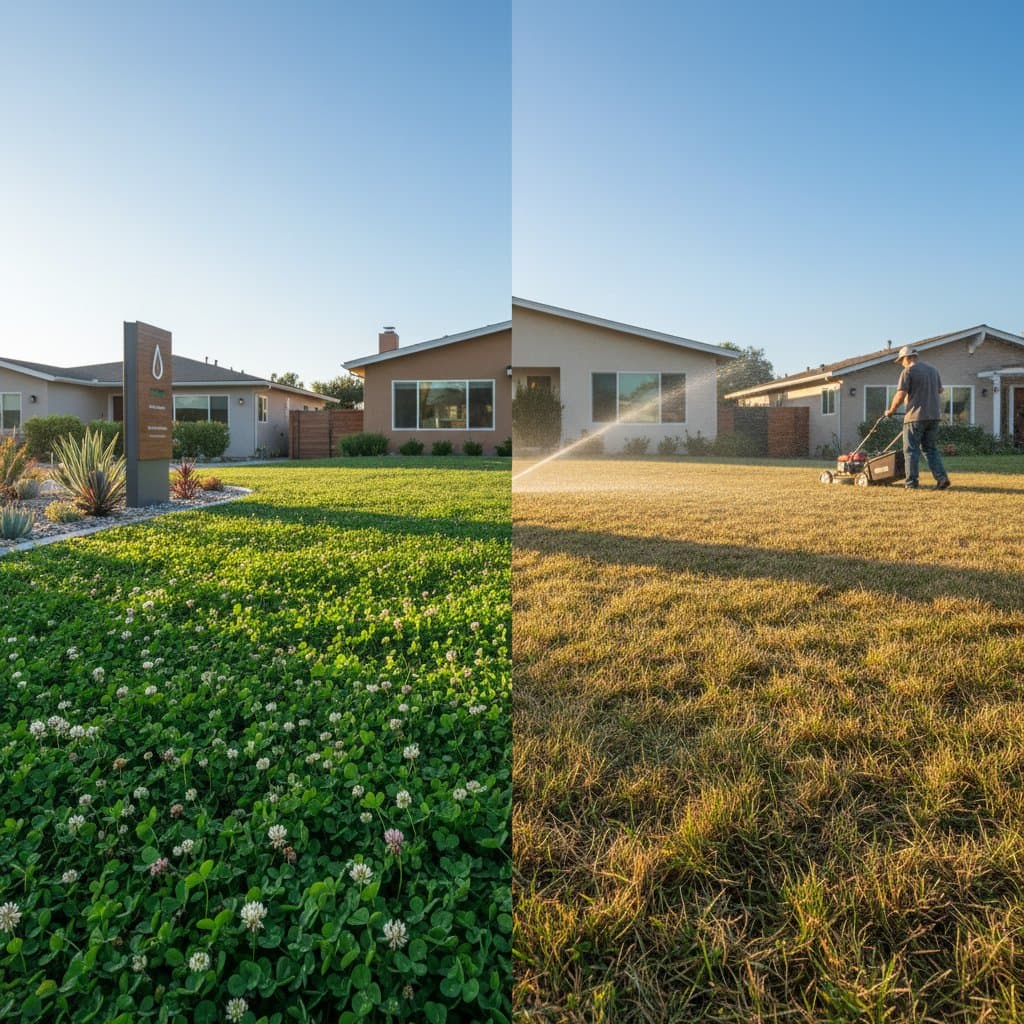
Why Homeowners Choose Clover Lawns Over Traditional Grass
A lush green lawn enhances the peace and appeal of any home. Maintaining perfect grass, however, requires significant work. Water restrictions, fertilizer costs, and frequent mowing lead many to explore better options. Clover stands out as an excellent choice. Once seen as a weed, clover now gains favor in California gardens and beyond. Homeowners value its soft texture, durability, and eco-friendly qualities, which fit modern landscaping goals.
The Rise of Clover Lawns
Clover lawns build on a traditional concept that gains traction as people seek to reduce maintenance and environmental impact. Standard grass lawns require large amounts of water, regular mowing, and chemical fertilizers to stay healthy. Clover thrives with far less in each area while providing equal or better visual appeal.
Clover sets itself apart by fixing nitrogen in the soil. This natural process enriches the ground, feeding the clover and nearby plants. Homeowners who once spent weekends fertilizing find that clover handles this job on its own. This self-sufficiency aligns with California's focus on water conservation and healthy soil.
Key Benefits That Draw Homeowners
Clover lawns blend toughness, beauty, and practicality. When comparing options, several clear advantages make clover the top pick.
-
Lower Water Use
Clover keeps its green color with much less water than typical turf grass. Its deep roots pull moisture from lower soil layers, helping it endure dry spells. In areas where water conservation matters greatly, this trait makes clover a smart option. -
Minimal Fertilizer Needs
Clover's natural nitrogen fixation eliminates the need for synthetic fertilizers. It partners with soil bacteria to convert atmospheric nitrogen into usable plant food. This process nourishes the clover and improves surrounding grasses or ground covers. -
Soft and Thick Texture
Many homeowners love the cushioned feel of clover underfoot. The fine leaves create a soft mat that stays cool in the sun and welcomes barefoot play. Families with pets and children value its gentleness and strength. -
Resistance to Weeds
A dense clover cover leaves little room for weeds to take hold. Once established, clover outcompetes intruders, reducing the need for chemical weed killers. This fits well for those aiming for a pesticide-free yard. -
Support for Pollinators
Clover flowers attract bees and other essential insects, boosting local biodiversity. Gardeners who care about ecosystems see the clover lawn as a built-in habitat that aids pollination across the neighborhood. -
Cost Savings Over Time
Less watering, rarer mowing, and no fertilizer bills add up to real savings. Seeding costs money upfront, but ongoing care stays simple, freeing up time and budget.
Choosing the Right Clover Types
Different clover types vary, and picking the best one affects both performance and look. White clover and microclover lead as choices for lawns.
-
White Clover (Trifolium repens)
This variety spreads easily and produces small white flowers that add charm. It grows to a moderate height and mixes well with short grasses. White clover shows strength and adapts to various soils and climates. -
Microclover (a smaller version of white clover)
Microclover has finer leaves and fewer flowers, creating a neater, more uniform look. It pairs nicely with fine fescues or ryegrass for a smooth green carpet that mimics traditional lawns but keeps eco-benefits.
For mixes with grass, aim for balance to allow both to thrive. Too much clover can smother slower-growing grasses, while too little misses full nitrogen gains. Many find that adding about 5 percent microclover seeds ensures even coverage.
How to Establish a Clover Lawn
Starting a clover lawn follows straightforward steps, but preparation and timing matter for long-term success. Whether starting fresh or adding to an existing lawn, careful setup leads to strong results.
-
Prepare the Soil
Clear weeds and debris from the area. Loosen or aerate the soil to help seeds contact the ground. Clover prefers well-draining soil with moderate fertility, so add compost to compacted or poor spots before planting. -
Pick the Best Planting Time
Clover germinates best in cool weather with consistent moisture. Avoid seeding during extreme heat or frost. The goal is to give young plants time to establish roots before tough conditions hit. -
Spread Seeds Evenly
Distribute seeds uniformly across the area. Hand-spreading works for small spaces. Use a spreader for larger ones. Lightly rake seeds into the soil, then water gently. -
Water Carefully
Keep the soil moist but not soggy for the first few weeks. Once established, clover handles dry periods well. Use deeper, less frequent watering to build strong roots. -
Mowing Guidelines
Clover grows slowly and rarely tops six inches. Some mow occasionally for a tidy look, while others let it flower for a wilder feel.
Common Concerns and Realistic Expectations
No landscaping choice lacks challenges, and clover lawns have their own. Understanding these helps decide if it fits your needs.
-
Bee Activity
Clover flowers bring bees, which may worry those with allergies. Mow before blooming to limit flowers while keeping the green lushness. -
Traffic Tolerance
Clover handles moderate foot traffic but wears under constant heavy use. Add paths or hard surfaces in play or walkway areas to prevent damage. -
Color Variations
Clover holds a steady green hue, but it may differ slightly from nearby grass. This subtle contrast pleases many, though blending with microclover creates a more uniform appearance.
Environmental and Lifestyle Advantages
Clover lawns offer benefits that reach beyond the yard to reflect shifting views on beauty and care in outdoor spaces. They help pollinators, reduce runoff pollution, and save water. They also free up time for enjoying the outdoors rather than working on it.
Clover suits California's style. Its natural softness pairs with native plants, stone paths, and drought-tolerant features. It captures the low-maintenance approach that builds resilient landscapes. As climate changes challenge regions, such water-smart lawns show forward-thinking adaptation.
Maintaining Your Clover Lawn
Once established, a clover lawn becomes a living system that improves over time. Soil gains nutrients, roots deepen, and the surface smooths out. Reseed thin spots as needed, but overall care remains basic compared to grass.
For the best look:
- Water only during extended dry spells.
- Mow lightly once or twice a year if desired for neatness.
- Leave clippings to naturally return nutrients.
- Avoid heavy traffic on wet soil to prevent compaction.
Making the Switch to Clover
Moving from traditional grass to clover invests in ease and eco-balance. Choose pure clover or a mix for a lively, touchable, responsible landscape.
Homeowners who make the change often note less yard work and more relaxation time. This shift captures smart landscaping: creating spaces that support people and nature. Under California's sun, clover lawns represent timeless, practical choice.