
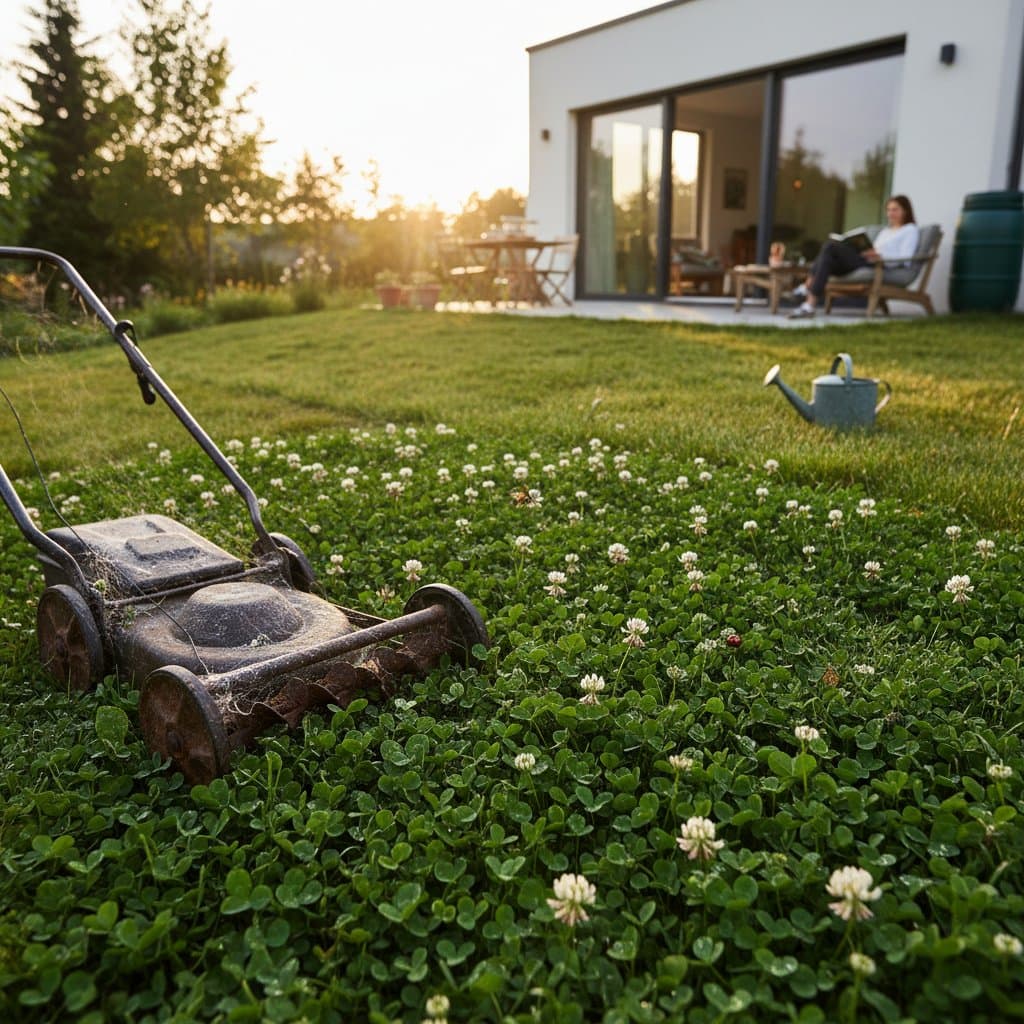
Why Clover Lawns Outperform Traditional Grass
A vibrant green yard symbolizes outdoor appeal for many homeowners. However, conventional turf grass requires ongoing attention through watering, fertilizing, and mowing. Clover lawns present a durable, environmentally sound substitute that enhances the landscape's softness and bolsters underlying soil health. This approach yields a casual, welcoming vibe distinct from the precision of manicured lawns.
At a Glance
Location: Adapts to most temperate areas
Size: Fits compact yards, expansive lawns, or integrated plantings
Climate Zone: Excels in mild to warm conditions with periodic rainfall
Project Goal: Minimize upkeep, promote biodiversity, and limit chemical applications
1. Select the Appropriate Clover Variety
The choice of clover type establishes a robust foundation for lawn success. White clover expands rapidly while remaining low-profile, suiting active family spaces. Microclover integrates smoothly into current grass and maintains a neat finish. Red clover reaches greater heights, ideal for meadow-inspired designs or broad expanses.
Clover naturally fixes nitrogen in the soil, decreasing reliance on commercial fertilizers. A Midwest-based landscape designer notes, "Clover nourishes itself and nearby plants. This inherent nutrient process yields a healthier lawn with reduced labor."
Design Insight: Incorporate clover into existing grass for a gentle, variegated pattern that withstands moderate use and retains vitality during droughts. Opt for microclover or dwarf white clover to achieve consistency.
Visual Callout: Delicate white clover blooms create understated patterns across the ground without dominating the view.
2. Adjust Care Routines for Efficiency
Clover lawns alter the pace of landscape maintenance. Unlike grass that demands weekly cuts and regular feeding, clover advances more gradually and sustains color amid dry periods. Trim every two to three weeks to promote uniformity and thickness.
Clover's extensive root systems access deeper moisture and strengthen soil composition compared to standard turf. These traits prevent sparse areas and curb watering frequency. A horticulture consultant observes, "After rooting, a clover lawn substantially lowers water demands. It flourishes on ambient precipitation in typical settings."
Functional Benefit: Reduced trimming and hydration efforts conserve time and lower utility expenses.
Design Insight: Permit clover to reach three to four inches in height for a plush, inviting texture. Frequent short trims may stress the foliage.
Visual Callout: A battery-powered mower effortlessly navigates a clover expanse that holds its deep green hue through midsummer warmth.
3. Foster Pollinators and Enhance Soil Vitality
Beyond visual improvements, clover lawns contribute to ecological balance. Their petite white or pink flowers draw bees, butterflies, and helpful insects, boosting pollination throughout the property. Nitrogen fixation by clover roots also enriches the earth, benefiting adjacent garden features.
An ecological gardener states, "A clover lawn infuses vitality into the surroundings. It buzzes with subtle activity, linking the space to the broader environment."
Functional Benefit: Builds ecological diversity and superior soil with little intervention.
Design Insight: Perform a light trim post-primary flowering to manage bloom density. This preserves pollinator support without cluttering the area.
Visual Callout: Bees visit compact white flowers near a stone walkway, introducing dynamic elements to the setting.
4. Integrate Clover with Complementary Covers
Clover pairs effectively with additional hardy ground covers for added dimension. Creeping thyme, chamomile, or local sedges introduce diverse textures and aromas, filling spots where clover might sparse. Such combinations deter invasive plants and yield a stratified, organic appearance.
A landscape architect specializing in arid zones explains, "Diverse plantings enhance durability. When one element falters, companions compensate, ensuring consistent greenery."
Functional Benefit: Broadens coverage and secures soil integrity.
Design Insight: Deploy clover-dominant blends in full sun, combining with shade-adapted covers beneath trees or borders.
Visual Callout: Microclover interwoven with creeping thyme crafts a gentle tapestry flowing from terrace to lawn.
5. Prepare the Site and Establish Methodically
Success with clover begins with thorough groundwork. Clear weeds or old sod, till the surface soil, and smooth the grade. Scatter seeds uniformly, then apply light irrigation to embed them. Maintain steady dampness for the initial weeks as roots develop.
Under favorable temperatures, clover sprouts swiftly, covering the area in verdure soon after. Limit foot traffic in the nascent phase. Established clover withstands play, pets, and events robustly.
Functional Benefit: Rapid rooting averts exposed soil and runoff.
Design Insight: Seed clover at half the density of standard grass to encourage organic expansion and a naturalistic outcome.
Visual Callout: Emerging clover fills gaps among pavers, tempering rigid lines with fresh verdure.
6. Realize Enduring Economies and Ecological Gains
Clover lawns diminish needs for amendments, watering setups, and treatments. They evolve into independent surfaces that remain handsome with sparse care. This strategy trims expenses and eases environmental impact over years.
A sustainability specialist comments, "Each clover area advances a more vital environment. It demonstrates how aesthetics and stewardship coexist harmoniously."
Functional Benefit: Curbs ongoing expenditures and consumption.
Design Insight: Complement clover with water-harvesting features or porous surfaces for a comprehensive green infrastructure.
Embracing the Clover Lifestyle
A clover lawn redefines yard utility and ambiance. Its yielding turf welcomes bare feet, and blooming phases introduce gentle yearly shifts. Freed from intensive chores, owners reclaim leisure time. Ultimately, this choice transcends mere ground cover, embodying a harmonious blend of ease and ecology for contemporary homes.