
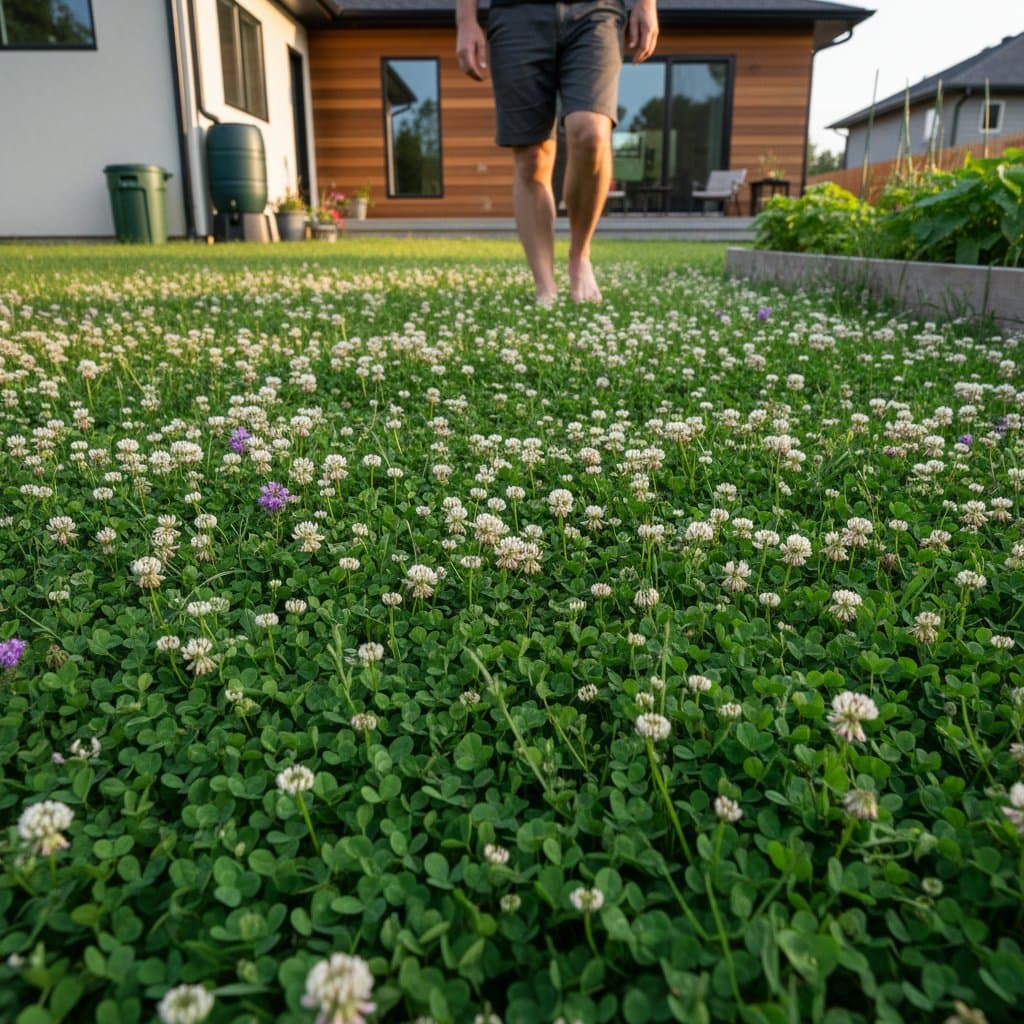
Why More Homeowners Choose Clover Lawns Over Grass
A lawn establishes the initial impression of any home and serves as the foundation for outdoor activities. In recent years, numerous homeowners have transitioned from traditional turf to clover due to its minimal upkeep, durability, and inherent appeal. This change extends beyond aesthetics; it embodies a commitment to sustainable landscapes that harmonize with the environment.
At a Glance
- Location: Thrives in temperate and transitional climates
- Size: Ideal for compact yards or expansive properties
- Climate Zone: Accommodates cool-season and warm-season conditions
- Project Goal: Develop a verdant, environmentally sound lawn that minimizes maintenance and water consumption
1. Clover Thrives Where Grass Struggles
Clover demonstrates exceptional adaptability, remaining vibrant during periods of drought and flourishing in nutrient-poor soils where grass develops uneven patches. Homeowners facing persistent bare areas discover that clover rapidly occupies these spaces, creating a uniform, thick mat. To establish clover, select white Dutch clover or microclover seeds and sow them in spring or fall after preparing the soil by removing debris and lightly tilling.
Landscape designers emphasize that clover roots quickly and provides a plush surface, rendering it suitable for family-oriented yards that demand both visual allure and longevity. The plant converts atmospheric nitrogen into a usable form for the soil, enhancing fertility without the application of synthetic fertilizers. This single adjustment in vegetation selection diminishes reliance on chemicals over time.
From a practical standpoint, clover enhances yard resilience as its roots facilitate water infiltration, thereby minimizing surface runoff. In terms of design, the delicate foliage texture of clover tempers rigid features and integrates seamlessly with elements such as stone paths, gravel accents, or wooden structures.
Visual callout: Low-growing clover spreads evenly around a stepping-stone path.
2. Less Water, More Green
Clover lawns preserve their verdant appearance with significantly reduced irrigation compared to turf grass. The extensive root system accesses moisture from deeper soil levels, sustaining vitality amid high temperatures and arid conditions. For residents in areas subject to water restrictions, this characteristic yields noticeable improvements in lawn health.
Horticulturists note that clover lawns halve water usage in various regions while retaining lushness throughout the growing season. Such efficiency fosters sustainable residential landscapes and decreases long-term expenses. To optimize water savings, install a drip irrigation system initially, then rely on natural rainfall once established.
Design professionals value the uniform soft green shade of clover, which remains steady across the property and avoids the dull appearance of browned grass in summer. In blended lawns, combining clover with fine fescue achieves a cohesive hue that transitions smoothly into adjacent garden borders.
Visual callout: Clover remains vibrant beside a mulched vegetable patch during dry weather.
3. No Need for Fertilizer or Weed Control
Conventional lawns demand regular fertilization and herbicide applications to maintain vigor. Clover disrupts this cycle entirely, as its legume nature enables it to enrich the soil with nitrogen, benefiting both itself and surrounding vegetation. Homeowners can forgo commercial fertilizers by overseeding existing lawns with clover, allowing natural fixation to take effect within one season.
Turf specialists describe clover as a self-sustaining nutrient producer that bolsters the broader soil biology once rooted. This mechanism nurtures healthier companion plants, including ornamental grasses and blooming perennials. The process requires no additional inputs beyond initial seeding.
Weed competition diminishes as clover forms a dense canopy that blocks sunlight to the ground, suppressing invaders like crabgrass and dandelions. The consistent coverage ensures a smooth, green expanse free from common lawn pests. This approach conserves time, curtails environmental harm, and shifts emphasis to aesthetic elements rather than corrective measures.
Visual callout: A smooth clover surface replaces patchy turf around a backyard seating area.
4. Soft Texture and Year-Round Appeal
Barefoot traversal on clover differs markedly from that on grass, with its petite, padded leaves offering a cooling, gentle sensation. Families with children or pets immediately appreciate this tactile comfort, which encourages outdoor engagement. Clover varieties like Dutch white maintain this quality consistently.
Designers highlight that clover lawns beckon occupants outdoors through their inviting feel, contrasting with the coarser texture of certain turf types. This attribute suits play zones, relaxation areas, or routes to garden features. Integrate clover by edging it along borders to define spaces without harsh lines.
Clover sustains its coloration across seasons, holding a reliable green until severe frost arrives. Unlike grass, which may enter dormancy, clover's compact stature averts soil erosion and preserves neatness during winter. It complements stone patios, metal edgings, or native plantings, where its subtle foliage offsets bolder textures such as tall grasses or lavender hedges.
Visual callout: A low clover lawn frames a modern concrete terrace with soft green edges.
5. Friendly to Bees and Biodiversity
Clover revitalizes pollinator populations in suburban settings through its diminutive white or pink flowers, which supply nectar to bees and helpful insects. This support extends to nearby fruit trees, vegetable plots, and flowering shrubs, enhancing overall productivity. Opt for low-bloom microclover in visible areas to minimize floral density while preserving benefits.
Garden ecologists observe that a clover lawn transforms a standard yard into a dynamic ecosystem, attracting pollinators that bolster garden performance. The subtle activity of insects and butterflies, coupled with vigorous underground soil life, infuses the landscape with vitality. This interconnectedness contributes to its rising popularity.
Designers perceive clover as an animated element that fosters a sense of harmony and energy. To amplify biodiversity, interplant with native wildflowers, creating pockets of heightened ecological activity without overwhelming the lawn's uniformity.
Visual callout: Bees move across low clover blossoms near a raised herb bed.
6. Easy Maintenance and Natural Repair
Maintaining a clover lawn involves minimal labor, as most types reach only a few inches in height, necessitating cuts every two to three weeks for tidiness. Many owners forgo mowing altogether, embracing a gentle meadow aesthetic that aligns with informal garden designs. Use a sharp reel mower to avoid damaging the fine leaves.
Groundskeepers affirm that clover lawns require scant attention: reduced mowing, watering, and no reseeding for sparse areas. Creeping runners naturally mend any disruptions, restoring full coverage independently. This self-repair capability ensures enduring uniformity.
Practically, clover lowers the need for equipment, fuel, and expenses associated with upkeep. In design terms, it sustains a polished appearance with little effort, resonating with sustainable modern living. For optimal results, aerate annually to promote root depth and health.
Visual callout: Low clover growth stays uniform around a gravel fire pit area.
7. Adapts Beautifully to Mixed Landscapes
Clover extends beyond complete lawn replacements, integrating effortlessly into current grass areas or serving as filler in garden divisions. Its flexibility appeals to designers crafting multifaceted, responsive environments. Begin integration by topdressing with clover seed over thinned grass in autumn for gradual blending.
Landscape architects praise clover's compatibility with fescue, rye, or native grasses, where it eases boundaries and introduces ecological advantages. Such combinations cut maintenance demands while preserving a conventional lawn vibe. Experiment with ratios, starting at 20 percent clover for subtle enhancement.
For added visual intrigue, employ clover as borders along walkways, patios, or rain gardens. It fits seamlessly in rustic cottage schemes or sleek contemporary layouts, yielding purposeful, benefit-rich outcomes that feel deliberate.
Visual callout: Mixed clover and fine fescue lawn connects seamlessly to a stone walkway.
Integrating Clover into Daily Yard Life
Adopting clover alters the yard's dynamics and enhances everyday interactions with the space. The surface endures as vibrant, comfortable, and accessible with sparse intervention. It nurtures pollinators organically and sustains soil vitality absent chemical aids.
Homeowners pursuing durability, elegance, and harmony with nature find clover lawns a straightforward solution. These landscapes deliver practicality alongside resource conservation and seasonal liveliness, proving that effective design can prioritize gentleness and efficiency.