
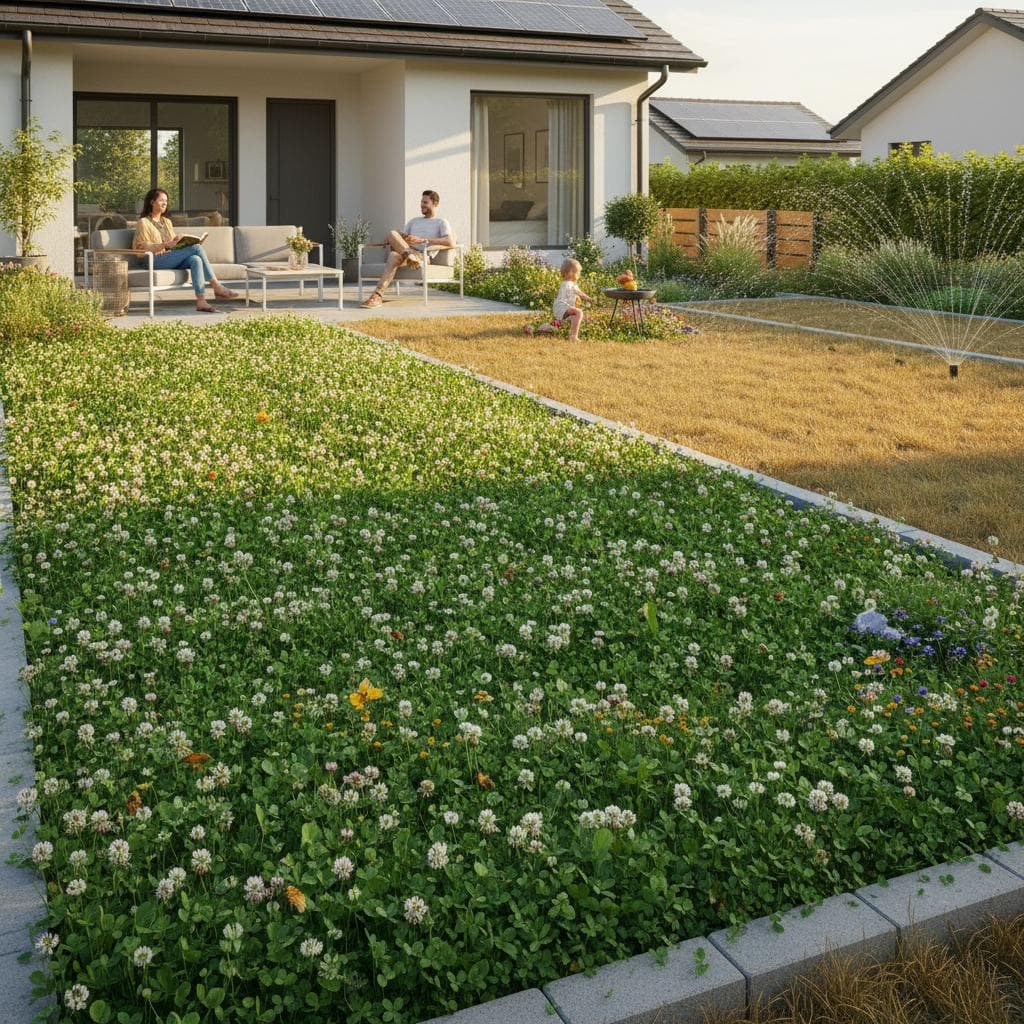
The Rise of Clover Lawns: A Sustainable Shift for Modern Yards
Traditional lawns demand constant attention through frequent mowing, heavy watering, and chemical fertilizers. In contrast, clover lawns provide a lush, green expanse with minimal effort and substantial environmental advantages. This transition aligns with a broader movement toward landscapes that harmonize with natural ecosystems.
Homeowners select clover for its adaptability to diverse conditions, its ability to enhance soil quality, and its endurance during periods of low rainfall. Such lawns maintain their appeal while supporting wildlife and reducing resource consumption.
Key Considerations
Suitable Regions: Most temperate areas with moderate sunlight.
Yard Scale: Ideal for compact urban plots or expansive suburban lawns.
Climate Suitability: Thrives in moderate to warm zones with occasional dry spells.
Primary Objective: Develop a resilient, eco-conscious lawn requiring little upkeep while preserving visual allure.
1. Conserve Water While Maintaining Lush Greenery
Clover lawns require significantly less irrigation compared to standard turf grasses. Their extensive root systems penetrate deeper into the soil to access stored moisture, ensuring the surface remains vibrant even in arid conditions. Establish clover by seeding in early spring or fall, then water sparingly until roots take hold, typically within four to six weeks.
Landscape designers note that clover retains its hue when surrounding grass browns, resulting in reduced irrigation frequency and substantial utility savings. From an aesthetic viewpoint, the fine-leafed texture of clover introduces subtle patterns, particularly when interplanted with complementary grasses like fine fescue.
This combination yields a textured mosaic that withstands summer heat without supplemental watering beyond natural rainfall.
Highlighted Benefit: A blend of clover and fescue endures extended dry periods with consistent green coverage.
2. Eliminate Fertilizer Applications Through Natural Enrichment
Clover possesses the unique ability to fix atmospheric nitrogen into the soil via symbiotic bacteria in its roots, nourishing itself and adjacent plants without external inputs. This process eliminates the need for synthetic fertilizers, preventing chemical runoff and fostering long-term soil fertility. To maximize this benefit, select white clover varieties and overseed existing lawns at a rate of five to ten pounds per thousand square feet.
Horticulturists emphasize that clover performs the role of fertilizer more efficiently and sustainably, enhancing overall yard health. In terms of layout, this self-nourishing quality allows for a polished appearance with simple edging using materials such as recycled plastic or natural stone to define boundaries.
Such borders maintain neatness while permitting clover to spread beneficially within designated areas.
Highlighted Benefit: Sturdy edging materials contain clover growth, ensuring a structured yet organic yard perimeter.
3. Foster Pollinator Habitats and Enhance Ecological Diversity
The delicate flowers of clover attract essential pollinators including bees, butterflies, and hoverflies, contributing to local biodiversity without additional planting efforts. These blooms, in shades of white or pink, emerge intermittently and add a touch of seasonal color that integrates seamlessly into the landscape. If a manicured uniformity is desired, mow the flowers after they fade to encourage further growth cycles.
Landscape ecologists observe that each clover lawn functions as a micro-habitat, bolstering pollinator populations with zero extra maintenance. This feature complements naturalistic designs; integrate clover with native species such as echinacea or rudbeckia along borders to form fluid connections between open lawn and structured beds.
The result is a cohesive yard that supports wildlife while offering visual depth through layered plantings.
Highlighted Benefit: Clover's white blooms draw pollinators alongside edges planted with native perennials.
4. Minimize Mowing Frequency for Effortless Upkeep
Clover typically grows to a compact height lower than many turf varieties, reaching only three to six inches before requiring attention. This trait allows homeowners to mow every two to three weeks rather than weekly, preserving a meadow-inspired softness ideal for barefoot strolls. Adjust mower blades to two inches for clover to promote denser coverage and discourage weed intrusion.
Landscape contractors point out that occasional trimming suffices to maintain tidiness, as clover rarely overtakes its space. Design elements benefit from this restrained growth, which accentuates focal points like outdoor seating areas, pathways, or sculptural features without overwhelming the composition.
The smooth visual flow draws attention to architectural highlights within the yard.
Highlighted Benefit: A compact clover expanse accentuates a stone fire pit, creating an inviting outdoor retreat.
5. Withstand Foot Traffic and Pet Activity with Quick Recovery
Clover demonstrates remarkable durability against regular use, rebounding from footsteps or pet play within days due to its flexible stems and rapid regrowth. It suits high-traffic zones such as play spaces or dog runs, where bare spots fill in naturally without intervention. For optimal performance, incorporate drought-tolerant microclover seeds at a density of two pounds per thousand square feet, blended with fine fescue for added strength.
Turf specialists affirm that clover's toughness rivals more demanding grasses, eliminating the need for annual reseeding. This blend ensures a plush, even surface that remains inviting across varying weather and usage patterns.
Homeowners enjoy a yard that accommodates family activities while retaining its fresh appearance.
Highlighted Benefit: Microclover fused with fescue forms a sturdy, cushioned lawn resilient to daily wear.
Embracing the Everyday Advantages of Clover
Adopting a clover lawn transforms yard maintenance into a streamlined routine focused on enjoyment rather than labor. Watering becomes occasional, mowing intervals lengthen, and the return of pollinators signals a thriving ecosystem. Professionals value clover's versatility, as it pairs effortlessly with elements like gravel paths or ornamental borders to craft personalized outdoor environments.
Designers highlight how clover unites aesthetics with utility, delivering enduring satisfaction. With appropriate seed selection and basic practices such as aerating annually, clover lawns flourish indefinitely, exemplifying sustainable choices that enhance both form and function.