
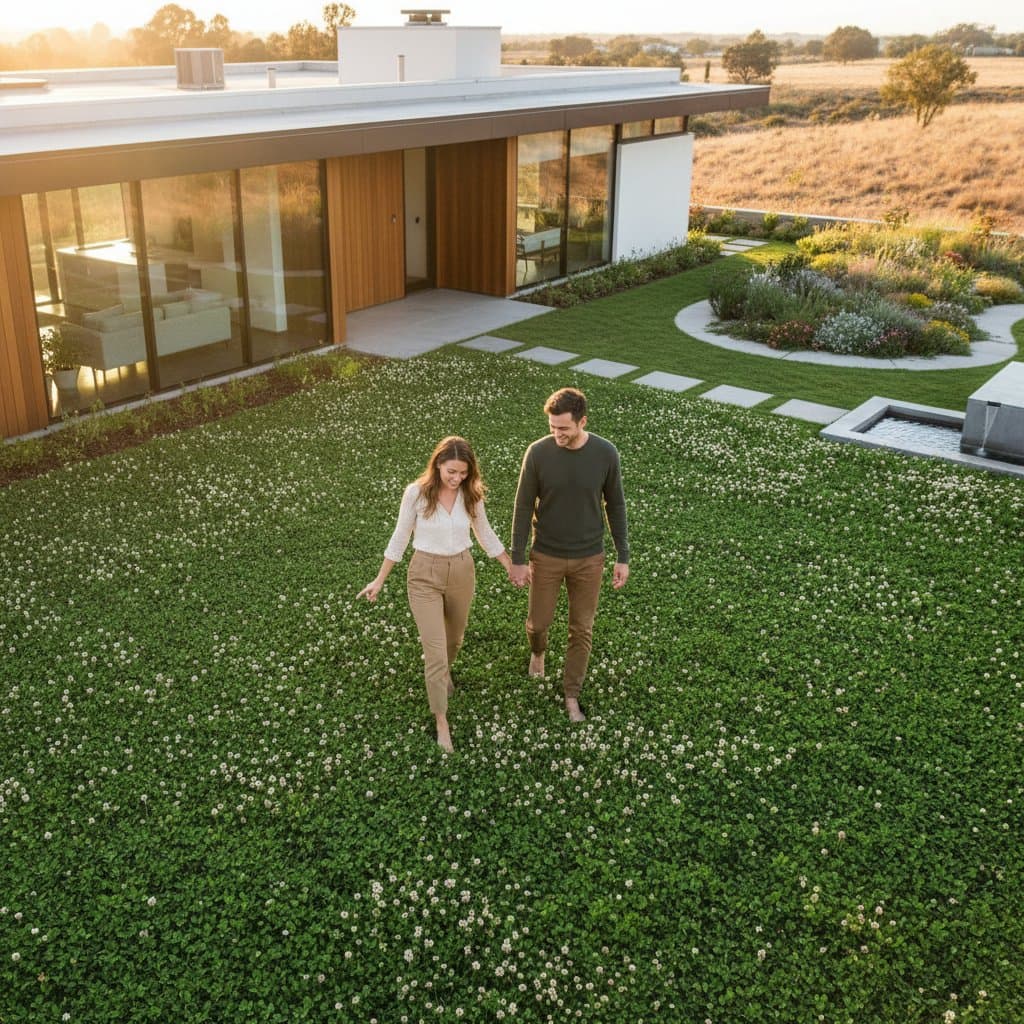
Why Homeowners Choose Clover Lawns
Sarah and Daniel purchased a mid-century home with an expansive yard they admired, yet the maintenance proved overwhelming. Weekends filled with mowing, watering, and fertilizing led to frustration during patchy summers. They sought a vibrant, low-effort lawn that integrated naturally, aided pollinators, and required minimal intervention. Clover emerged as the ideal choice.
The Appeal of Clover's Lush Appearance
Viewed from the street, Sarah and Daniel's yard presents a dense, velvety expanse of green. Closer inspection reveals microclover's delicate leaves forming a tight mat, blended with Dutch white clover and a touch of low-growing fescue for added stability. This combination mimics the feel of conventional turf while offering superior resilience.
Clover lawns capture interest for their ability to remain verdant without frequent irrigation or synthetic inputs. They recover swiftly from activity like foot traffic or pet romps. For Sarah and Daniel, this translated to a durable surface suitable for everyday use and occasional events.
"Once we understood that clover fixes its own nitrogen, the decision felt straightforward," Sarah explained. "We preferred a system that harmonizes with the environment."
Key Benefits of Clover for Modern Yards
Homeowners seeking relief from intensive lawn routines find clover provides tangible improvements. These advantages stem from clover's biological traits and adaptability.
1. Reduced Water Needs
Clover develops extensive root systems that access deeper soil moisture, sustaining color during dry periods. After establishment, supplemental watering occurs only in prolonged droughts, typically every two to three weeks in arid conditions.
2. Self-Sustaining Nutrition
Through nitrogen fixation, clover converts atmospheric nitrogen into soil nutrients, nourishing itself and surrounding vegetation. This process avoids reliance on chemical fertilizers, preventing runoff that harms aquatic systems.
3. Enhanced Pest Management
Clover demonstrates resistance to prevalent pests and ailments affecting turf. It draws helpful insects, including bees and ladybugs, fostering an equilibrium that deters invasive species naturally.
4. Inviting Surface Quality
The soft foliage and resilient bounce underfoot create comfortable areas for walking, lounging, or play without irritation.
5. Attractive and Consistent Look
Select fine-leaved types maintain a compact height with subtle white flowers blooming sporadically, adding charm without overwhelming the design.
Daniel noted the swift impact. "The former lawn consumed our weekends with cuts and treatments. Today, we edge occasionally and savor the space."
Implementing Clover Maintenance
Adopting clover shifts perspectives from rigid uniformity to flexible vitality. These lawns hold steady green tones and respond well to basic care. Sarah and Daniel adhere to this straightforward schedule:
- Mow every two to three weeks, setting the blade at three inches to promote density.
- Irrigate sparingly, focusing on extended dry spells exceeding two weeks.
- Overseed in early spring with a light application to address bare spots.
- Allow clippings to decompose on site, recycling organic matter back into the earth.
Clover's slower growth halves mowing duration compared to grass. The family discontinued herbicides, permitting native elements like violets and self-heal to intersperse gently. This yields a plush, semi-wild aesthetic that suits suburban norms.
Integrating Clover into Broader Landscapes
Several months post-installation, Sarah and Daniel report profound shifts beyond aesthetics. Free time replaces chores, allowing more family moments in the yard. The surface endures heat waves with persistent color, while delicate blooms entice bees and butterflies, delighting the children.
This transition reshaped their overall garden strategy. They substituted select shrubs with pollinator-friendly natives and installed a modest rain garden by the gutter. The property now operates as an interconnected habitat, enhancing biodiversity and efficiency.
For those contemplating clover, Sarah and Daniel recommend a measured approach: establish a trial area of 100 square feet, observe growth patterns over one season, and refine based on local soil and climate. Clover flourishes under thoughtful oversight rather than relentless toil, yielding vibrant, functional outdoor realms.
Embracing clover restores equilibrium among human needs, plant health, and ecological harmony.