
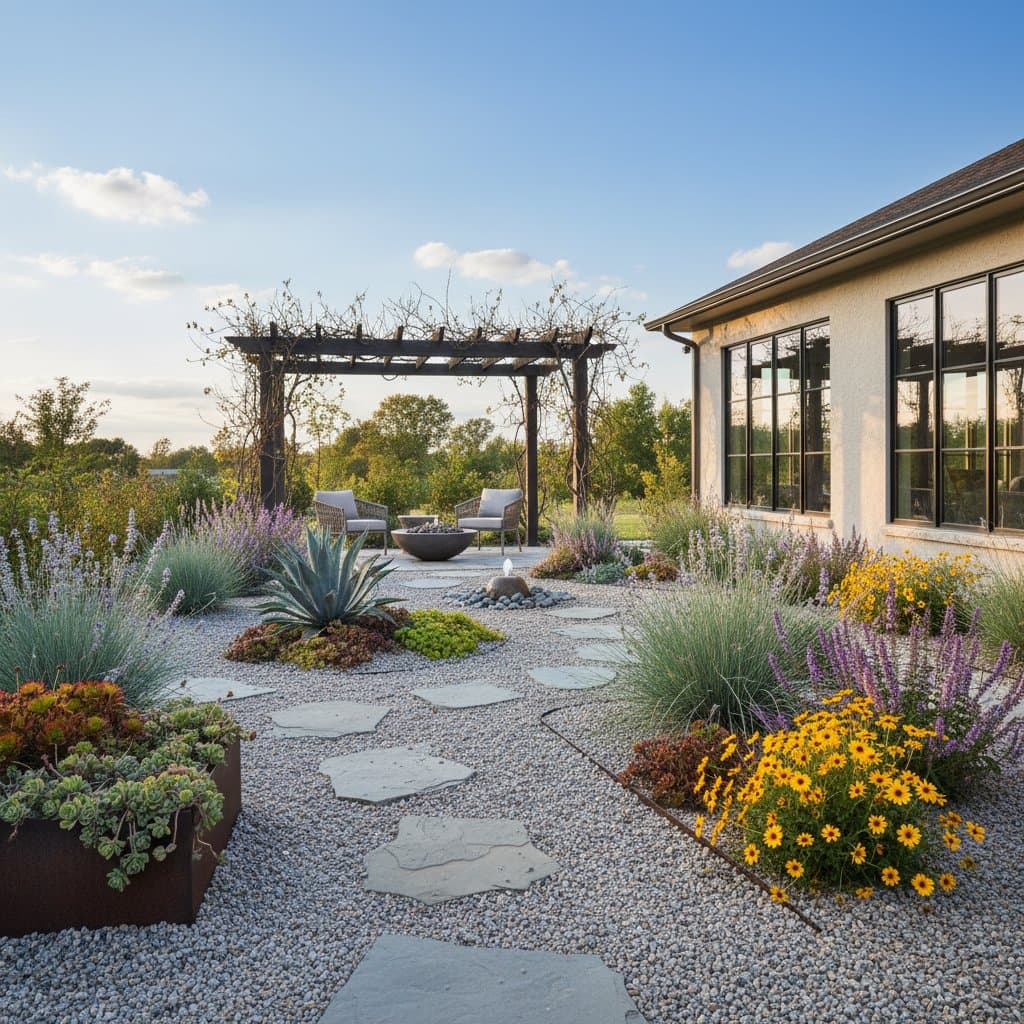
Why Gravel Gardens Outshine Traditional Lawns for Low-Maintenance Beauty
Picture a landscape that flourishes with scant attention, withstands dry spells, and maintains visual interest throughout the year. Gravel gardens embody this vision. Homeowners in California and similar arid areas increasingly view conventional lawns as outdated and resource-heavy. Gravel gardens provide depth, hue, and form without relentless watering or toil. These designs merge contemporary aesthetics with inherent durability.
Gravel gardens extend beyond mere substitution of turf with stones. They signify a transformation in outdoor space philosophy. A thoughtfully crafted gravel garden fosters pollinator habitats, lowers upkeep expenses, and establishes a serene, artistic ambiance suitable for modern or traditional residences. Such gardens retain allure amid adverse weather.
1. Challenges of Maintaining Traditional Lawns
Lawns traditionally represent tidiness and affluence. In numerous climates, however, they demand ongoing effort. Achieving verdant growth necessitates irrigation, nutrients, trimming, and insect management. In water-scarce locales, this practice proves expensive and ecologically burdensome.
Standard lawn care involves:
- Consistent watering, potentially multiple sessions weekly during arid periods.
- Routine cutting and bordering to preserve neatness.
- Nutrient applications and herbicide treatments that may contaminate aquifers.
- Annual reseeding or repairs for sparse areas.
Environmental impacts aside, time commitment weighs heavily. Homeowners dedicate numerous hours monthly to turf that yields minimal biodiversity. Gravel gardens, once set up, require far less intervention. They emphasize strategic planning over repetitive chores.
2. Essential Elements of Effective Gravel Gardens
A gravel garden constitutes a dynamic ecosystem grounded in water efficiency, ground quality, and compositional harmony. Gravel serves as mulch and cohesive base. It conserves soil dampness, curbs weed intrusion, and stabilizes thermal fluctuations.
Core features for optimal gravel gardens encompass:
- Soil foundation preparation: Incorporate organic matter or granular material to enhance percolation and root stability.
- Suitable gravel selection: Opt for jagged varieties that interlock securely. Small rounded pebbles appear attractive yet shift easily; fragmented rock or granular stone ensures firmness.
- Strategic stratification: Compact the underlying layer, add permeable barrier, then apply gravel topping for enduring strength.
- Water-efficient vegetation: Select herbs from Mediterranean regions, local species, or fleshy plants suited to gravel environs.
Balanced integration yields a landscape that appears organic yet deliberate.
3. Design Flexibility in Gravel Gardens
Gravel gardens exhibit remarkable adaptability. Tones span gentle ochre and neutral tan to intense ebony and alabaster fragments. Landscape professionals employ gravel to accent bold flora, form traversal routes, or delineate functional zones. The granular surface pairs seamlessly with streamlined buildings or wild terrains.
Consider these styling approaches:
- Contemporary simplicity: Employ single-hue gravel alongside structured clusters of century plants, yuccas, and decorative grasses.
- Mediterranean allure: Pair earthy gravel with aromatic herbs like lavender and rosemary, plus evergreen shrubs. Incorporate clay vessels or rock seating for warmth.
- Regional native style: Blend granular stone with adapted flora such as bearberry, lilac, and salvia. Subdued shades and indigenous leaves harmonize with local structures.
Gravel gardens manage inclines effectively. They mitigate water flow and soil loss, permitting infiltration while upholding unified appearance.
4. Substantial Water Conservation Benefits
Many property owners underestimate lawn hydration needs. Even compact turfs consume vast quantities annually. Gravel gardens feature root-deep flora requiring sparse supplemental moisture post-establishment. The stone layer retards vapor loss and cools the earth, prolonging hydration efficacy.
Effective gravel designs slash exterior water demands significantly. This benefits ecosystems and finances alike. As utility costs escalate, regions incentivize turf conversions with incentives. In certain markets, low-effort landscapes enhance resale potential, appealing to efficiency-minded purchasers.
5. Minimal Upkeep with Maximum Benefits
Gravel gardens demand little ongoing involvement. Eliminate trimming, bordering, or frequent clipping. The area develops subtly across seasons, needing sporadic oversight.
Routine duties comprise:
- Extracting occasional intruders amid stones.
- Redistributing or adding gravel biennially.
- Trimming hardy plants annually for vitality.
- Inspecting low-volume irrigation for functionality.
Proper upfront strategy confines these activities to brief intervals. Gravel gardens value foresight over perpetual labor. They enable relaxation in the yard rather than exertion upon it.
6. Enhancing Ecosystems and Ground Vitality
Despite minimalist appearances, gravel gardens sustain diverse life. Selecting blooming perennials and indigenous bushes supplies sustenance and refuge for insects, lepidoptera, and avians. The porous gravel promotes insect habitation and natural aeration.
Gravel-adapted flora develop extensive roots. These anchor earth and refine its composition gradually. Such systems self-regulate with reduced artificial aids. Lawns, conversely, rely on chemical amendments that harm microbial balance and taint drainage.
7. Cost Efficiency and Durability
Gravel gardens prove economical from outset through perpetuity. Setup entails soil work and material transport, yet subsequent expenses dwindle. Avoid equipment fixes, supply buys, or elevated utility charges.
Durability stands out. Installed soundly, gravel endures for generations. It resists degradation unlike sod or wood surfaces. Future modifications permit gravel relocation, promoting versatility and reuse.
For incremental upgrades, begin modestly, such as edging a drive or corner plot, expanding progressively.
8. Blending Gravel into Functional Outdoor Areas
Gravel transcends bed filling. It unifies lounging zones, meal spaces, and trails. Paired with slabs or poured elements, it fosters seamless, earthy transitions between interiors and exteriors.
For instance, a granular terrace edged by creeping herbs conveys ease with sophistication. It accommodates foot traffic, sheds precipitation swiftly, and coordinates with timber or masonry. Gravel routes flanked by resilient edging guide visitors through themed sections, instilling progression and unity.
Illumination enhances gravel appeal. Ground-level or self-powered lights cast gentle glows on light stones, evoking peace at dusk. Gravel's crunch underfoot introduces auditory texture absent in turf.
9. Addressing Gravel Garden Myths
Prospects sometimes perceive gravel gardens as stark or dull, yet vibrant implementations dispel this. Gravel frames lively accents and cyclic blooms comparably to tilled plots.
Clarify these myths:
- Perceived as mere stones: Actually, they integrate rigid and pliant elements in composed ecosystems.
- Growth difficulties for plants: Numerous varieties flourish, including aromatic spikes, sages, beardtongues, coneflowers, and local tufted grasses.
- Excessive heat buildup: Adequate foliage and layering avert scorching; pale gravel deflects rays for balance.
- Overly contemporary vibe: Customization via flora and arrangement suits diverse motifs, from pastoral to arid elegance.
Mature gravel gardens cultivate an authentic, nurtured essence.
10. Step-by-Step Planning and Setup Guidance
Prior to gravel implementation, map the area. Outline resting spots, routes, and flora arrangements. Evaluate light patterns and intended uses.
Installation sequence:
- Clear sod or overgrowth via smothering or heat methods, eschewing synthetics.
- Level for runoff, directing flow from buildings and averting depressions.
- Fortify ground with organics or aggregates for permeability.
- Place containment like alloy or rock perimeters.
- Position breathable sheeting to block intrusions yet permit circulation.
- Distribute gravel uniformly to 2-3 inches.
- Integrate plants amid coverage, spacing for expansion.
- Irrigate thoroughly initially; taper to periodic deep applications thereafter.
Meticulous groundwork yields polished, purposeful results.
11. Adapting Gravel Gardens to Varied Climates
Gravel excels in California's dry warmth but suits broader locales. Coastal settings benefit from erosion resistance. Interior deserts gain cooling cover. Temperate zones employ it as protective layer against compression and freeze cycles.
Success hinges on flora matching. Arid areas favor fleshy plants, sages, and indigenous swards. Moister climes select drained setups with montane or meadow perennials.
Cultivating Lasting Outdoor Harmony
As your gravel garden establishes, it transforms subtly. Flora expand, stones soften visually, and fauna integrate naturally.
This approach elevates rather than settles. It delivers persistent allure, ecological stewardship, and true simplicity. For those prioritizing form and conservation, gravel gardens represent a wise, artistic commitment.