
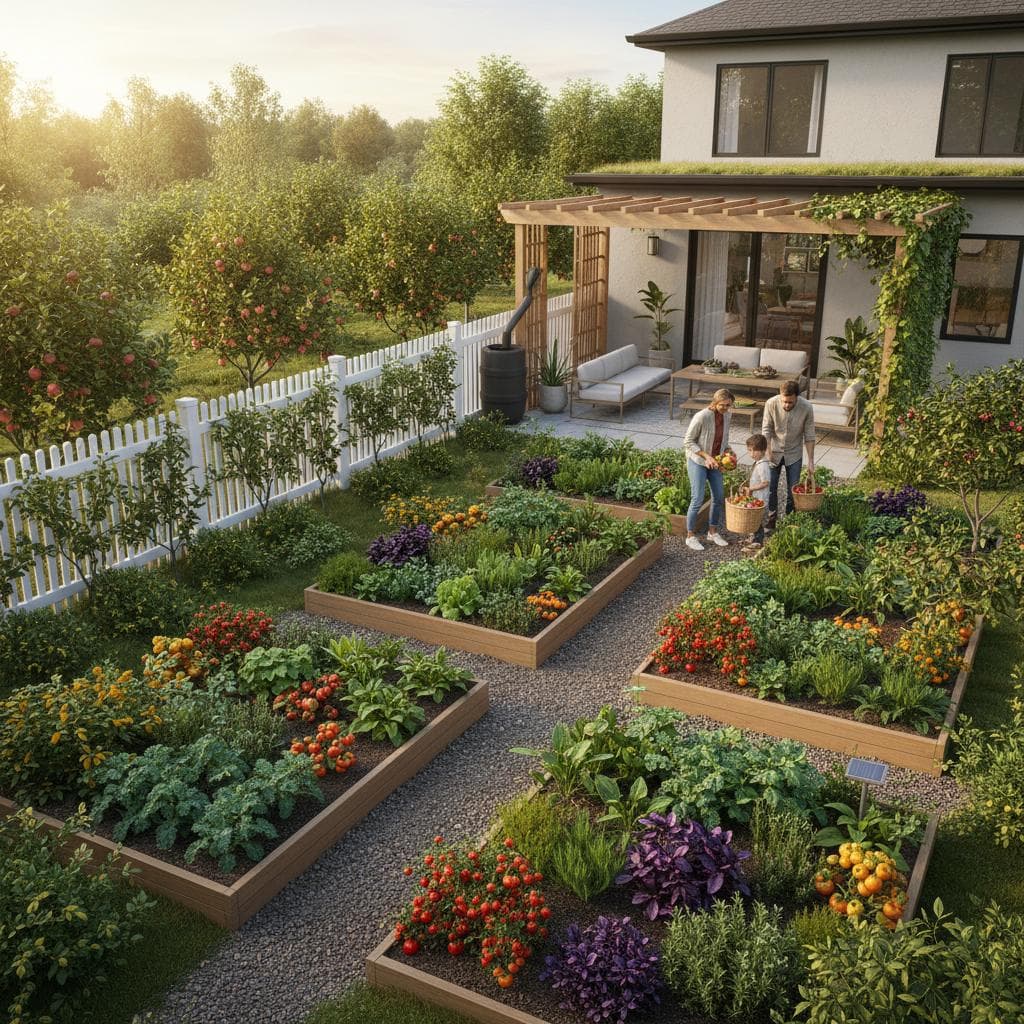
Why Edible Landscaping Will Transform Your Garden by 2026
Beautiful landscapes that produce food represent the future of home gardening. Edible landscaping merges ornamental appeal with practical yields, resulting in outdoor areas that deliver both visual delight and nutritional value. Homeowners increasingly prioritize versatile spaces that optimize land, water, and effort, moving beyond separate zones for flowers and vegetables toward unified, efficient designs.
Shifts in Home Gardening Practices
Homeowners traditionally divided yards into functional vegetable plots and decorative borders. This separation now appears inefficient. Contemporary designs integrate edibles seamlessly: fruit trees cast shade over seating areas, herbs define pathways, and vegetable beds incorporate lavender or native perennials.
Several influences drive this change. Consumers seek traceable, pesticide-free produce that arrives fresh and nutrient-dense. Escalating food and water prices favor abundant, low-input systems. In denser communities, limited space demands multifunctional yards that support wildlife while maintaining elegance.
Core Elements of Edible Landscaping
Edible landscaping involves selecting and arranging plants for dual ornamental and culinary purposes. Common choices include fruit-bearing trees, berry bushes, herbs, vegetables, and edible blooms, composed with precision akin to formal gardens.
Effective designs avoid a utilitarian appearance. They feature varied heights, blooming cycles, and textures for year-round appeal. For instance, a fig tree offers dappled shade, blueberries border trails, and kale accents foundation plantings. Ground covers such as thyme or strawberries replace sod, enhancing cohesion.
Key Advantages Over Traditional Gardens
Edible landscapes provide distinct benefits that surpass conventional setups.
- Water Conservation. Edible species often require less irrigation than turf or non-native ornamentals. Implement drip systems and mulch layers to retain soil moisture and minimize runoff.
- Enhanced Biodiversity. Combining food plants with flowers draws bees, predatory insects, and birds, fostering resilience and decreasing chemical interventions.
- Improved Soil Quality. Crop rotation and compost application from household waste build nutrient-rich earth that retains water and bolsters plant vigor.
- Visual Appeal. Varieties like multicolored Swiss chard, deep-hued basil, and vivid scarlet runner beans deliver color and form comparable to dedicated flowers.
- Household Nutrition. Compact spaces yield substantial harvests: dwarf citrus, leafy greens, and tomato vines can diversify meals and cut grocery expenses.
Steps to Design an Edible Landscape
Success depends on deliberate site analysis, including sunlight patterns, soil pH, and care schedules.
- Establish the Framework. Select structural plants suited to local conditions. In arid regions like California, opt for drought-resistant options such as citrus, pomegranate, or olive trees that anchor the layout seasonally.
- Build Vertical Layers. Apply principles from ornamental gardening: position canopy trees above shrubs, then underplant with accessible edibles. Harvest paths should lead to herbs and annuals.
- Organize by Accessibility. Place labor-intensive items near entry points; assign perennials like rhubarb or berries to remote areas needing occasional checks.
- Balance Form and Utility. Intersperse pollinator-friendly herbs such as borage or dill among greens to ease edges and invite beneficial wildlife.
- Ensure Seasonal Variety. Incorporate broadleaf evergreens, cool-season brassicas, and fruit trees with spring flowers and fall foliage for continuous engagement.
Overcoming Common Obstacles
Edible designs face hurdles like variable plant needs, wildlife competition, and upkeep demands. Balanced approaches mitigate these issues.
- Select Hardy Cultivars. Prioritize figs, rosemary, and olives for low-maintenance performance in dry climates after initial rooting.
- Adopt Natural Pest Controls. Plant companion flowers to harbor allies against aphids; steer clear of synthetic sprays that harm allies.
- Apply Thick Mulch. Use organic materials to lock in hydration, block weeds, and feed microbes.
- Cycle Annuals Annually. Shift planting spots to avert nutrient loss and pathogen buildup.
- Optimize Layout for Use. Install stepping stones, elevated planters, and borders to simplify access and protect soil structure.
Blending Aesthetics with Productivity
Skeptics worry that edibles compromise sophistication. In reality, integrated schemes elevate design. Consider espaliered pears framing a lawn, underlaid with alpine strawberries and creeping savory. Side plots might interweave nasturtiums, eggplants, and cilantro for dynamic patterns.
Focus on sensory elements: contrast broad kale leaves with feathery fennel, or train peas up arbors to frame views. Portable pots with dwarf lemons, microgreens, and viola add flexibility to hardscapes, creating edible extensions.
Contributions to Sustainability
Sustainable practices define modern living. Edible landscapes align by minimizing food miles, plastic use, and agrochemical reliance. On-site composting recycles organics into fertile amendments.
Efficient watering via soaker hoses and drought-adapted natives like ceanothus alongside avocados promotes ecological harmony. Such combinations yield landscapes that honor regional habitats while delivering harvests.
Impacts on Daily Life and Community
Edible yards foster connections. Families bond over picking raspberries or snipping sorrel for salads. Gatherings spill into gardens, where fresh basil elevates meals.
These spaces also nurture wellness. Tending plants lowers anxiety, while the satisfaction of homegrown yields deepens appreciation for seasonal cycles amid city routines.
Insights from Design Professionals
Experts view edible integration as an advancing field. Landscape teams partner with agronomists and culinarians to harmonize visuals and outputs. Designs incorporate durable irrigation and soil prep from the outset.
Builders master grafting methods and companion planting. Clients benefit from consultations on crop succession. Collaborative efforts ensure landscapes that endure and adapt.
Implementing Your Edible Transformation
Shift gradually without full redesigns. Target a lawn strip or idle border first, selecting beloved flavors matched to your zone.
- Scale Modestly. Introduce modular beds or berry hedges for quick wins.
- Prepare the Base. Test and enrich soil with aged manure or leaf mold prior to sowing.
- Choose Enduring Options. Favor self-fertile trees and repeat-blooming perennials for lasting impact.
- Maintain Routines. Schedule trims, amendments, and refreshes to sustain vigor.
- Incorporate Yields. Feature garden produce in recipes, trade surpluses, and adapt habits around abundance.
Gradually, boundaries between decorative and productive fade. Yards emerge as holistic environments sustaining health and harmony. Edible landscaping reimagines gardens as vital assets, blending delight, nourishment, and resilience for the long term.