
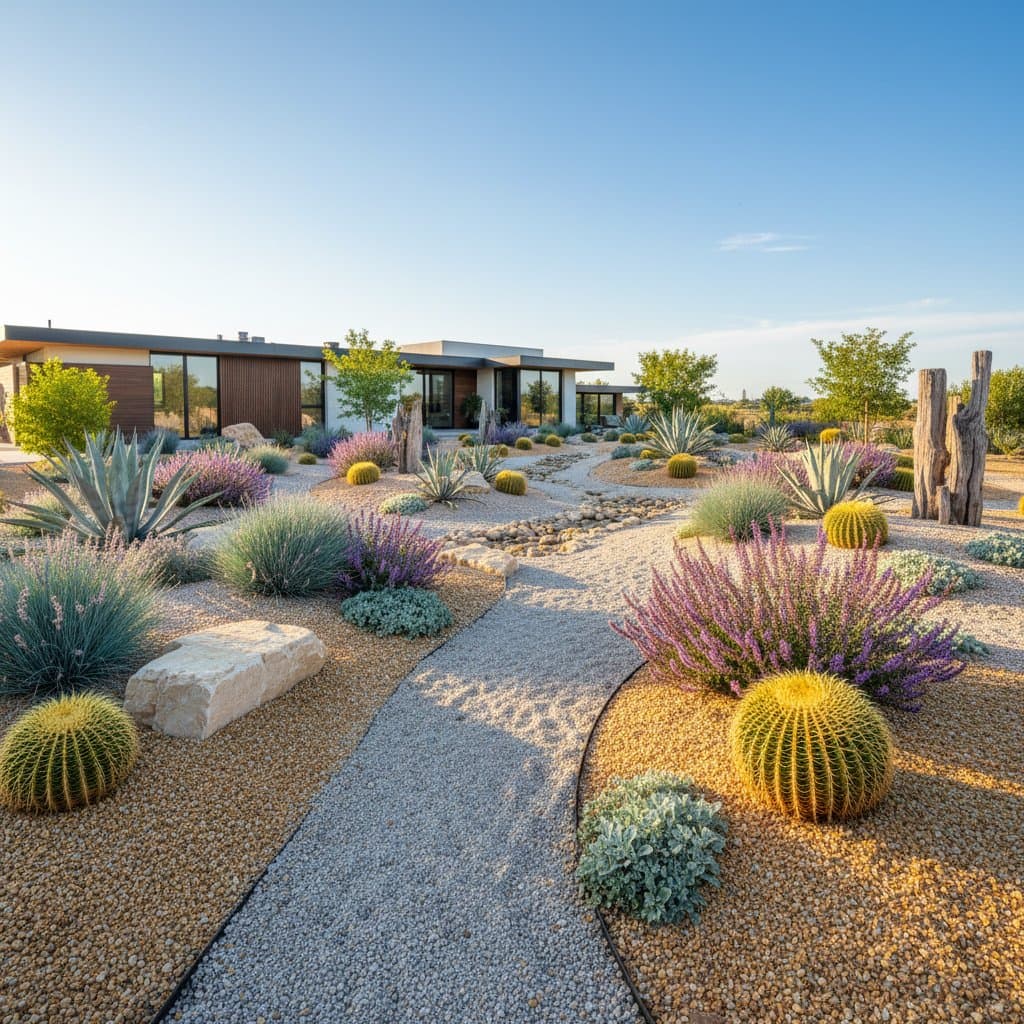
Why Gravel Gardens Excel in Drought Conditions
Gardens that maintain their appeal during extended dry periods represent intelligent design and environmental stewardship. In regions like California with arid climates, homeowners increasingly turn to gravel gardens. These landscapes not only endure without frequent irrigation but also deliver texture, color, and form that withstand intense heat. Such gardens demand minimal upkeep, lower water expenses, and suit both modern and classic home styles.
The Fundamentals of Gravel Gardens
Gravel gardens draw from xeriscaping principles, emphasizing water conservation in landscaping. They replace water-intensive lawns and flower beds with gravel bases that support resilient plants. The outcome features crisp lines, sculptural elements, and earthy tones ideal for dry environments.
Beyond aesthetics, gravel insulates soil to preserve moisture and minimize evaporation. It suppresses weeds and enhances drainage, promoting healthy roots and averting rot after rains. This blend of form and function appeals to those seeking refined, durable outdoor areas.
How Gravel Promotes Water Conservation
Gravel appears straightforward yet serves multiple roles underground. Its stones permit water to percolate slowly into the soil, avoiding runoff or stagnation. Consequently, more moisture reaches plant roots efficiently.
Acting as permanent mulch, gravel cools the soil and curbs evaporation rates. Unlike organic mulches that decompose and require renewal, gravel endures for years with little intervention. This durability renders it economical for eco-friendly designs. Additionally, gravel resists pests and decomposition, simplifying care routines.
Paired with native or drought-resistant plants, gravel fosters a microclimate that retains humidity while allowing air movement. Plants develop robust root systems that tap deeper water sources, even as surface layers dry.
Selecting Appropriate Gravel Types
Gravel varieties differ in performance and style, so choice impacts functionality and visuals.
-
Pea Gravel: Rounded and fine, this option offers a gentle walking surface for paths or lounging spots. It drains superbly but may migrate, necessitating borders for stability.
-
Crushed Granite: Compacting to a solid base, it suits driveways or trails and enhances Mediterranean or arid themes with its rugged texture.
-
River Rock: Smooth and sizable, it provides focal points in display zones rather than high-traffic paths.
-
Decomposed Granite (DG): Popular in California, DG creates a smooth, unified expanse. Compacted, it withstands erosion and demands scant attention.
Gravel hues shape the garden's mood. Pale stones bounce light to illuminate dim areas, whereas dark ones retain heat for bolder contrasts. Blending sizes and shades evokes organic, rugged landscapes.
Steps to Design a Resilient Gravel Garden
Effective gravel garden design begins with site analysis. Track sunlight patterns to classify zones as full sun, partial shade, or full shade, informing plant choices and arrangements.
Prepare the ground meticulously by clearing weeds and turf, then contour for optimal runoff. A subtle incline avoids water accumulation. Install permeable fabric to block weeds, followed by uniform gravel application.
Space plants generously for growth and ventilation, accentuating individual shapes. Cluster compatible species to streamline watering needs.
Recommended Plants for Gravel Settings
Gravel gardens flourish with species adapted to arid roots and bright light. Many originate from Mediterranean or desert habitats, ensuring drought tolerance.
Key selections encompass:
-
Lavender: Evergreen with fragrance, it delivers blooms and draws bees.
-
Sedum: Succulent forms in diverse colors provide persistent appeal.
-
Salvia: Extended flowering with vivid hues demands little hydration.
-
Agave and Yucca: Striking forms anchor compositions with bold presence.
-
California Poppy: This local bloom endures parched earth, offering sunny accents.
These plants harmonize with gravel, their leaves contrasting stones while flowers inject vitality with sparse care.
Blending Gravel with Living Areas
Gravel gardens integrate smoothly into patios, decks, and kitchens. The surface flows from beds to lounges, unifying the space. It remains comfortable underfoot and tempers hard elements like pavers.
Extend gravel to serene nooks, such as a bench amid lavender and grasses, for peaceful escapes. Incorporate subtle lighting to accent textures after dark and guide paths. In dining zones, firm gravel supports tables while fostering relaxed vibes.
Gravel enhances water elements too. Position a fountain or basin in the bed for prominence with easy upkeep. Stones curb splatter and limit algae by averting persistent moisture.
Essential Upkeep Practices
Gravel gardens require light attention to peak condition. Rake regularly to even stones and clear debris like leaves.
Address weeds swiftly by hand to curb spread. Dust buildup between stones calls for occasional hosing to restore freshness. Top up gravel periodically to sustain thickness and vibrancy.
Trim plants to foster vigor and avoid density. These species favor minimal interference, yet removing faded parts preserves a deliberate appearance.
Water sparingly via drip lines that target roots. Established plants suffice with infrequent deep soaks during prolonged dryness.
Benefits for Environment and Budget
Gravel gardens advance ecological goals by slashing water use, preserving essential supplies. They cut reliance on chemicals, as resilient plants resist pests naturally.
Financially, benefits accrue quickly through reduced bills, fewer plant losses, and lower labor. Durable components minimize replacements and waste.
In cities, these gardens aid stormwater control by boosting absorption. Rain infiltrates gradually, easing sewers and recharging aquifers, proving valuable amid water limits.
Building Your Gravel Garden
Launch with a defined plan and precise setup. Start modestly by converting a lawn patch to gravel and suitable plants. Monitor seasonal performance before scaling up.
Engage a designer or expert for tailored advice on plants, grading, watering, and supplies suited to local conditions.
View the garden as an evolving ecosystem. Plants root deeply, surfaces gain patina, and stone-plant dynamics refine. The crunch of gravel, aroma of warmed herbs, and ease of a water-thrifty yard yield ongoing fulfillment.
Gravel gardens merge endurance with allure, demonstrating that sustainable choices yield lasting, drought-defying beauty.