
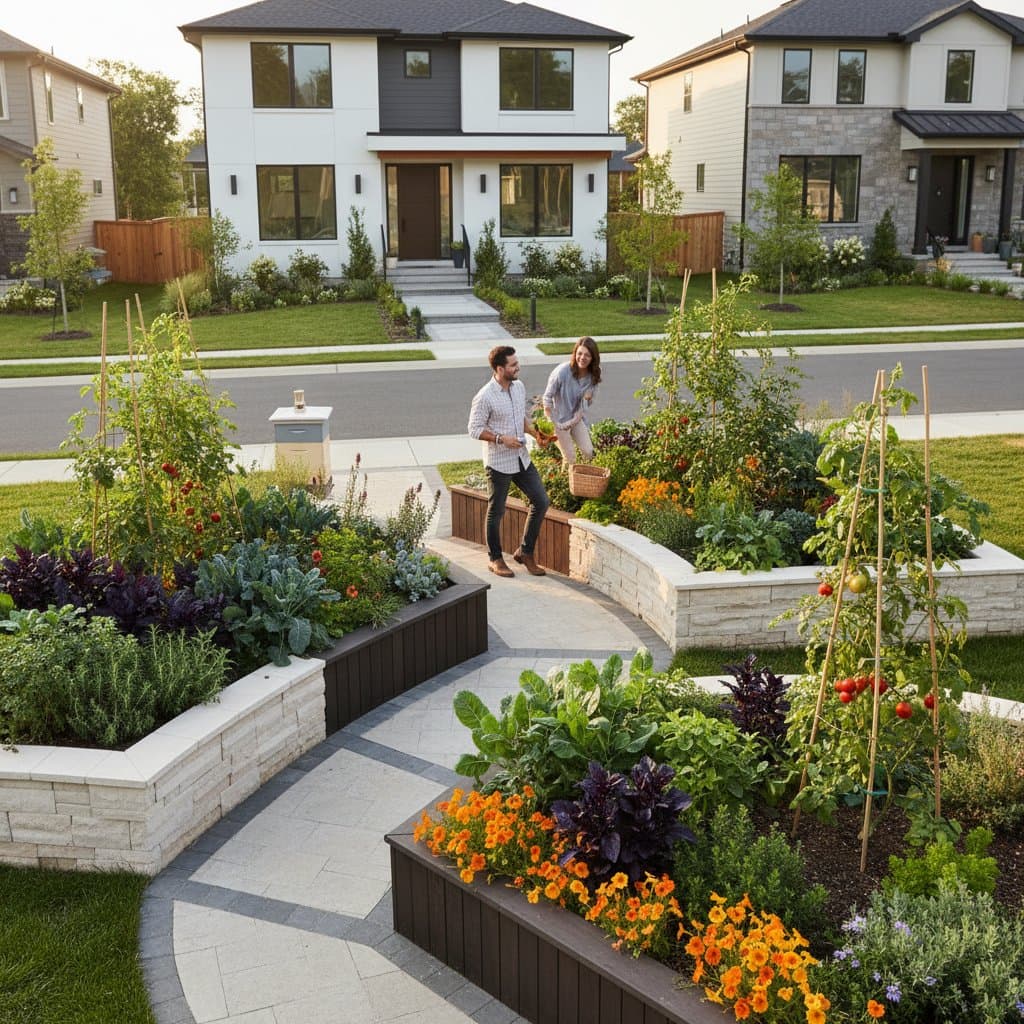
HOAs Embrace Edible Front Yard Gardens
Homeowners passionate about growing fresh produce often faced strict limits from their homeowners associations. Vegetable beds and fruit trees typically stayed confined to backyards or hidden spots. Now, change is underway. In California and beyond, associations update landscaping rules to allow edible front yard gardens. These designs blend striking visuals, environmental care, and practical yields. Thoughtful setups enhance home exteriors while supporting goals like healthy eating and smart resource use.
Reasons Edible Gardens Gain Acceptance
Edible front yard gardens provide benefits on multiple levels. They supply organic fruits and vegetables right outside the door. Drought-tolerant choices cut water use, and diverse plantings attract pollinators. In neighborhoods, these gardens spark conversations. Neighbors might trade citrus from overhanging branches or taste sun-ripened tomatoes at a block party, building stronger bonds.
Associations once resisted these features, but they now recognize real gains. Proper edible landscapes keep things neat, balance visuals, and demand low maintenance costs. When designed with the same care as ornamental beds, they can even boost property values. Key factors involve intentional layouts that respect design standards and ecological needs.
Strategies for Securing HOA Approval
To win over a homeowners association, start by reviewing current rules. Most emphasize consistency, cleanliness, and drought-resistant plants. Build your edible garden to match these while adding productive options for local conditions.
- Create clear boundaries. Use raised beds, stone edging, or defined zones to promote structure. Clean lines and geometric shapes signal commitment to maintenance.
- Mix edibles with ornamentals. Choose attractive producers like dwarf blueberries, stately artichokes, or colorful Swiss chard. Pair them with scented additions such as lavender, rosemary, or native grasses for balanced appeal.
- Plan for height and placement. Place tall plants like corn or sunflowers at the rear or against walls. Line walkways with low herbs or greens to keep sightlines open and meet safety rules.
- Plan for year-round interest. Include evergreens from herbs, hardy veggies, or trees with interesting bark. A garden that looks cared for in every season reassures boards and neighbors.
Adaptations for California's Distinctive Climate
California's long dry spells and mild winters call for water-saving methods. Set up drip irrigation below ground and add organic mulch to slash water needs and stabilize soil temperature. Local stars like figs, olives, and pomegranates thrive here. Add tough herbs such as creeping thyme or silver sage for a cohesive, easy-care setup.
Techniques like composting and soil building gain support if kept discreet. Place a small, covered bin in a shielded spot near the fence or shed. Better soil means healthier plants, fewer pests, and less need for chemicals. This fits wider aims for sustainable yard care in communities.
Addressing Typical HOA Objections
Associations often worry about mess, neglect, or clashing styles. Address these head-on to build confidence.
- Show your plan. Present a full proposal with plant lists and layout sketches. Boards appreciate evidence of forethought.
- Prove reliability. Share a maintenance schedule with tasks by month. This eases fears of overgrown weeds or faded looks.
- Ensure harmony. Use matching elements like uniform edging, pots, or paths to tie the garden to the neighborhood. A shared gravel walkway or color scheme creates seamless flow.
Start small to test the waters. A border of kitchen herbs or berry row can demonstrate success. Good results often lead to approval for bigger projects with little pushback.
Community Benefits from Visible Edible Gardens
These gardens offer more than food. Children learn where meals come from through direct participation. Adults swap growing tips and recipe ideas. Turf disputes turn into shared projects, like swapping supplies or hosting harvest events. Such ties foster pride and connection, turning quiet streets into vibrant hubs.
Associations that approve them see more involvement. Community planting days create natural gathering spots and strengthen relationships. The varied look of mixed edible designs refreshes neighborhood aesthetics, permitting personal touches within shared guidelines.
Maintaining Your Edible Landscape
Once approved and planted, weave the garden into daily life. Pick herbs for dinner, prune in winter, or refresh mulch in spring to sync with nature's cycles.
For sustained health:
- Rotate crops to keep soil nutrients even.
- Refresh mulch annually.
- Check irrigation systems regularly.
- Update seasonal plants in set areas to hold the shape.
These steps protect beauty and productivity. They prove edible yards can rival traditional ones in elegance and endurance.
Building Sustainable Neighborhoods Through Edible Yards
Growing support for edible front yard gardens marks advances in eco-practices, smart design, and social ties. Homeowners meet rules while exploring creativity. With careful planning and steady care, these spaces meet standards and bring energy, diversity, and fresh food to communities.