
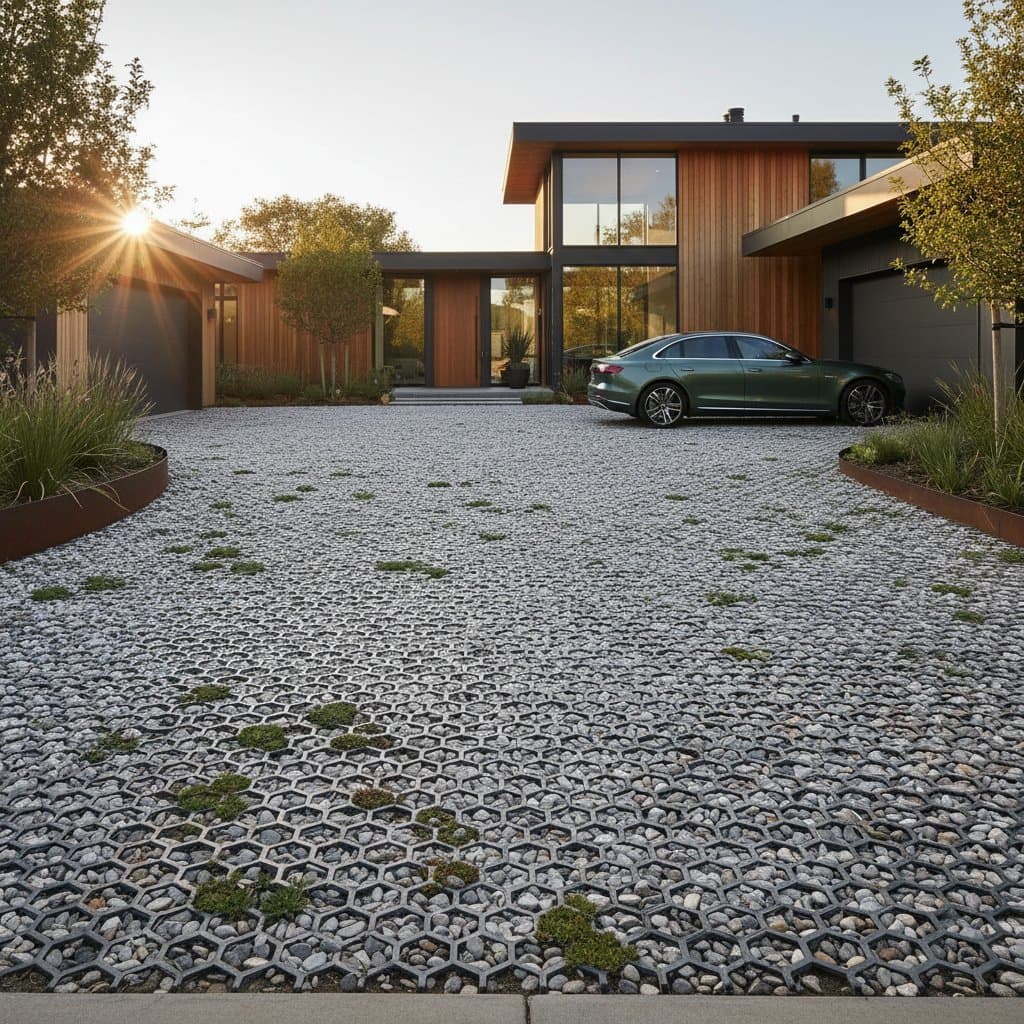
Gravel Grids Versus Concrete Driveways
A modern driveway does more than park cars. It sets the tone for the entire property while balancing visual appeal with durability. Gravel grids are gaining attention as a practical alternative to concrete. They provide a stable surface that drains easily and looks natural.
Project Overview
- Location: Residential and light commercial properties
- Surface Type: Permeable gravel grid system
- Climate Zone: Suitable for both wet and dry regions
- Project Goal: Create a durable, low maintenance, and eco friendly driveway
Encourage Natural Drainage
Concrete traps water at the surface. This situation can lead to runoff and pooling. Gravel grids solve this issue by letting rain pass through to the soil below. Each interlocking panel holds gravel in place while maintaining open joints for drainage. This design reduces erosion and helps recharge groundwater.
A landscape contractor noted that permeable surfaces represent one of the simplest ways to reduce stormwater problems without sacrificing structure. The result is a driveway that stays usable in all seasons and fits naturally into its surroundings.
Even after a heavy rain the gravel surface remains dry and firm underfoot.
Reduce Heat and Glare
Concrete can reflect heat and light, especially in sunny climates. Gravel grids use loose stone that stays cooler and blends with the landscape. The lighter tone of locally sourced gravel can soften the transition from driveway to garden.
Choosing materials like crushed granite or pea gravel adds variation in color and texture. The surface appears softer and more organic. This quality pairs well with native plantings and informal garden edges. A designer observed that gravel breaks up hard surfaces visually so the entry feels more relaxed and inviting.
Simplify Maintenance
Once installed, gravel grids need minimal upkeep. The plastic or recycled resin panels hold the stone securely. This approach prevents ruts and washouts. Occasional top ups of gravel are simple and inexpensive compared to repairing cracked concrete.
Homeowners appreciate that the grid system stays level over time. It can also handle freeze thaw cycles without heaving or splitting. A maintenance expert stated that a well compacted gravel grid can outlast many rigid surfaces if kept topped and clean.
A rake and a few extra bags of gravel are often all that is needed for upkeep.
Support Sustainability Goals
Gravel grids often use recycled materials and fit well with sustainable landscape design. Their permeability supports native plant zones, rain gardens, and bioswales. Because they avoid large concrete pours they reduce both embodied energy and waste.
For properties where environmental performance matters grids can help meet local permeable surface requirements. They also make it easier to integrate green features like driveway planting strips or edging with drought tolerant species such as lavender or yarrow.
Daily Experience with a Gravel Grid Driveway
A gravel grid driveway feels different from a solid slab. It flexes slightly under weight and blends with planting areas instead of dividing them. The visual and tactile qualities encourage slower driving and calmer transitions between street and home.
For designers and homeowners the appeal lies in its balance of practicality and charm. A gravel grid system keeps the driveway functional, reduces runoff, and adds texture that complements the landscape. With thoughtful detailing and routine care it becomes a durable surface that looks good year after year.