
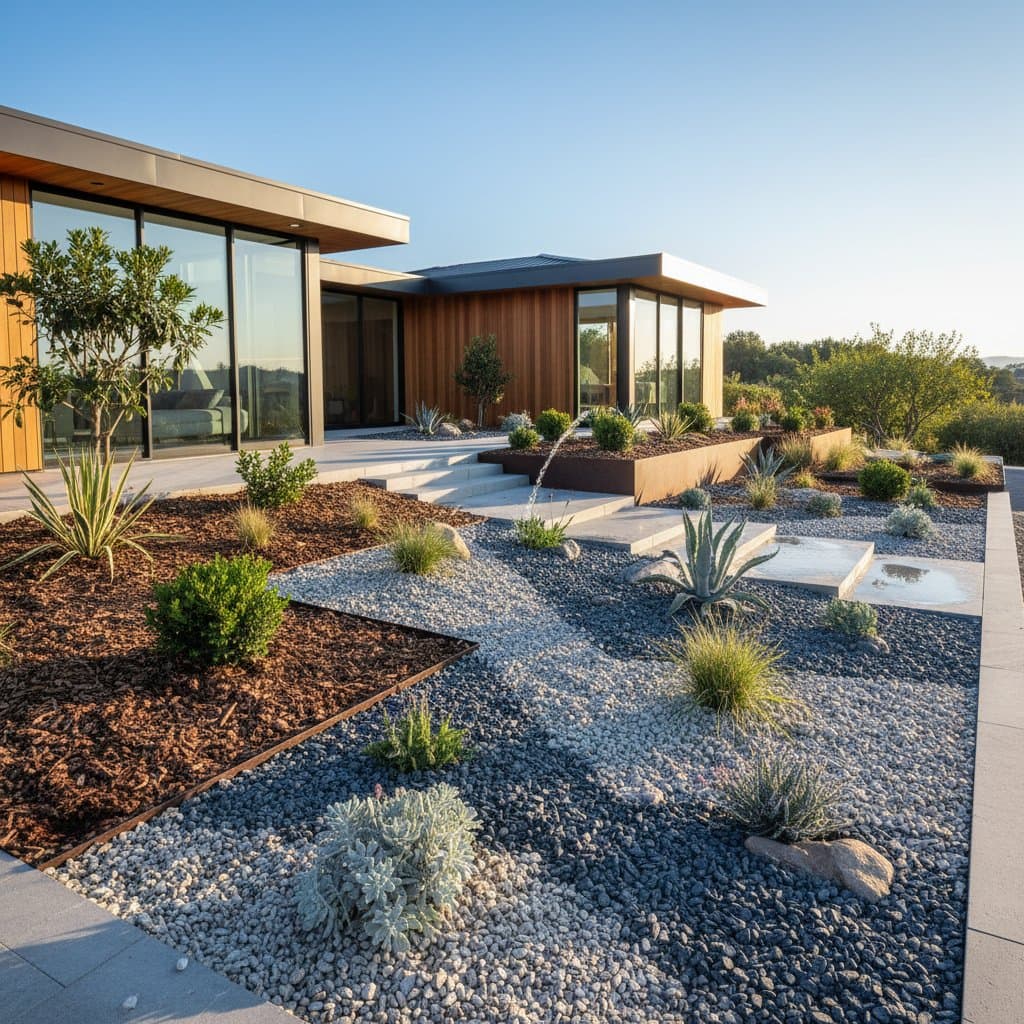
Why Gravel Outperforms Mulch in Low-Maintenance Yards
Homeowners seek landscapes that remain attractive across seasons with minimal effort. Gravel emerges as a preferred choice for such designs. It maintains its appearance, ensures effective drainage, and requires little ongoing care. In contrast to mulch, which degrades and shifts, gravel retains its integrity for extended periods, supporting practical outdoor aesthetics.
At a Glance
Suitable Locations: Most climate zones, including temperate, arid, and coastal areas
Ideal Applications: Low-maintenance gardens, contemporary designs, regions with limited water
Primary Objective: Durable ground cover that demands infrequent attention
1. Establish Strong Structure
Gravel provides immediate definition for garden beds and walkways. It creates sharp boundaries that endure exposure to elements. Mulch often disperses or rots, but gravel remains positioned, offering a precise separation between vegetation and bare spaces.
Design professionals note that gravel preserves the intended layout as plants evolve.
Key Functional Advantage: Gravel mitigates erosion and enhances water flow, safeguarding soil during intense downpours.
Practical Design Tip: Select angular crushed granite for durable pathways and smoother pea gravel for lounging spots to optimize both stability and ease.
Real-World Application: Transform a slim side yard into a polished feature with a crushed limestone walkway edged by resilient grasses such as little bluestem or switchgrass.
Visual Highlight: Crushed stone pathway directs visitors amid native flora.
2. Minimize Ongoing Upkeep
Fresh mulch appeals briefly before it discolors and disintegrates. It draws insects and necessitates frequent renewal. Gravel requires just periodic leveling to appear pristine. It avoids decomposition, repels pests, and curbs weed growth when installed over robust landscape fabric.
Landscape experts observe that a single gravel setup endures a decade with scant intervention.
Key Functional Advantage: Gravel moderates soil warmth, inhibits weeds, and cuts watering needs by promoting uniform moisture penetration.
Practical Design Tip: Install permeable fabric beneath the gravel layer to preserve edges and eliminate reliance on synthetic weed controls.
Real-World Application: Frame elevated beds with Mexican beach pebbles to cool the earth and accentuate vivid greenery against a striking dark outline.
Visual Highlight: Rounded river gravel cushions the foundation of an elevated planter.
3. Optimize Water Management
Pooled water harms vegetation and fosters insect breeding. The open texture of gravel permits rainfall to infiltrate the soil, avoiding the stagnation common with mulch. In variable weather conditions, gravel serves as both a functional drain and an attractive surface.
Designers emphasize that effective drainage integrates seamlessly into the overall plan.
Key Functional Advantage: Gravel avoids soil packing, allowing roots access to air and fluid movement.
Practical Design Tip: Mix fine decomposed granite with coarser crushed rock to achieve a firm yet permeable base.
Real-World Application: On a gentle incline, incorporate tiered beds with gravel conduits to redirect runoff from relaxation zones.
Visual Highlight: Gravel channel steers precipitation from terrace to garden area.
4. Harmonize with Home Architecture
Gravel adapts to diverse architectural profiles. Sleek modern facades pair with consistent gray or black crushed stone, while classic settings benefit from warm tan pea gravel or varied river rocks. Mulch uniformizes to dull tones over time, but gravel sustains its hues and surface qualities, enhancing plant and hardscape contrasts.
Professionals highlight that gravel's enduring palette integrates with building elements.
Key Functional Advantage: Steady coloration streamlines the outdoor view and avoids material discord.
Practical Design Tip: Apply pale gravel in dim spots to amplify light, and deeper shades in exposed patios to anchor the composition.
Real-World Application: In an enclosed yard, light limestone gravel bounces illumination indoors, complemented by ebony basalt routes for defined paths.
Visual Highlight: Pale gravel illuminates a shaded seating enclave.
5. Expand Usable Outdoor Spaces
Gravel bases encourage versatile activities. They offer a yielding tread, swift drying, and compatibility with tiles or slabs. Such qualities suit fire circles, informal benches, or al fresco meals. Gravel resists scattering or adhering to footwear, preserving cleanliness in high-traffic zones.
Designers point out that gravel balances natural sensation with orderly surroundings.
Key Functional Advantage: Gravel withstands climate variations and frequent footfall on a solid footing.
Practical Design Tip: Integrate broad stepping stones or concrete bases within gravel to vary the pattern and boost mobility.
Real-World Application: Encircle a recessed fire feature with decomposed granite and stone accents for year-round comfort free of litter.
Visual Highlight: Decomposed granite expanse merges fluidly with a stone fire enclosure.
6. Advance Eco-Conscious Practices
Gravel aligns with water-efficient and indigenous plant selections. It facilitates rainwater absorption to recharge aquifers instead of surface diversion. It integrates effortlessly with resilient species, fostering unified, environmentally sound environments.
Horticultural specialists remark that gravel and native flora demand similar restraint in care.
Key Functional Advantage: Gravel diminishes irrigation requirements and conserves subsurface hydration.
Practical Design Tip: Pair gravel with regional shrubs like sage, manzanita, or lavender to introduce hues and scents with little oversight.
Real-World Application: In arid zones, a gravel plaza with succulents and rocks builds depth absent high water use.
Visual Highlight: Drought-resistant flora flourish in gravel surrounds accented by regional boulders.
7. Control Long-Term Expenses
Initial gravel placement might exceed mulch costs marginally, yet it yields returns through eliminated annual tasks. Mulch demands repeated procurement, delivery, and labor. Gravel represents a singular outlay that persists across multiple years.
Contractors affirm that gravel initiates cost reductions upon completion.
Key Functional Advantage: Reduced renewals limit waste and hauling expenditures.
Practical Design Tip: Source gravel locally to trim transport fees and echo the area's inherent tones.
Real-World Application: A entry garden with tough conifers topped by nearby crushed rock maintains tidiness sans seasonal charges.
Visual Highlight: Regional stone forms a unified, economical cover layer.
8. Balance Ease and Resilience
Certain residents concern themselves with gravel's coarseness or shiftiness. Success hinges on appropriate sizing and layering. Particles from three-eighths to one-half inch deliver comfort alongside solidity. A compacted subbase ensures evenness for furniture and passage.
Designers stress that gravel's usability derives from measured elements, not yielding materials.
Key Functional Advantage: Correct placement keeps gravel even and secure against movement.
Practical Design Tip: Opt for rounded stones in repose areas and edged types for vehicular or trail uses.
Real-World Application: A leisure nook with refined pea gravel invites relaxation while upholding simplicity throughout the calendar.
Visual Highlight: Pea gravel repose area offers gentle footing and serene sightlines.
Sustaining Your Gravel Landscape
Gravel-based designs evolve elegantly. Plants establish roots, stones acquire subtle weathering from moisture, and the area develops an organic finish while retaining definition. Maintenance stays straightforward, involving light redistribution and infrequent replenishment.
This approach advances practical, earth-friendly exteriors. It directs attention to greenery, structures, and outdoor enjoyment over perpetual chores. For those desiring an elegant, undemanding garden, gravel demonstrates the harmony of form and function.