
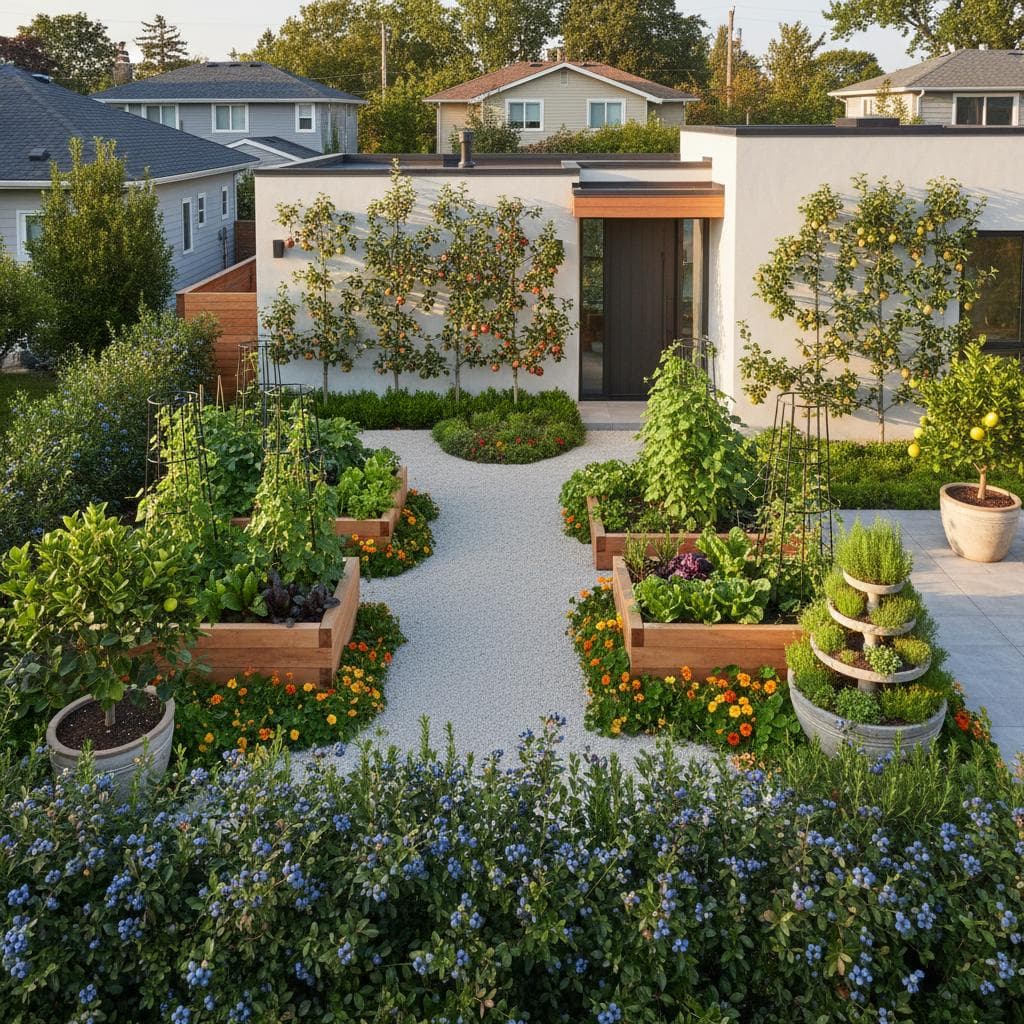
Edible Landscaping: Achieve $3,000 Plus in Annual Grocery Savings
Picture yourself strolling through your front yard at dawn, selecting a fresh fig for your morning meal, or collecting herbs and tomatoes for evening preparation without a trip to the market. Edible landscaping makes this scenario achievable. This method combines the elegance of ornamental gardening with the utility of homegrown food, frequently reducing household grocery expenses by thousands of dollars annually. Through careful planning, homeowners establish landscapes that nourish their families and enhance their surroundings.
Edible landscaping extends beyond a simple vegetable patch in the rear yard. It represents a comprehensive design strategy that incorporates fruit trees, shrubs, herbs, and vegetables throughout the outdoor area. Such integration delivers vibrant colors, pleasant aromas, and diverse textures alongside a steady supply of fresh produce accessible just beyond the door.
Planning Your Edible Landscape
Prior to any planting, dedicate time to the design phase. Approach this task similarly to an interior remodel, developing a detailed blueprint that harmonizes aesthetics, utility, and upkeep requirements.
Step 1: Evaluate Your Site
Begin by examining your property thoroughly. Observe the sun's path across the yard, identify drainage patterns, and pinpoint zones exposed to intense afternoon sun or gentle morning shade. Soil conditions differ widely in California properties, so conduct a soil test prior to planting. Coastal sandy soils often require added organic material for nutrient retention, whereas inland clay soils improve with applications of compost and gypsum to enhance drainage and structure.
Step 2: Establish Your Objectives
Determine your priorities for the space. Consider whether you seek fruit trees that offer shade alongside produce, or prefer contained beds brimming with herbs and vegetables. Certain homeowners position culinary herbs close to the kitchen entrance for convenience, while others emphasize fruit trees that serve dual purposes as decorative elements.
Step 3: Develop Functional Zones
Segment your property into distinct areas based on use and visibility. In the front yard, incorporate an appealing blend of fruit trees, blooming herbs, and resilient vegetables that align with local aesthetics. Reserve the backyard for elevated beds, compost stations, and supported climbing vines. Cluster plants sharing comparable requirements for water and light to streamline irrigation schedules and maintenance routines.
Balancing Aesthetics and Practicality in Design
An effective edible landscape appears purposefully arranged, avoiding the appearance of scattered plots. The objective involves cultivating an environment that conveys abundance while maintaining organization.
Incorporating Layers and Form
Build the design in vertical layers. Position taller features like fruit trees at the base, followed by shrubs, then ground-level covers and herbs. This layering echoes natural habitats and adds dimension to the view. For instance, plant a compact citrus tree to define a boundary, surrounded by lavender borders and strawberry underplantings. The outcome yields a harmonious arrangement that pleases the eye and the palate.
Ensuring Seasonal Variety
Select plants that offer changing interest throughout the year. Spring brings tender herbs to life, summer delivers bountiful vegetables, and fall provides ripe fruits. During winter, persistent evergreens like rosemary and hardy citrus varieties sustain greenery and scent.
Integrating Pathways and Accessibility
Incorporate paths that facilitate straightforward harvesting. Opt for gravel or decomposed granite surfaces, which integrate seamlessly with California terrains and manage water runoff effectively. Position tools and composting zones within reach yet concealed behind screens for tidiness.
Handling Harvests and Upkeep
A flourishing edible landscape offers delight alongside duties. Consistent pruning, nutrient applications, and timely collections sustain its productivity.
- Pruning shapes plants, promotes fruit development, and enhances air circulation to deter diseases.
- Fertilizing with compost or organic formulations fosters consistent growth and vitality.
- Harvesting promptly avoids spoilage and stimulates further yields.
When surplus produce exceeds immediate needs, distribute it to neighbors or contribute to local food initiatives. Preserve excess through freezing, dehydration, or canning to prolong usability.
Streamline upkeep through intentional layout. Arrange plants according to shared hydration and nutrition demands to reduce effort. Apply mulch over beds to control weeds and regulate soil warmth. Install automated drip irrigation equipped with timers to eliminate manual watering tasks.
Collaborating with Experts
Although numerous homeowners relish crafting their own gardens, engaging a landscape designer ensures edibles blend smoothly with existing features. Professionals optimize plant positioning, irrigation systems, and overall harmony. Consulting a horticulturist or tree specialist prevents errors like excessive crowding or inadequate drainage.
For individuals desiring active participation, adopt a combined strategy. Employ experts for foundational planning and installations, then assume responsibility for routine care. This balance controls expenses while securing a robust starting point.
Integrating Edible Elements into Daily Life
As your edible landscape establishes itself, it evolves beyond a mere food source. It reshapes everyday routines. Dawn gatherings become routine harvests. Meals incorporate ingredients gathered moments earlier. Children gain insights into food origins, and guests appreciate the immersive qualities of a vibrant, consumable setting.
Upkeep transforms into an enjoyable activity when accessibility and appeal guide the design. A citrus tree providing patio shade or a rosemary border framing a path elevates standard gardening to moments of calm renewal.
Nurturing Long-Term Garden Success
Over time, your edible landscape gains depth and maturity. Trees develop greater strength, soil enriches progressively, and the overall system achieves equilibrium. Grocery expenditures diminish as homegrown supplies fill storage spaces.
Continue adapting based on observations of plant performance in your specific conditions. Replace less successful varieties with alternatives suited to your locale. Introduce rotating crops or heritage selections to enhance visual and taste profiles.
Patience combined with diligent care yields benefits extending past monetary gains. Edible landscaping fosters connections to nature, personal fulfillment, and self-reliance. Transforming your yard into a personal larder instills a profound sense of accomplishment unmatched by store purchases.