
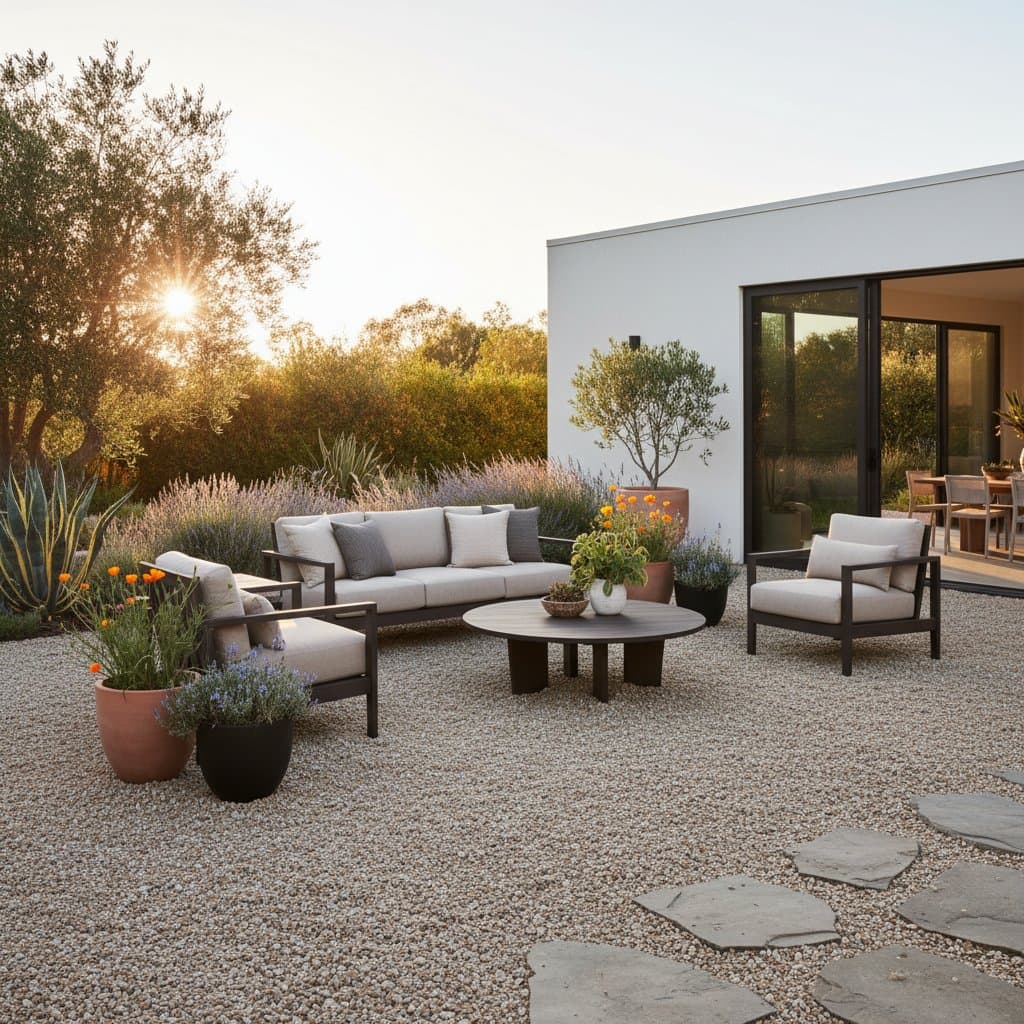
Low-Maintenance Gravel Patios: Ditch Concrete Forever
If the goal is a beautiful outdoor space that feels natural, drains well, and requires little upkeep, a gravel patio presents an ideal project. Many California homeowners shift from poured concrete slabs to permeable gravel patios that appear refined and manage the climate's dry spells and sudden rains effectively. Gravel proves adaptable, affordable, and environmentally sound. With smart design and proper installation, it outlasts many hard surfaces while providing a relaxed, timeless charm.
Why Gravel Beats Concrete in Everyday Living
Concrete serves as the traditional patio material, yet it carries significant drawbacks. Installation proves expensive, and the material cracks under temperature fluctuations while trapping heat on summer afternoons. Gravel maintains cooler surfaces and allows rainwater to soak into the ground instead of running off. This approach benefits plants and reduces water bills.
A gravel patio delivers a softer aesthetic. It integrates seamlessly with garden beds, stone borders, and native plantings. The crunching sound underfoot adds texture and atmosphere, particularly in outdoor dining or lounge areas. Unlike concrete, gravel surfaces permit reshaping or expansion without demolition, allowing design evolution as the backyard develops.
Choosing the Right Type of Gravel
Gravel's appeal stems from its variety. Each type provides distinct textures and colors that influence appearance and performance.
- Decomposed Granite (DG): This remains a California favorite. It compacts firmly to form a stable surface suitable for chairs and tables. Warm tones complement Mediterranean and desert-inspired gardens.
- Pea Gravel: Rounded and smooth, this option feels comfortable for bare feet and suits informal fire pit areas or pathways. It shifts under furniture, so reserve it for low-traffic zones.
- Crushed Stone: Angular pieces interlock tightly to minimize movement and create a structured appearance. Select this for dining areas or outdoor kitchens where stability is essential.
- Recycled Gravel Blends: Derived from crushed concrete or brick, these options minimize waste and typically cost less.
To select gravel, obtain a small sample and place it in the intended space. Observe its appearance in sunlight and shade, and assess compaction ease. A combination of particle sizes achieves optimal balance between comfort and firmness.
Planning and Preparing the Site
Success with a gravel patio starts with thorough groundwork. Neglecting preparation leads to weeds, uneven surfaces, and ongoing issues.
- Define Shape and Boundaries: Employ garden hoses or chalk lines to outline the perimeter. Curved edges enhance natural flow, whereas straight lines convey a modern aesthetic.
- Excavate and Level: Remove the topsoil layer, typically 4 to 6 inches deep. Compact the base with a tamper or plate compactor to establish a firm foundation. In California's diverse soils, this prevents settling after rainfall.
- Add a Base Layer: Spread 4 inches of crushed rock or class II road base for drainage support. Compact thoroughly until the surface solidifies.
- Install a Weed Barrier: Position breathable landscape fabric to block weeds while permitting water passage.
- Edge the Patio: Use metal, stone, or composite materials to contain the gravel and maintain shape over time.
After completing these steps, distribute the chosen gravel evenly and rake it to a depth of 2 to 3 inches. Initial watering aids settling.
Design Ideas That Work in Every Garden
Gravel patios suit diverse styles with ease. In modern settings, pale gray crushed stone with steel edging and drought-tolerant grasses creates a sleek effect. Cottage gardens pair golden decomposed granite with lavender and rosemary for warmth.
Coastal designs feature soft pea gravel adjacent to pale flagstones for a breezy vibe. Layering materials adds sophistication: integrate pavers with gravel joints or embed stepping stones in a gravel expanse. These elements introduce visual interest and functional paths.
Incorporate low-voltage lighting among rocks or under benches to illuminate evenings softly. Such details extend usability without overwhelming brightness.
Maintenance Made Simple
A properly installed gravel patio demands minimal maintenance. Routine care involves basic tools and brief effort.
- Weed Control: Pull weeds by hand periodically or apply a natural suppressant sparingly. The underlying barrier handles most prevention.
- Raking and Leveling: Rake lightly every few months to redistribute gravel and eliminate indentations from footprints or furniture.
- Top-Offs: Replenish with a thin layer of fresh gravel every two years to restore color and depth.
- Cleaning: Use a leaf blower or broom for swift removal of leaves and debris, avoiding surface disturbance.
These practices sustain a tidy appearance and avert the cracks and stains common to concrete.
Sustainable and Budget-Friendly Benefits
Gravel patios align well with California's climate beyond their visual appeal. They facilitate groundwater recharge, curb runoff, and remain cooler during heatwaves. Installation expenses average half those of concrete, with straightforward repairs.
Reconfiguring sections or replanting proves simple, as the material reuses easily and diverts waste from landfills.
Living with Your Design
With the gravel patio in place, daily life integrates it effortlessly. Morning coffee gains serenity from the subtle crunch underfoot. Evening gatherings benefit from cooler, more inviting spaces.
The surface encourages barefoot walks and flexible seating. Over time, it evolves with the garden, fostering a harmonious outdoor retreat.