
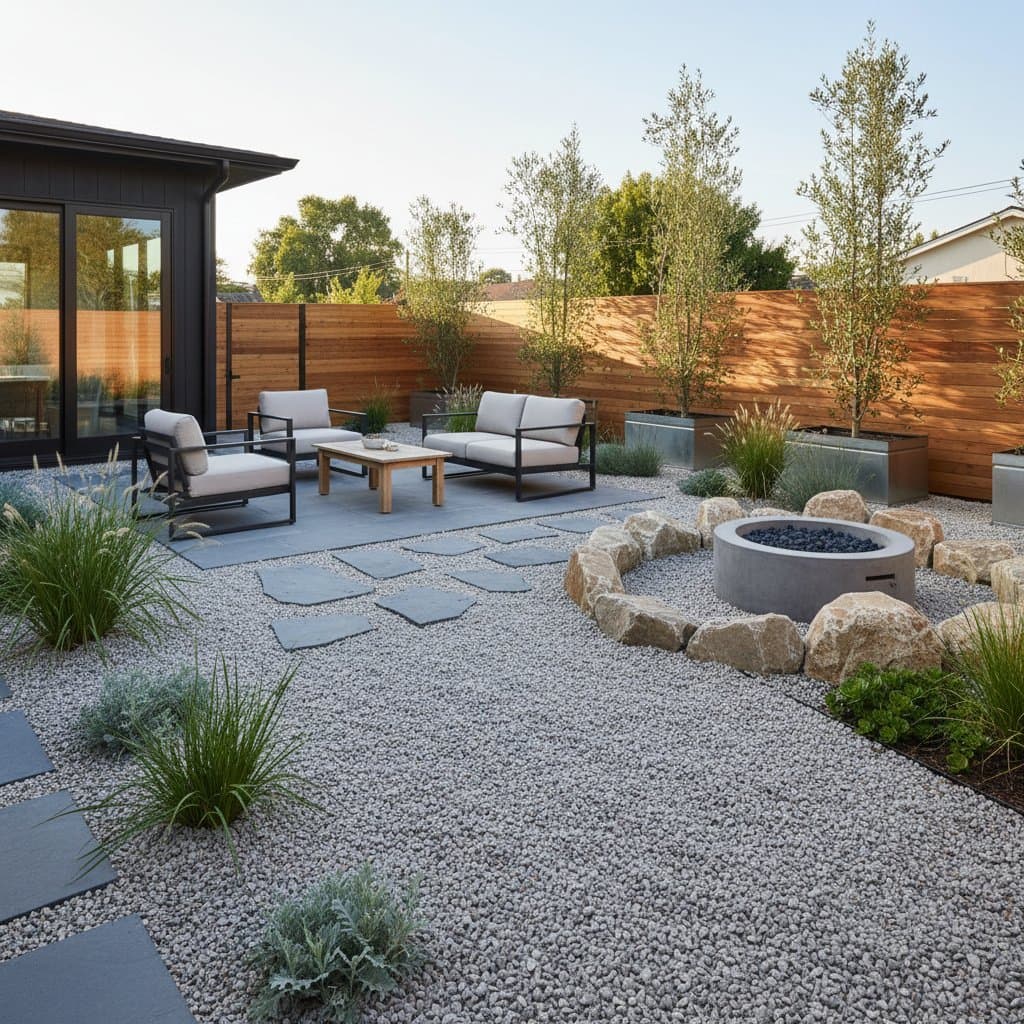
Why Gravel Patios Are Surging 300% in Popularity Over Traditional Pavers
A gravel patio may appear modest next to sleek porcelain tiles or precisely arranged pavers, yet homeowners throughout California and other regions rediscover its understated elegance and utility. Landscape designers note a sharp increase in gravel installations, surpassing traditional pavers by a ratio of nearly three to one. This shift stems from gravel's ability to provide versatility, sustainability, and cost savings that align with contemporary outdoor living, where minimal upkeep and natural textures rival polished aesthetics in importance.
1. The Appeal of Simplicity and Versatility
Gravel patios complement diverse architectural styles, from midcentury ranch houses in Palm Springs to seaside bungalows in Monterey. This material excels in adaptability. Unlike paver arrangements that demand precise leveling and grouting, gravel conforms to the landscape's contours. It fills winding areas, edges planting beds, or blends smoothly from pathways to lounging zones.
Designers value gravel for its inviting warmth. The gentle sound underfoot, the play of light on its surface, and the nuanced color shifts impart an organic essence that conveys ease and endurance. Such a patio integrates naturally into a desert enclosure or under a grove of oaks.
2. Budget-Friendly Without Compromising Quality
Expense plays a pivotal role in this popularity. A gravel patio installation generally costs far less than one using pavers or natural stone. Savings arise from both the materials and the labor involved. A modest team can distribute and compact gravel without needing specialized equipment or mortar. Repairs prove straightforward and economical. When a portion settles or weeds emerge, resolution requires only raking and replenishing, not extensive re-leveling.
This financial efficiency enables homeowners to allocate resources to enhancements like outdoor kitchens, integrated benches, or enhanced illumination. Gravel thus supports investments that elevate the area's usability.
3. Climate Compatibility and Drainage Advantages
California terrains endure arid summers alongside erratic rainfall. Gravel manages these extremes effectively. Water seeps through it into the ground rather than collecting atop or diverting to sewers. This permeable quality aids native vegetation and curbs soil erosion, positioning gravel as an ideal element for eco-conscious landscaping.
In warm environments, gravel tempers surface heat. Pale stones bounce back sunlight rather than retain it. The result yields a more comfortable walking area than dark pavers or concrete. For those mindful of water scarcity, pairing gravel with resilient, low-water plants yields an appealing, efficient outdoor haven.
4. Design Freedom and Straightforward Customization
Pavers confine users to set forms and joint lines. Gravel encourages innovation. Individuals mix gravel sizes and hues to form motifs or outlines. Options like crushed granite, pea gravel, and decomposed granite offer unique feels and shades that harmonize with nearby scenery.
A favored method pairs gravel with sizable stepping stones or concrete platforms. This setup introduces visual cadence and firmness for placements while preserving a casual vibe. In contemporary settings, dark basalt or neutral gray granite gravel aligns well with sleek metal containers and rich timber pieces. For countryside plots, warm beige or golden gravel enhances clay vessels and masonry barriers.
5. Low Maintenance Paired with Enduring Strength
Although no surface demands zero care, gravel needs considerably less than sealed ones. Periodic raking ensures evenness, and a new layer every few seasons preserves vibrancy and feel. Landscape fabric under the gravel suppresses weeds, while borders of metal or rock maintain neat edges.
Strength stands out as a key benefit. Pavers risk fracturing or displacing with ground shifts, but gravel yields naturally. Joints do not weaken, and grout avoids discoloration. In high-traffic zones, firmly packed gravel endures placements and passage with minimal degradation.
6. An Environmentally Sound Selection
Producing and placing gravel exerts a lighter impact on the environment than fabricating pavers. Numerous gravel varieties come from nearby sources, cutting transport-related emissions. Its permeability fosters vibrant soil life and aquifer replenishment. For pursuits of LEED accreditation or similar green standards, gravel bolsters eco-friendly site planning.
Dismantling or reshaping a gravel patio occurs with less disruption than demolishing concrete or extracting pavers. Recycled gravel then functions as foundation for fresh endeavors, underscoring its role in resource循环.
7. Swift Installation and Adaptability
Small-scale gravel patios often finish over a weekend, while larger ones conclude in days. The method remains simple: clear the site, prepare a firm foundation, install containment borders, and distribute the gravel. Without drying periods or adhesive tasks, the area becomes usable promptly.
This rapid completion attracts those eager to utilize their exteriors without prolonged disruptions. Adaptability benefits changing designs. Should a household wish to enlarge a meal zone or incorporate a hearth, the gravel adjusts readily, sparing major removal costs.
8. Resolving Typical Hesitations
Certain homeowners balk at gravel due to fears of instability or stray pebbles. Proper setup addresses these effectively. Choosing appropriate gravel proves essential. Angular or fragmented types interlock better than rounded pea gravel. A dense underlayer averts subsidence, and defined borders retain the material.
Items place steadily on prepared gravel. Level compaction supports them, and broad feet or pads spread loads. For inclusive access, resin-stabilized gravel with organic adhesives forms a solid, navigable path that retains visual authenticity.
Embracing Everyday Enjoyment on Gravel
A gravel patio promotes a deliberate, sensory engagement with nature. Its distinct acoustics, texture, and appearance differ from solid stonework. These traits, alongside economic and ecological merits, account for the growing favor among residents and experts alike.
Steps to Install Your Gravel Patio
To launch a gravel patio project, outline a precise blueprint. Assess the dimensions, select gravel suited to your home's style, and secure robust borders for sharp definition. Engage a landscaping specialist for sloped terrains or water management issues.
After setup, maintain simplicity. Clear debris like leaves, renew the topcoat as required, and allow the inherent aging to unfold.