
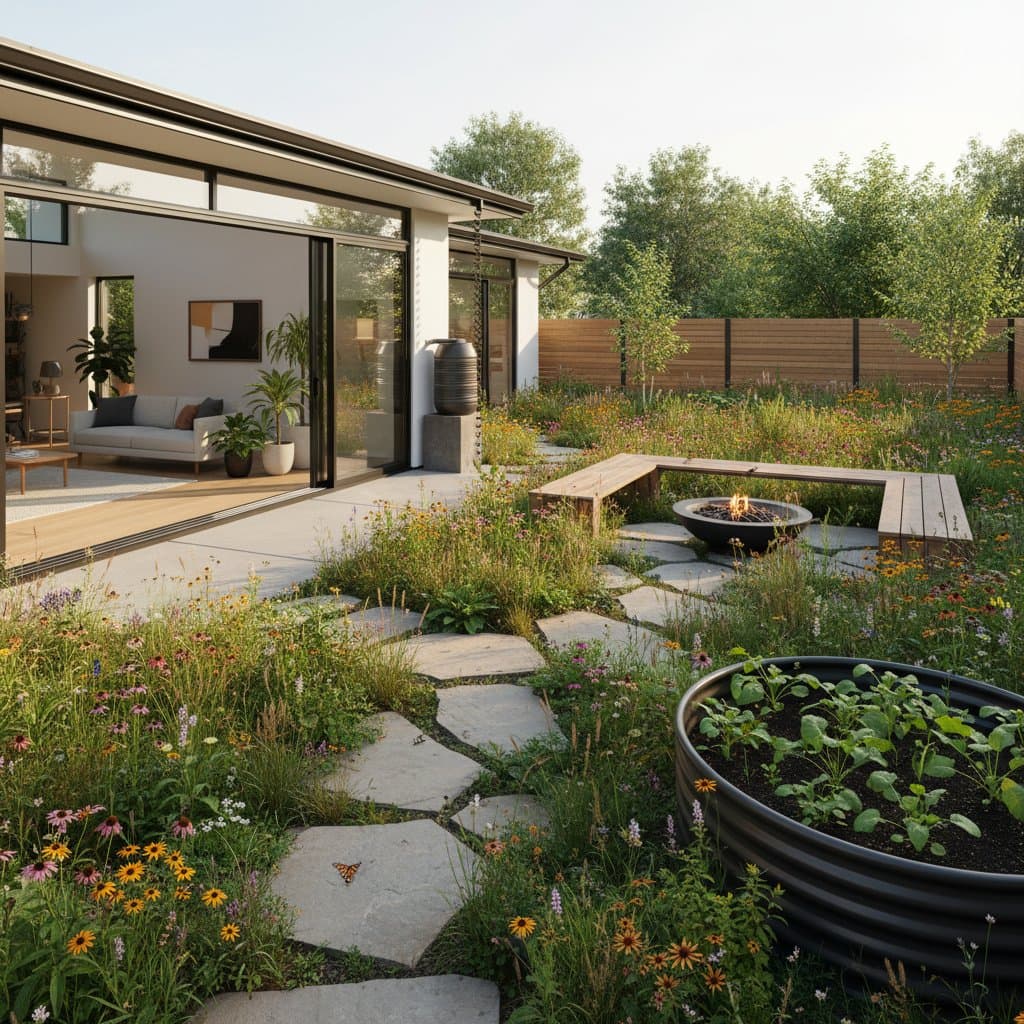
Why Homeowners Replace Patios with Native Meadows
Maya and Daniel bought a suburban home with a backyard featuring a concrete patio surrounded by trimmed grass. They wanted an entertaining space paired with a garden that changed through the seasons and welcomed wildlife. Maya stated, "We realized we did not need another stone outdoor room. We desired a space that evolves, expands, and attracts living elements." Their decision to rewild the yard replaced the patio with layers of native grasses, flowering perennials, and a winding gravel path through a small meadow.
Transforming Patios into Habitats
The original backyard setup resembled many contemporary homes. A large stamped concrete area extended from the back door, edged by narrow planting beds and turf. Drainage issues persisted, and the surface trapped heat during sunny days. The homeowners wished to spend more time outside, but the space felt barren and uninviting.
Landscape designer Leah Torres of Green Current Studio started the project by evaluating sunlight exposure, water movement, and soil composition. Torres explained, "The patio acted as a heat island. Removing it for permeable surfaces and plants helped control temperatures and restore natural water absorption."
The redesign involved breaking up the patio and reusing pieces as stepping stones. Workers laid a base of compacted crushed gravel for support while allowing water to pass through. Around the paths, Torres planted native sedges, asters, coneflowers, and little bluestem grass. The result offers an organic flow, with each plant serving a distinct purpose.
Key Design Elements for Rewilded Yards
Moving from a patio to a natural landscape requires reimagining structure and circulation. Torres focused on function before appearance.
Pathways and Social Areas
Rather than a single large paved section, the yard now includes several small zones connected by gravel trails. A circular seating nook uses reclaimed flagstone set into decomposed granite. Wooden benches line the edges without creating walls. This arrangement accommodates various family gatherings while limiting environmental effects.
Layered Plantings
The plant layout mimics a meadow's natural layers. Tall plants such as switchgrass and Joe Pye weed form the back borders. Mid-height perennials like bee balm and black-eyed Susan fill the middle sections. Ground covers including wild strawberry and creeping thyme hold the soil, preventing weeds and erosion.
Selected Materials
Every element prioritizes water permeability and longevity.
- Path base: Compacted crushed gravel for drainage
- Path surface: Decomposed granite mixed with local sand for stability
- Borders: Weathered steel with a protective coating to prevent rust
- Seating: Reclaimed cedar finished with natural oil
- Lighting: Low-voltage LED fixtures placed among plants for subtle illumination
These materials blend into the environment. They gain a weathered look over time, which complements the landscape's natural character.
Environmental and Functional Advantages
Rewilding provides clear ecological gains. The garden absorbs rainwater, reduces runoff, and moderates temperatures around the home. Diverse plants attract pollinators and beneficial insects, promoting a healthy ecosystem.
Homeowners save on water and chemical treatments. Mature plants rely mostly on natural rainfall. Soil improves each year as roots deepen and organic matter accumulates.
Torres noted, "People often see wild gardens as messy. Intentional planning creates balance and scale. Let go of demands for sameness and watch plants arrange themselves."
Maya described how their family's outdoor habits changed. "We go outside in every season now. The children collect seed pods, and a milkweed patch draws monarch butterflies. The space feels alive."
Steps for the Conversion Process
Converting a patio to a rewilded area requires careful planning. Start by removing the old surface and restoring the ground. Reuse broken concrete as a base for paths to lower disposal fees and waste.
Next, amend the soil with compost and coarse sand to improve drainage. Plant in early spring or fall so roots can establish before extreme conditions arrive. Torres recommends starter plugs or small pots instead of large plants. "This approach promotes better root development and a more natural look," she said.
Provide consistent weeding and watering at first until plants fill in. Maintenance decreases after the second year. Leave dead stems through winter for animal habitat and interest, then cut back in spring.
For clearer edges, Torres suggests mowing borders or adding stone lines. These features add definition and keep growth from spreading into lawns.
Costs and Long-Term Value
Removing a patio and building a rewilded yard involves costs that vary by size and choices. Here, on-site concrete recycling avoided hauling fees and reduced trash. Major expenses went to soil preparation, plants, and labor for grading and path building.
Ongoing care saves money. No need for resealing, harsh cleaners, or replacements. The family's water bills dropped, and the yard withstood heavy rains and droughts well.
Real estate experts note that buyers appreciate rewilded yards. These features signal environmental awareness and distinctive style. A well-designed natural space shows care rather than neglect.
Allowing the Garden to Evolve
Rewilded designs thrive on flexibility. Plants shift positions yearly, filling gaps and creating new patterns. The family adds small touches, like a birdbath from a reused container and boulders for seating.
Torres advises observing before making changes. "Spend a full season tracking light patterns, insect presence, and moisture flow. The garden will show what it needs."
For Maya and Daniel, the project altered their home perspective. The once-static yard now functions as a living system. Daniel said, "We used to see the yard as work to manage. Now it draws us in."
Building Connections in a Living Landscape
A rewilded yard promotes participation rather than control. Replacing hard surfaces with vibrant ecosystems strengthens ties to the natural world.
This shift from built environments to thriving habitats redefines outdoor living. It emphasizes partnership and development, maintaining an ongoing exchange with nature.