
Why Edible Yards Will Replace Flowers by 2026
Front yards increasingly feature vegetables, herbs, and fruit trees alongside traditional elements. Homeowners select edible landscapes that support both human needs and pollinator populations. These gardens offer visual charm, productive output, and a sense of independence that surpasses conventional lawns and flower beds. The transition emphasizes functionality and design, aligning with preferences for multifunctional outdoor areas.
At a Glance
Location: Urban and suburban properties
Size: Adaptable from compact patios to expansive lots
Climate Zone: Flexible through suitable plant selections
Project Goal: Develop spaces that provide nourishment, conserve resources, and maintain attractiveness
1. Establish a Strong Foundation with Layout
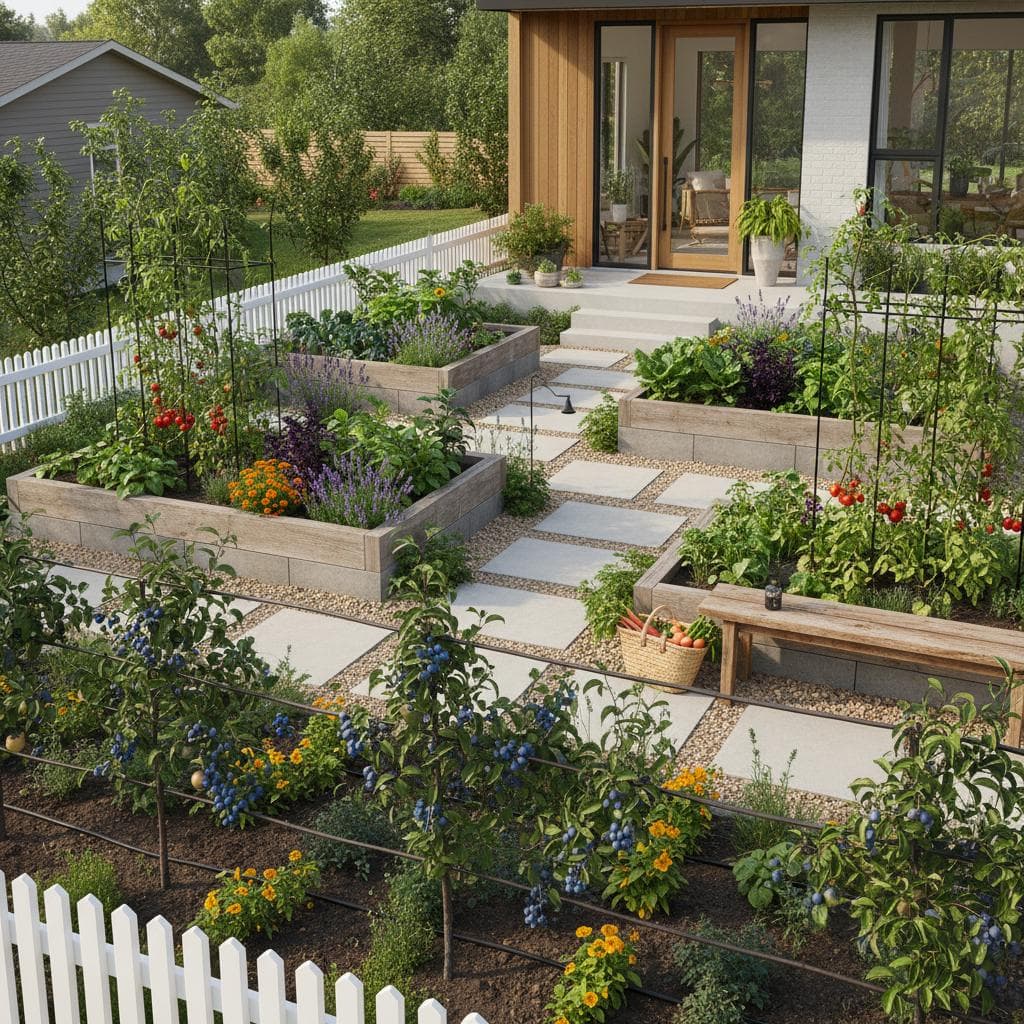
Edible yards require careful planning of layout before selecting plants. Structure promotes organization and fosters plant health. Incorporate pathways, raised beds, and clear boundaries to divide the area effectively. Opt for gravel or decomposed granite for paths to ensure durability and ease of access. Install low retaining walls or timber edging to outline planting areas and control erosion.
A designer notes: Good structure makes an edible garden look intentional, not improvised.
Consider geometric patterns to match home styles. Curved beds enhance softness in traditional front yards, whereas straight lines complement contemporary architecture. Add trellises, arbors, and espaliered fruit trees for vertical interest. This combination of form and flexibility elevates a food-producing space into a deliberate landscape element.
2. Select Multifunctional Plants Over Purely Decorative Ones
Numerous edible options rival ornamental plants in visual appeal. Varieties of kale, chard, and purple basil deliver vibrant hues. Blueberry shrubs offer spring blooms, summer berries, and autumn color changes. Strawberries serve as effective ground covers beneath smaller trees.
Swapping decorative plants for those with dual roles optimizes space and reduces effort. These selections justify their presence through both productivity and appearance. Pair feathery fennel with lavender or train scarlet runner beans along fences for integrated effects. The outcome includes diverse textures, scents, and yields within a unified design.
A horticulturist observes: We can design the same color and form as a flower garden, but everything is edible or useful.
3. Incorporate Pollinator Support Alongside Crop Production
Pollinator presence enhances the performance of edible yards. Include blooming herbs such as thyme, oregano, and borage to draw bees. Native plants like coneflower and milkweed aid butterflies. These elements maintain ecological balance and improve pollination for fruits and vegetables.
Arrange plants according to flowering periods to ensure continuous activity. Early spring blooms sustain pollinators at the start of the season, while late autumn flowers prolong support. Edible blooms including nasturtiums, calendula, and violets combine ornamental value with utility.
A landscape designer states: When pollinators thrive, yields rise without extra effort. It is the simplest partnership in the garden.
4. Build Layers for Maximum Yield and Depth
Vertical layering expands the potential of edible yards. Position fruit trees as the canopy layer, place shrubs like currants and blueberries in the middle tier, and use herbs or greens for ground cover. This method replicates natural habitats and utilizes space efficiently.
Ground covers such as thyme or alpine strawberries minimize weeds and retain soil moisture in sunny areas. Woodland strawberries or sorrel work well in shade. Mid-level options include peppers, eggplant, or bush beans. Espaliered apples or dwarf pears overhead yield fruit without dominating limited areas.
Such layering produces a dense, appealing appearance comparable to traditional landscaping. Varied heights and textures provide dimension throughout the growing cycle.
A garden consultant explains: Layering is the secret to making a small space feel generous. Every level contributes to the harvest.
5. Choose Durable, Natural Materials
Materials in edible yards should reinforce the theme of sustainability. Reclaimed brick, cedar, and stone provide a stable, enduring base. Metal edging secures gravel paths and contains soil. Construct raised beds from untreated wood or recycled composites for longevity and clear zone definition.
Steer clear of plastics that degrade rapidly or clash with organic tones. Blend warm wood shades with earthy minerals to harmonize with the environment. Include basic seating like a wooden bench or compact table to promote outdoor use.
A builder comments: Durable materials make maintenance easier and let the plants take center stage.
6. Implement Efficient Water Management
Edible gardens demand steady hydration, yet smart strategies minimize consumption. Install drip irrigation to target roots and cut evaporation. Use rain barrels to capture rooftop water for reuse. Apply mulch to preserve soil dampness and regulate temperatures.
Prioritize drought-resistant edibles when feasible. Herbs from Mediterranean regions, including rosemary, sage, and oregano, endure arid conditions. Deep-rooted options like asparagus and rhubarb draw water from lower soil levels. Cluster plants with similar requirements to streamline watering and avoid excess.
A designer remarks: Water efficiency is not about restriction, it is about accuracy. Give each plant what it truly needs.
7. Plan for Seasonal Variety
Edible yards evolve across seasons, displaying fresh shapes and shades annually. Spring introduces tender greens and flowers, summer yields ripe produce, autumn highlights colorful peppers and squash, and winter exposes underlying forms.
Account for these cycles to sustain interest. Evergreen herbs such as rosemary or bay maintain winter structure. Ornamental kale retains vibrancy as other plants decline. Plant bulbs beneath fruit trees for initial spring displays before full leafing.
A horticultural planner advises: A productive yard should never look empty. Each season should have its own story.
8. Balance Productivity with Neighborhood Aesthetics
Front yards invite public view, so harmony proves essential. Maintain neat shapes and consistent materials for cohesion. Align raised beds with home lines for purposefulness. Pathways and edges uphold tidiness amid plant growth.
Repeat colors or shapes to link elements. Red-stemmed chard mirrors brick accents, and silvery sage eases shifts from paths to plantings. Install an arbor or gate to define entrances and convey intentionality.
A designer notes: When it looks designed, people see it as landscape, not farm.
9. Prioritize Perennial and Flavorful Crops
Success in edible yards hinges on selecting resilient, tasty varieties. Emphasize perennials like asparagus, artichokes, and rhubarb for yearly returns. Add annuals such as tomatoes and lettuce for timely diversity. Herbs, berries, and fruit trees form stable foundations with ongoing benefits.
Promote variety to deter pests and sustain engagement. Practice companion planting, pairing basil with tomatoes or carrots near onions, to boost growth and efficiency. Rotate crops annually to sustain soil quality.
A grower states: A well-planned edible yard is a living pantry that refills itself every season.
10. Add Strategic Lighting for Evening Use
Lighting enhances safety and atmosphere in edible yards after dusk. Employ low-voltage path lights for subtle guidance. Select warm 2700 K bulbs to accent leaves and forms. Position uplights beneath trees for dramatic outlines.
Such features allow evening harvesting of herbs or vegetables. Solar-powered options align with eco-friendly goals and simplify installation. Maintain soft, natural glows to preserve the serene ambiance.
A lighting designer says: Gentle illumination makes the garden feel alive after sunset and connects the home to its landscape.
11. Foster Community Through Shared Harvests
Edible yards often initiate neighbor interactions. Visible ripe tomatoes or flowering herbs prompt inquiries. Distributing excess builds positive relations and motivates others to adopt similar practices.
These exchanges bolster local food networks and curb waste. Donate surplus to acquaintances, food banks, or local trades. Even modest front gardens contribute to broader generosity.
A community gardener reflects: An edible front yard feeds more than one family. It feeds connection.
12. Adopt Sustainable Maintenance Practices
Consistent upkeep guarantees thriving edible yards. Refresh mulch biannually to block weeds and hold moisture. Trim fruit trees for form and ventilation. Replant annuals swiftly post-harvest to fill gaps.
Raised beds facilitate weeding and renewal. Compost materials on-site to recycle nutrients. Establish a weekly schedule for irrigation, pruning, and gathering to manage tasks effectively.
A maintenance expert advises: Consistency beats intensity. A few minutes each day keeps the garden thriving.
Integrating Edible Yards into Daily Life
Edible yards integrate seamlessly into routines over time. Harvesting lettuce or mint outdoors attunes individuals to seasonal patterns. The design matures while retaining unity via foundational elements and materials.
This approach merges aesthetics, utility, and intent. Homeowners shift from lawn care or flower tending to gathering meals, distributing goods, and observing wildlife. As adoption grows, these yards set the benchmark for resilient, nurturing outdoor environments that satisfy visual and nutritional needs.