
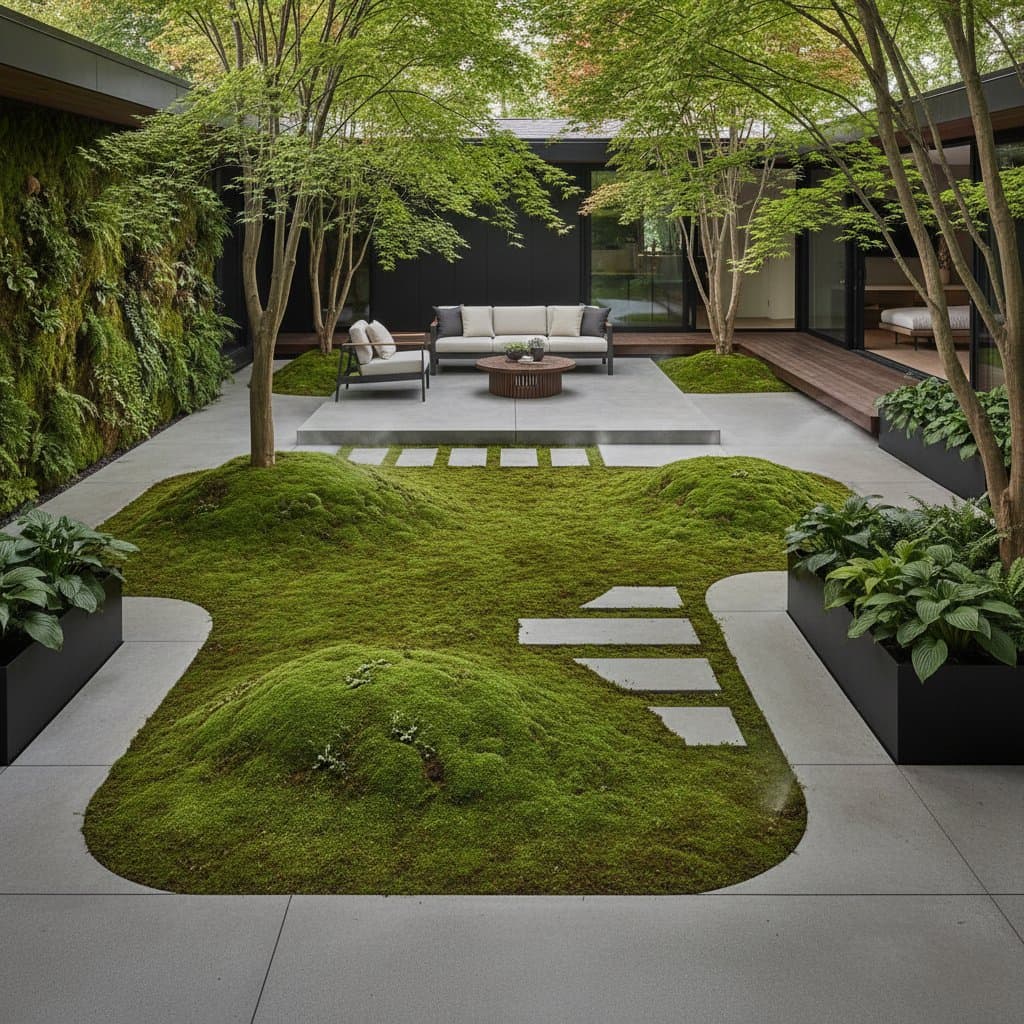
Why Moss Lawns Surge 300% Over Traditional Grass
A moss lawn evokes calm with its soft, timeless texture. It transforms shaded areas into lush green carpets that maintain their color across seasons. Homeowners and landscape designers increasingly select moss for its serene aesthetic and practical benefits. This choice delivers the essence of a woodland floor while eliminating the need for frequent mowing, watering, or fertilizing required by traditional grass.
At a Glance
- Location: Ideal for shaded or partially shaded yards
- Size: Adaptable from small courtyards to expansive lawns
- Climate Zone: Best in cool or temperate regions with moderate humidity
- Project Goal: Establish a low-maintenance, evergreen surface featuring natural texture
Moss lawns represent a resurgence in sustainable landscaping practices. Their popularity has increased 300% compared to traditional grass, driven by demand for low-effort, environmentally friendly options. These lawns demand no mowing, minimal water, and zero chemical inputs. The result is a soft surface underfoot that remains vibrant when grass fades, particularly in challenging sites where turf fails to thrive.
1. Choose the Right Moss for Your Site
Moss varieties differ in their preferences for light, moisture, and soil. Select species that match your conditions to ensure long-term success. For instance, sheet moss (Hypnum) forms smooth, spreading mats suitable for gentle slopes. Cushion moss (Leucobryum) creates dense, rounded mounds that provide depth along paths or borders. Rock cap moss (Dicranum) adheres well to stones, enhancing a woodland ambiance.
A designer advises: “Begin by assessing your site’s natural conditions. Shaded, moist areas support moss growth with little intervention.”
Functional benefit: Matching moss to the site minimizes die-off and ongoing care.
Design insight: Combine multiple varieties for layered visuals and texture. This approach creates a natural patchwork that eases transitions between garden areas.
Visual callout: Cushion moss illuminates a shaded corner planted with ferns and hostas.
2. Prepare the Ground for Moss Success
Begin by removing existing grass to expose bare soil. Moss requires a compact, neutral surface for attachment. Rake the area smooth, then firm it using a roller or by tamping with your feet. Test soil pH; if alkaline, apply sulfur to acidify it gradually, as moss favors acidic conditions around pH 5.0 to 6.0.
A landscape specialist notes: “Moss establishes on the surface, so direct contact with prepared soil is essential.”
Functional benefit: Thorough preparation promotes rapid rooting and limits weed intrusion.
Design insight: Aim for a level surface to achieve a seamless appearance. Avoid irregularities that trap debris and disrupt uniformity.
Visual callout: Even ground allows moss to expand uniformly around embedded stepping stones.
3. Control Moisture and Light
Moss depends on steady moisture without saturation. For newly planted areas in arid regions, apply a fine mist two to three times weekly until roots secure. Established moss tolerates brief dry periods better. Partial shade fosters consistent growth, whereas direct sun can dry out sensitive types.
Functional benefit: Optimal moisture levels preserve moss vibrancy and resilience during heat.
Design insight: Incorporate overhead shade from trees or structures like pergolas to diffuse light. Pair moss with compatible shade plants such as wild ginger or sweet woodruff for a cohesive understory.
A designer explains: “View moss as a natural sponge that absorbs ambient humidity rather than relying on frequent irrigation.”
Visual callout: Tree canopies provide dappled light, maintaining cool conditions for moss lawns.
4. Skip the Mower, Keep the Rake
Moss excels in low-maintenance scenarios, freeing you from routine grass care. Avoid mowing and fertilizers entirely. Instead, gently rake or use a leaf blower to remove fallen debris that could smother the moss. In dry periods, occasional misting sustains freshness without excess effort.
Functional benefit: Reduced maintenance lowers expenses and allows more leisure in the garden.
Design insight: The flat, slow growth of moss complements clean-lined hardscapes and Zen-style designs. Integrate gravel walkways or stone borders to define and highlight the verdant expanse.
A horticulturist observes: “Mature moss acts as self-mulch, retaining soil moisture and suppressing weeds effectively.”
Visual callout: A raked moss lawn accentuates a stone lantern amid a gravel path.
5. Embrace Seasonal Texture
Moss retains its green hue through winter, unlike grass that yellows or thins. Seasonal light variations introduce nuanced shifts in appearance. Certain species intensify to deep emerald in humid conditions, while others develop a subtle silver sheen when drier. These changes add dynamic depth to the landscape.
Functional benefit: Persistent greenery sustains visual interest throughout the year.
Design insight: Position moss as a stable backdrop for seasonal performers like ferns, hellebores, or bulbs. This contrast highlights floral displays against the consistent base.
A garden consultant states: “Moss provides enduring texture when other elements recede, grounding the overall composition.”
Visual callout: Moss’s subtle gleam offsets the copper tones of autumn fern fronds.
6. Think Beyond the Lawn
Extend moss applications vertically to walls, rocks, or paver joints. This versatility links constructed features with natural elements seamlessly. In compact spaces like courtyards or terraces, moss maximizes green coverage without demanding additional footprint.
Functional benefit: Vertical installations amplify vegetation in limited areas.
Design insight: Select spreading types for flat expanses and clustered forms for accents. Moss softens edges, merging architecture with the environment.
A landscape designer comments: “Moss serves as a subtle bridge, harmonizing built forms with organic surroundings.”
Visual callout: Moss ascends a garden wall, integrating stone into the verdant landscape.
Sustaining Your Moss Lawn
Established moss lawns offer enduring rewards through their cool touch and acoustic absorption, fostering tranquil outdoor retreats. The subtle patina that develops over time conveys maturity and intentional care. Transitioning from grass to moss advances sustainability by conserving water, minimizing pollution, and embracing natural elegance.
To maintain vitality, monitor for debris and adjust moisture as needed. This approach ensures the lawn remains a vibrant, low-demand feature for years.