
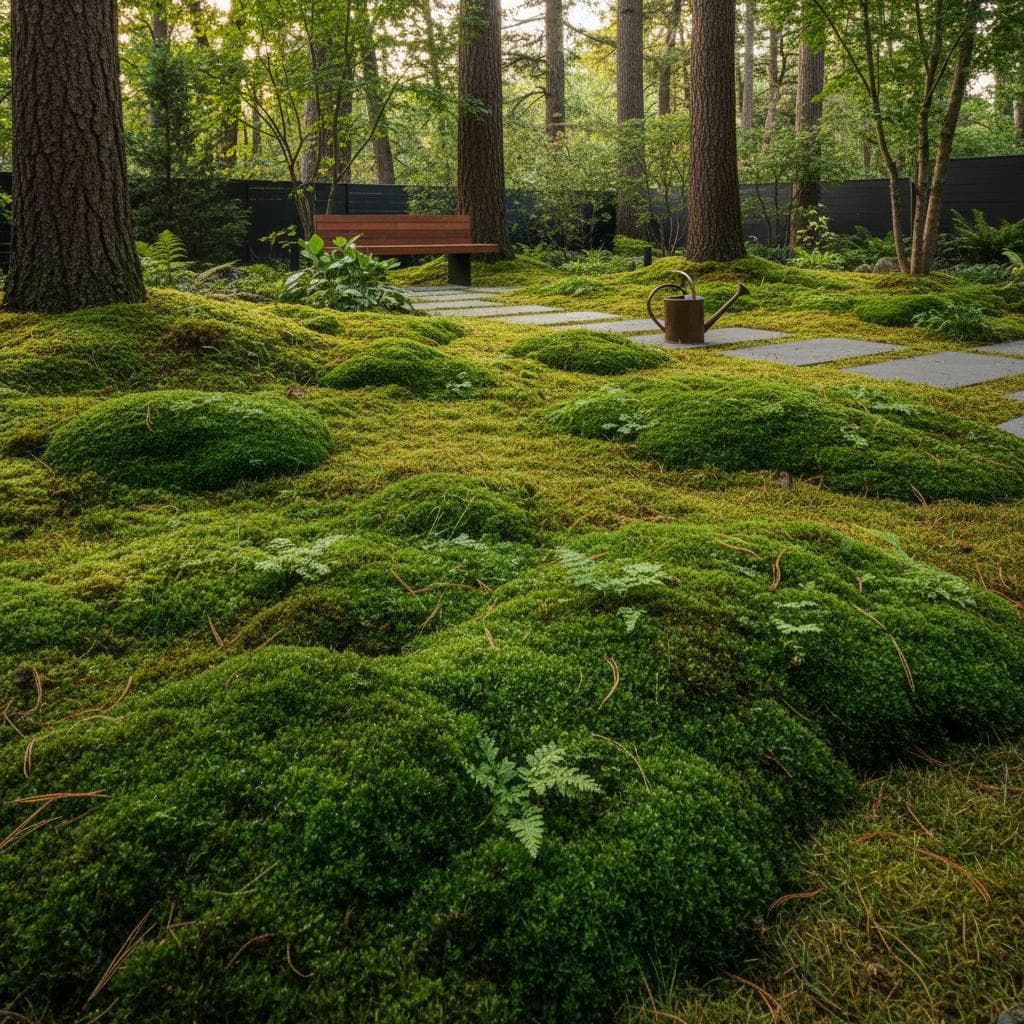
Why Moss Lawns Are Revolutionizing Backyard Care
A moss lawn evokes the tranquil texture of a forest floor, soft and vibrant green just steps from the home. This option provides a serene contrast to the demanding routine of maintaining turf grass. Property owners increasingly select moss for its aesthetic appeal, durability, and ease, especially in areas where grass falters. Moss redefines low-maintenance landscaping by flourishing in conditions that challenge conventional lawns.
Key Considerations at a Glance
- Ideal Locations: Shaded or partially shaded yards with consistent moisture.
- Suitable Sizes: From compact courtyards to expansive woodland gardens.
- Climate Suitability: Temperate zones with humidity or regular rainfall.
- Primary Objectives: Establish a no-mow, eco-conscious ground cover that remains verdant throughout the year.
Assessing Your Site for Moss Success
Before introducing moss, evaluate the yard's conditions to ensure compatibility. Moss prefers acidic soil with a pH between 5.0 and 6.0, ample shade, and steady humidity. Test soil acidity using a simple kit from a garden center, and amend with sulfur or peat moss if needed to lower pH levels.
Observe drainage patterns during rain; moss tolerates moist but not waterlogged ground. Remove existing grass or weeds by raking vigorously or applying a natural vinegar solution, allowing two weeks for die-off. Clear debris like leaves or rocks to create a smooth base, preventing competition that could hinder moss establishment.
A horticulturist observes, "Site preparation sets the foundation; overlook it, and moss may struggle to take hold."
Selecting the Right Moss Species
Moss varieties differ in growth habits and tolerances, so select based on specific site needs. Acrocarpous types, such as Dicranum scoparium, form upright cushions ideal for slopes or drier spots within shaded areas. These species endure short dry periods and add a sculptural texture to the landscape.
Pleurocarpous mosses, including Hypnum cupressiforme and Thuidium delicatulum, spread horizontally to create a plush carpet, thriving in evenly moist environments. Opt for native species to promote quicker adaptation and ecological harmony. Designers recommend blending types for visual interest; combine tufted and mat-forming mosses to achieve layered depth.
Visual Suggestion: Pair tufted moss with velvety varieties beneath a Japanese maple for striking textural contrast.
Preparing and Installing the Moss Lawn
Once the site suits moss conditions, prepare the substrate for optimal rooting. Loosen the top inch of soil with a rake, then apply a thin layer of compost or leaf mold to retain moisture without smothering growth. For larger areas, divide moss into small clumps from healthy patches or purchase transplants from reputable nurseries.
Install by pressing moss fragments directly onto the prepared soil, spacing them 1 to 2 inches apart. Use a broom to secure them flat, then mist thoroughly to initiate adhesion. In the first weeks, protect the area from foot traffic with temporary barriers like straw mulch. This method encourages rapid colonization, often covering the ground within a season.
A landscape professional notes, "Patience during installation pays off; moss spreads steadily when given a stable start."
Implementing Effective Watering Practices
Moss depends on surface moisture for vitality, yet it avoids the need for daily irrigation once rooted. During establishment, mist the area each morning to simulate dew, using a gentle spray that soaks the top layer without runoff. Established lawns revive swiftly after rainfall, tolerating brief dry intervals in humid climates.
Integrate efficient systems like drip irrigation with low-flow emitters or overhead misters set on timers for consistency. In naturally shaded spots, tree canopies and ground-level humidity suffice, reducing supplemental needs. Border the moss with stones or low walls to capture and hold ambient moisture, enhancing overall hydration.
Visual Suggestion: Dawn misting envelops the moss in a light veil, amplifying its fresh emerald hue.
Balancing Sunlight and Shade Exposure
Moss excels under indirect light, where filtered sun supports growth without scorching. Full shade fosters dense mats, while partial exposure demands vigilant moisture management to prevent desiccation. Assess daily light patterns by noting shadow shifts throughout the day, adjusting plantings accordingly.
Introduce companion plants such as ferns, Ilex glabra shrubs, or Pieris japonica to diffuse harsh rays and maintain cool microclimates. In brighter zones, apply a light scattering of pine needles as mulch to shield and hydrate the surface. Over months, moss adjusts, thickening in optimal light while thinning elsewhere to signal adjustment needs.
A designer advises, "Light control acts as a subtle guide; balance it to let moss reveal its full potential."
Visual Suggestion: Sunlight dapples through oak foliage, accentuating subtle shades in the moss carpet.
Designing for Durability and Use
Moss accommodates gentle use when paired with supportive elements that distribute pressure. Embed stepping stones or gravel trails to channel foot traffic, preserving the soft expanse for visual enjoyment. Compact the underlying soil before planting in high-use areas to bolster resilience against compression.
Craft pathways from natural materials like irregular flagstone, wood chips, or crushed granite that harmonize with the moss palette. Position benches, fire features, or small water elements amid the greenery to create inviting focal points. This approach ensures the lawn functions as both aesthetic centerpiece and practical outdoor space.
A landscape architect comments, "Thoughtful design integrates moss into daily life, enhancing rather than restricting yard activities."
Visual Suggestion: A winding flagstone path meanders through the moss, culminating at a tranquil shaded seat.
Ongoing Maintenance for Lasting Beauty
Mature moss lawns demand minimal effort, focusing on preservation over intensive labor. Brush away fallen leaves periodically with a soft rake to avoid smothering, and inspect for invasive weeds, removing them by hand. During extended dry spells, provide occasional deep watering to refresh the surface.
Avoid chemical treatments; moss naturally resists pests through its dense structure. In winter, a light snow cover insulates without harm, while spring rains spur renewed vigor. This routine fosters a self-sustaining ground cover that evolves gracefully over time.
Environmental Advantages of Moss Lawns
Moss contributes significantly to ecological health, acting as a natural purifier and stabilizer. It traps airborne particles, sequesters carbon dioxide, and slows stormwater flow to minimize erosion. Shallow roots anchor soil while permitting water infiltration, reducing flood risks in rainy regions.
In city environments, moss cools ambient temperatures and boosts humidity, countering urban heat. It shelters beneficial insects and microorganisms, fostering biodiversity without supplemental feeding. Sustainable by design, moss aligns with water conservation efforts and diminishes reliance on resource-heavy lawn care.
An environmental specialist states, "Moss transforms ordinary yards into active contributors to healthier ecosystems."
Visual Suggestion: Moss in a shaded courtyard diffuses gentle light, cultivating a peaceful, equilibrated ambiance.
Embracing the Moss Lawn Lifestyle
With establishment complete, a moss lawn invites a shift toward effortless stewardship. Time once spent on mowing redirects to savoring subtle changes, like the play of light on dew-kissed surfaces. This living tapestry endures seasons unchanged, offering perpetual serenity.
Homeowners discover deepened yard connections through quiet observation and light touches. The result embodies sustainable innovation: verdant elegance achieved with nature's own efficiency.
Visual Suggestion: Dew sparkles on a well-established moss lawn at sunrise, illuminating the garden's quiet allure.