
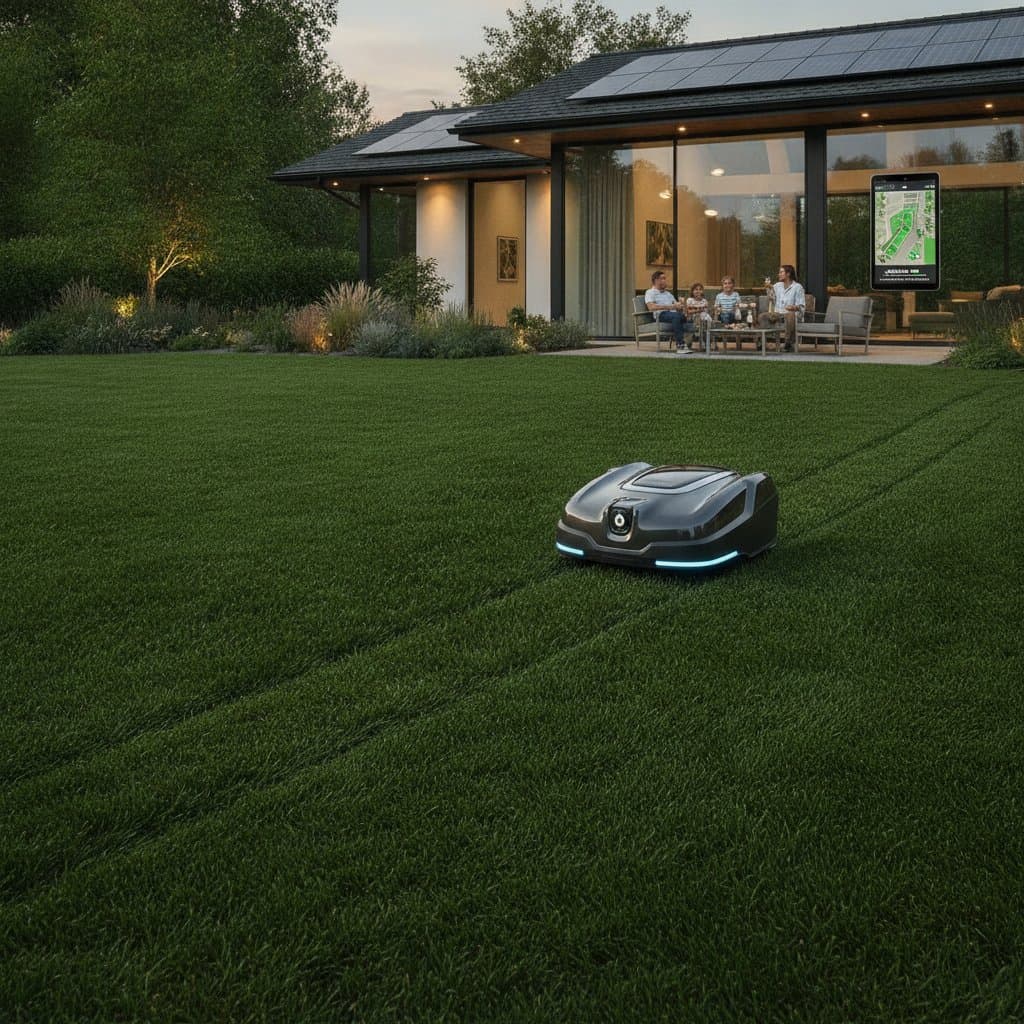
Why Robotic Mowers Are Reaching Their Breakthrough Moment
A quiet revolution is happening in home landscapes. Lawns that once demanded weekly noise and fuel are now cared for by compact, efficient machines that move almost silently. The modern robotic mower is not just a gadget. It is a dependable outdoor partner that keeps turf even and healthy while giving homeowners back their weekends.
As smart technology grows more accessible, these mowers are becoming a practical choice for both residential yards and professional landscapes. Their latest generation combines precision, environmental awareness, and design efficiency in ways that finally feel ready for everyday use.
1. Smarter Navigation Creates Perfect Patterns
Modern robotic mowers use satellite guidance, boundary sensors, and mapping software to move with purpose. Older models often followed random paths and left uneven cuts. The current technology allows each mower to learn the layout of a yard and adjust routes for trees, slopes, and flower beds.
A landscape designer said, "Intelligent mapping means the mower covers every part of the lawn without repetitive passes, saving energy and wear on the blades." The functional benefit is clear. Each session is shorter, quieter, and more efficient.
The mower works in smaller increments, which keeps grass at a consistent height and improves turf density. In design terms, the lawn gains a natural, uniform texture that looks cared for without appearing over-manicured.
Compact mower glides between stepping stones and perennial borders.
2. Customizable Schedules Adapt to Growth
Every lawn grows at its own pace depending on sunlight, soil, and weather. The latest robotic mowers connect to mobile apps that let users adjust schedules based on growth rate, rainfall, or seasonal conditions. Some models even detect moisture levels and pause automatically during rain.
A turf specialist said, "Smart scheduling keeps the lawn from being overcut, which preserves root health and reduces water needs." This automation saves time while improving results.
Instead of reacting to overgrown grass, the mower maintains a steady rhythm that encourages dense, resilient turf. Homeowners can fine-tune timing to fit their climate, ensuring that each cut supports rather than stresses the lawn.
Design insight: integrating mowing patterns with irrigation cycles helps balance soil moisture and reduces compaction, especially in clay-heavy soils.
3. Safety and Precision Protect the Landscape
Robotic mowers now include sensors that detect movement and obstacles. If a child, pet, or garden ornament enters the path, the blades stop instantly. This level of safety allows the mower to operate independently without supervision.
A product specialist said, "Blade guards and lift sensors make these machines safer than traditional push mowers, especially for families with children or pets." Functionally, this protection extends to landscape elements.
The mower sensors prevent damage to irrigation heads, low garden edging, or small tree trunks. From a design standpoint, this precision supports a more integrated yard layout where turf meets planting beds cleanly without the need for manual trimming.
Edge sensor follows stone border, leaving crisp definition between turf and planting.
4. Design-Friendly Aesthetics
Early robotic mowers looked mechanical and intrusive. The current generation is sleek, compact, and designed to blend with garden environments. Matte finishes, muted colors, and rounded profiles help them disappear into the landscape.
A landscape architect said, "When equipment looks considered, it supports the overall design rather than distracting from it." Functionally, smaller footprints mean easier navigation through narrow passages or around curved beds.
The visual benefit is subtle but powerful. The mower becomes part of the design narrative, much like hidden lighting or discreet irrigation. It supports the idea of outdoor technology that works quietly rather than calling attention to itself.
Streamlined mower rests beside ornamental grasses, nearly invisible from the patio view.
Bringing Robotic Mowers into Daily Use
Once installed and calibrated, a robotic mower becomes part of daily outdoor life. It needs little attention beyond blade changes and occasional cleaning. The lawn remains consistently trimmed, which improves photosynthesis and reduces thatch buildup. Over time, grass becomes thicker and greener with fewer inputs.
For homeowners, the biggest shift is psychological. Mowing stops being a weekend chore and becomes a background process. The garden feels more self-sustaining, and time once spent pushing a mower can go toward planting, entertaining, or simply enjoying the space.
A homeowner who installed one said, "It is like having an invisible gardener who never misses a day." This shift reflects a broader trend toward quiet automation. Tools that work with minimal intervention encourage a more relaxed relationship with maintenance.