
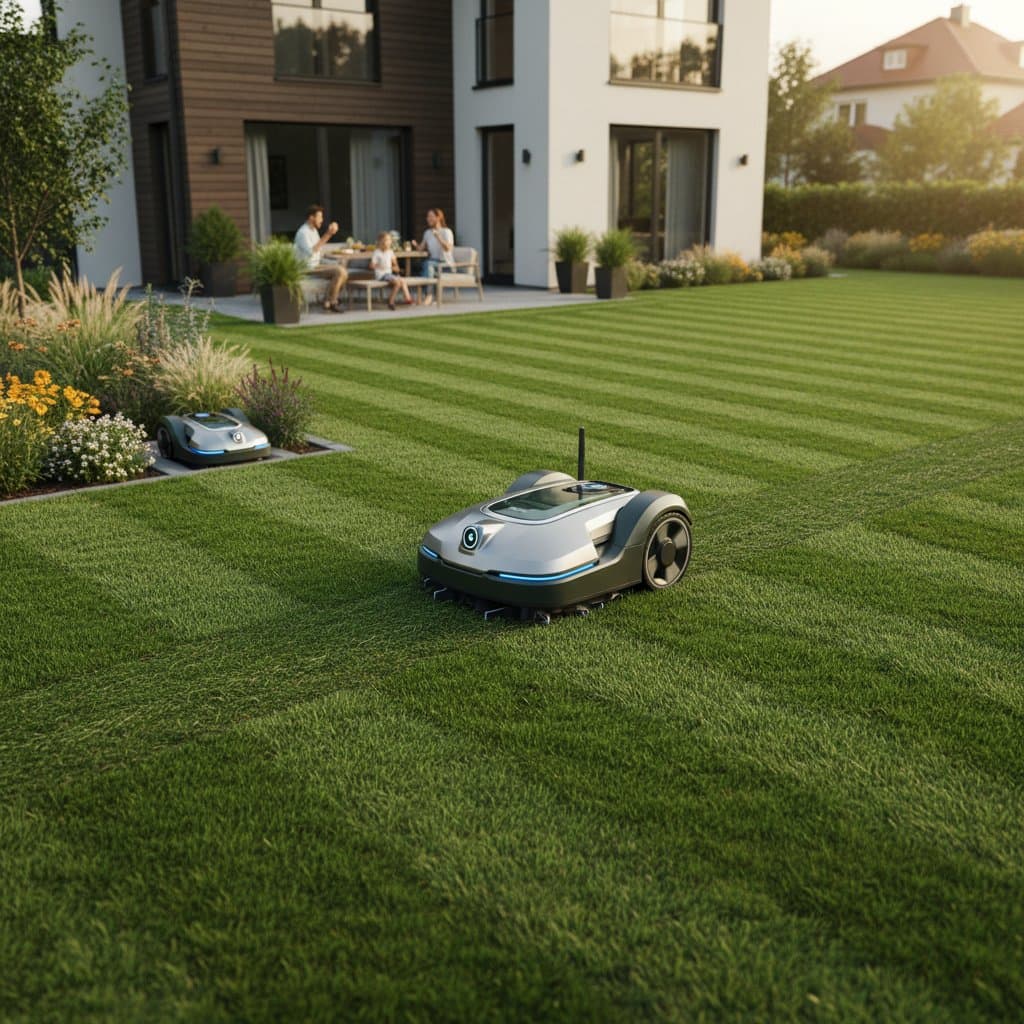
Why Robotic Mowers Promote Superior Lawn Health
Traditional weekly mowing often stresses grass by removing too much at once, leading to weaker roots and patchy growth. Robotic mowers address this issue through frequent, light cuts that mimic natural grazing patterns. They trim small amounts daily or every few days, allowing grass to recover quickly and develop denser, more resilient turf.
This approach enhances overall lawn vitality. Studies from turf experts indicate that consistent micro-cuts improve nutrient absorption and reduce weed invasion by maintaining an even height. Homeowners report thicker, greener lawns within weeks of switching, as the mowers avoid the compaction and tearing caused by heavy manual equipment.
Beyond health benefits, robotic mowers save time and resources. They operate quietly without fuel, lowering your carbon footprint while preserving soil structure. For families with busy schedules, this means reliable care without sacrificing weekend leisure.
Key Features Driving Lawn Improvement
Modern robotic mowers incorporate advanced technology to ensure precise, gentle maintenance. Ultrasonic and contact sensors detect obstacles such as pets, toys, or garden furniture, preventing damage and allowing safe navigation. These sensors enable the mower to adjust paths dynamically, covering every inch without overlap or missed spots.
Connectivity options like Wi-Fi or Bluetooth integrate with mobile apps for customized control. Users schedule mowing times, monitor progress via real-time maps, and receive alerts for low battery or boundary issues. This level of oversight ensures the lawn receives optimal attention tailored to weather and growth patterns.
Rain detection sensors add another layer of protection. Advanced models pause operations during wet conditions to avoid compacting soft soil or spreading clippings unevenly. By resuming only when conditions improve, they maintain a dry, healthy surface that discourages fungal diseases.
The evolution of this technology has simplified adoption. Early models demanded intricate boundary setups, but current versions offer near-instant installation. Charging docks now blend seamlessly into landscapes, positioned near planting beds or concealed behind hedges to uphold aesthetic harmony.
Integrating Design and Aesthetics Seamlessly
Aesthetic integration elevates robotic mowers from functional tools to landscape enhancements. Homeowners often worry about visible wires or bulky stations disrupting their outdoor design. Landscape professionals address these concerns by incorporating elements that complement the garden's style.
Charging docks can nestle behind decorative fencing or within low shrubbery for discretion. Some designs feature enclosures with retractable roofs or louvered panels that match surrounding materials like stone or wood. This thoughtful placement ensures the system supports rather than detracts from the yard's visual appeal.
"Placement is crucial," notes landscape designer Leah Morton, an expert in suburban renovations. "The dock must allow free mower movement while vanishing into the surroundings. We frequently coordinate its finish with adjacent features, such as patios or pathways."
Material selection plays a key role in durability and style. Powder-coated metal or UV-resistant composites withstand outdoor elements while mimicking natural textures. Buried cable channels under mulch or gravel paths eliminate surface clutter, creating a polished, intentional look from the outset.
Step-by-Step Setup for Optimal Performance
Setting up a robotic mower involves straightforward steps that most users complete in a single afternoon. Begin by mapping your yard's unique layout, including slopes, trees, and fixed obstacles. This preparation ensures comprehensive coverage and prevents operational glitches.
Follow these installation steps:
-
Outline the boundaries. Position the perimeter wire along edges and around no-mow zones like flower beds or patios. Secure it with provided stakes, leaving slight slack for terrain variations.
-
Install the charging base. Select a flat, shaded location close to an electrical outlet, ideally against a wall or fence for protection. Ensure at least 5 feet of clear space around it for docking.
-
Calibrate the system. Activate the mower for an initial guided tour to learn the layout. Use the app to refine edge settings and test sensor responses to common obstacles.
-
Customize operations. Input preferences for cut height, frequency, and anti-theft features. Start with conservative settings and adjust based on your grass type and local climate.
Testing the full cycle confirms even coverage and reliable return-to-base functionality. If irregularities appear, tweak wire positions or app parameters for refinement.
Essential Maintenance for Long-Term Lawn Benefits
Routine upkeep keeps robotic mowers performing at peak efficiency, directly contributing to sustained lawn health. Weekly cleaning removes grass clippings from the undercarriage using a soft brush and mild soap solution. This prevents buildup that could dull blades or hinder mobility.
Monthly inspections focus on blade sharpness and sensor cleanliness. Replace blades every two to three months, depending on usage and grass density, to maintain clean cuts that promote upright growth. Lubricate moving parts sparingly with manufacturer-recommended oils to ensure smooth operation.
Seasonal care adapts to environmental changes. In winter, store the unit in a dry indoor space to protect electronics from frost. During peak growing seasons, monitor battery health through the app and update software for new features like enhanced weather integration.
Low-maintenance design minimizes effort compared to gas mowers, which require fuel mixing and engine tuning. Robotic models eliminate oil changes and spark plug replacements, allowing focus on enjoying the results rather than upkeep.
Embracing Automated Lawn Care for Lasting Results
Robotic mowers align with broader trends in smart home ecosystems, connecting to irrigation controllers and weather stations for holistic yard management. This networked approach optimizes water use and nutrient delivery, amplifying health gains from precise mowing.
When evaluating options, assess your property's specifics: measure square footage, evaluate terrain steepness, and consider integration with existing smart devices. Entry-level models suit small, flat yards, while advanced units handle multi-zone complexes with steep inclines.
The investment yields immediate and enduring rewards. Expect reduced noise pollution, eliminated physical strain, and a lawn that thrives with minimal intervention. This shift reorients outdoor spaces toward relaxation and appreciation, fostering environments where nature flourishes effortlessly.