
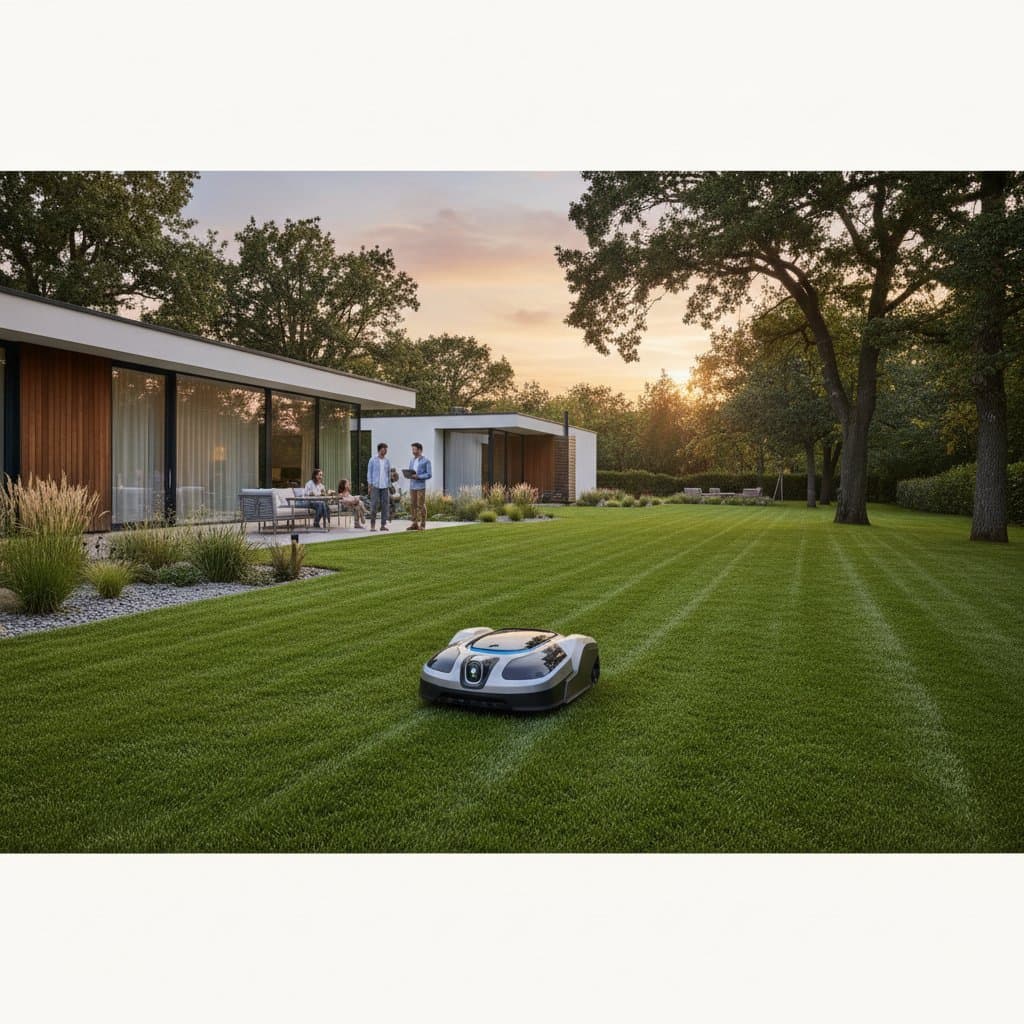
The Rise of Robotic Mowers in Suburban Landscapes
Suburban neighborhoods experience a subtle shift in lawn maintenance practices. Homeowners increasingly replace traditional gas-powered mowers with robotic alternatives that operate autonomously and silently. These devices navigate yards with precision, ensuring consistent grass height without human intervention.
The appeal lies in their ability to maintain lawns year-round, regardless of weather fluctuations in temperate regions. Families gain hours each week, redirecting effort toward relaxation or family activities. This transition supports a vision of outdoor spaces that require minimal oversight while maximizing aesthetic and environmental value.
Key Specifications for Suburban Use
Suitable Locations: Temperate and warm suburban areas with moderate rainfall.
Ideal Lawn Sizes: Between 2,000 and 10,000 square feet, accommodating most standard residential properties.
Climate Compatibility: Regions with consistent grass growth, from spring through fall.
Primary Objectives: Minimize manual labor, enhance turf vitality, and integrate automation for long-term efficiency.
Time Savings and Effortless Operation
Robotic mowers schedule cuts automatically, often during off-peak hours like early morning or evening. Users set boundaries using perimeter wires or virtual mapping via apps, allowing the device to cover the entire yard systematically. This eliminates the physical demands of pushing heavy equipment or maneuvering ride-ons over uneven terrain.
For busy professionals and parents, the impact proves immediate. One weekend previously dedicated to mowing becomes available for gardening, sports, or social gatherings. The mower returns to its charging station independently, ready for the next cycle without prompting.
Maintenance remains straightforward. Owners clean the undercarriage periodically and sharpen blades annually, tasks that take under an hour. This low-effort routine contrasts sharply with the fuel refills and oil changes required by conventional mowers.
Environmental Advantages of Battery-Powered Design
Gas mowers contribute to air pollution through exhaust fumes and soil compaction from their weight. Robotic models rely on rechargeable lithium-ion batteries, generating zero direct emissions during operation. Their lightweight construction preserves soil structure, preventing the rutting common with heavier machines.
Noise levels drop significantly, often below 60 decibels, comparable to a quiet conversation. This feature suits dense neighborhoods where sound carries easily, fostering harmony among residents. A sustainability consultant notes, "Battery-powered mowing reduces both air and noise pollution. It fits the suburban goal of comfort and greener living."
Frequent, light cuts by robotic mowers promote healthier ecosystems. The devices mulch clippings in place, returning organic matter to the soil. This process recycles nitrogen naturally, diminishing reliance on synthetic fertilizers by up to 30 percent over a season.
Visual callout: Layer of fine mulch from clippings enriching the soil surface.
Advanced Safety Mechanisms for Family Environments
Contemporary robotic mowers incorporate multiple safeguards to protect users and pets. Obstacle detection sensors, including ultrasonic and infrared types, halt blades upon encountering objects like toys or animals. Blades retract or stop within seconds if the unit encounters resistance.
Theft prevention adds another layer of security. Integrated GPS tracking allows remote monitoring through smartphone apps, alerting owners to unauthorized movement. PIN codes or app-based locks prevent operation by unauthorized individuals, reducing vulnerability in open suburban settings.
A garden equipment specialist explains, "The safety sensors make these machines reliable for families with pets or children. The blades sit deep within the chassis and stop when touched." These elements enable unattended operation, building confidence in the technology for daily use.
Visual callout: Sensor activation as the mower detects and pauses near a child's toy.
Enhancing Turf Vitality with Precision Mulching
Traditional mowing removes large clippings, depriving soil of essential nutrients. Robotic mowers slice grass into minuscule fragments, less than one-quarter inch long, which decompose rapidly. This mulching action delivers a continuous nutrient boost, fostering root development and denser growth.
Lawns under robotic care exhibit fewer bare patches and resist pests better due to the uniform height maintained, typically between 1.5 and 3 inches. Weeds struggle to compete in such conditions, often requiring no herbicides. Homeowners observe softer, more vibrant turf that withstands foot traffic and dry spells.
A horticulturist states, "Micro-mulching feeds the soil continuously. It keeps lawns lush without extra fertilizer." This method aligns with organic gardening principles, supporting biodiversity in suburban yards.
Visual callout: Microscopic view of clippings integrating into the grass roots.
Long-Term Cost Efficiency and Smart Integration
Initial investment in a robotic mower ranges from $800 to $2,500, depending on yard size and features. However, savings accumulate quickly through eliminated fuel costs, averaging $100 annually, and reduced fertilizer needs. Blades and batteries last several seasons, with warranties covering key components.
Smart connectivity elevates the experience. Many models sync with weather apps to pause during rain, avoiding wet grass clumping. Integration with home automation systems, like smart doorbells, provides real-time yard status updates, enhancing overall property management.
Over five years, owners recoup costs through time value alone, not to mention property appeal. Well-maintained lawns boost curb appeal, potentially increasing home values in competitive markets.
Integrating Robotic Mowers into Daily Routines
Adopting a robotic mower begins with site assessment. Measure the lawn, identify obstacles, and install boundary wires if needed, a process taking two to four hours. App setup follows, where users customize schedules and zones for multi-area yards.
Ongoing adjustments ensure optimal performance. Monitor battery health via diagnostics and adjust cutting heights seasonally for grass types like Bermuda or fescue. Seasonal storage involves cleaning and indoor charging during winter dormancy.
This integration streamlines suburban life, blending innovation with natural beauty. Yards remain pristine with minimal input, allowing focus on enjoyment rather than chores.
Sustaining Greener Yards Through Automation
Robotic mowers represent more than tools; they embody a commitment to efficient, eco-conscious living. Suburbs benefit from reduced noise, healthier soils, and preserved leisure time. As adoption grows, these devices set a benchmark for modern yard care that prioritizes sustainability and simplicity.
Homeowners discover yards that thrive independently, inviting more outdoor moments. The quiet efficiency of robotic mowing ensures lawns stay vibrant year-round, enhancing the rhythm of suburban existence.